







Mexico Plans Gradual Shift to 40-Hour Workweek by 2030
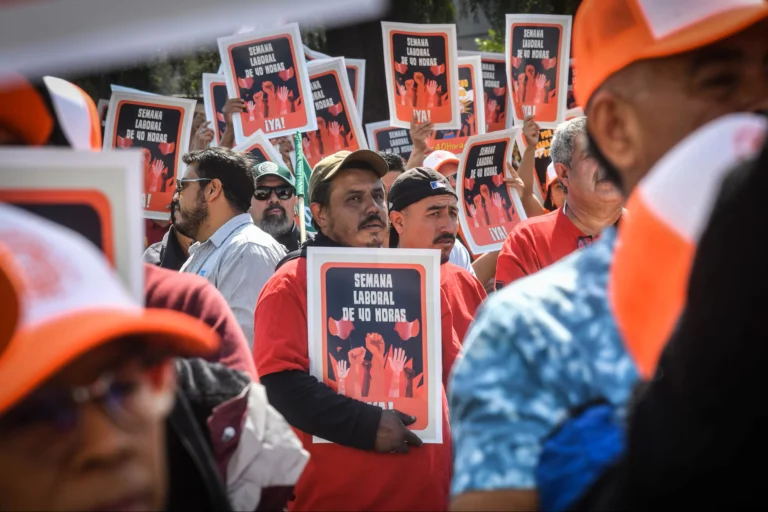
Protest against the 40-hour workweek in Mexico City. Photo: El Pais.
December 3, 2025 Hour: 2:55 pm
🔗 Comparte este artículo
The Sheinbaum administration will also increase the minimum wage nationwide.
On Wednesday, Mexican President Claudia Sheinbaum announced that a constitutional and legal labor reform will be introduced in 2026 to gradually reduce the workweek from 48 to 40 hours by 2030, benefiting 13.4 million workers.
RELATED:
Mexico: Maya Train to Help Lower Gasoline Prices
The proposal was agreed upon in 40 working groups with business leaders, unions, and workers. Marath Bolaños, the secretary of Labor and Social Welfare (STPS), emphasized that there will be no reduction in wages and that overtime work will be voluntary and paid at double the rate.
At the moment, the law allows for a 48-hour workweek, but in practice, some employees work more than 56 hours without penalties for their employers. The reform will entail two mandatory days off, aiming for greater productivity, social cohesion, and economic benefits, with an electronic registry to monitor compliance.
The government also reached an agreement with the labor and business sectors on a minimum wage increase nationwide of 13% and an additional 5% in the northern border region. The wage will reach US$24 per day in that region and US$17 in the rest of the country.
The text reads, “After 108 years of working with a 48-hour work week, today, on the Second Floor of Transformation, we present the Reform Project for the Implementation of the 40-Hour Work Week for the benefit of Mexican workers.”
Sheinbaum acknowledged that the negotiations were complex, as unions demanded the implementation of a 40-hour workweek starting in 2026, while employers rejected the measure. However, she pointed out that international experiences, including those in Nordic countries with a 36-hour workweek, demonstrate benefits in productivity and well-being.
The Mexican President remarked that the reform complements other labor changes such as extended vacation time, the elimination of outsourcing, profit sharing, and the so-called “chair law” (the right to rest during work shifts), which strengthen labor rights.
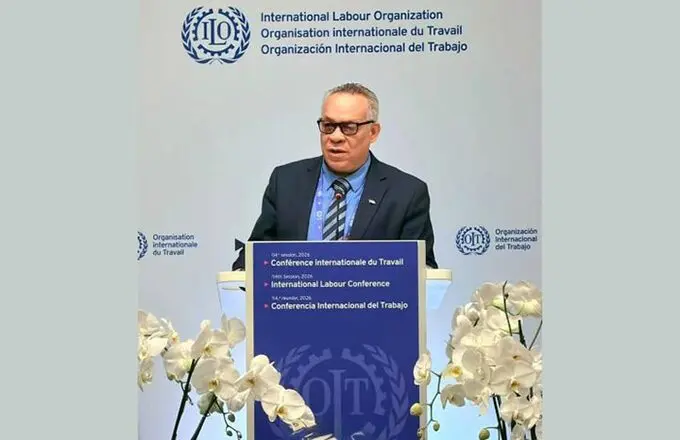
Bolaños indicated that the gradual implementation is in accordance with Convention 116 of the International Labour Organization (ILO). The reduction in working hours will diminish health risks, fatigue, and allow more time for leisure and proper nutrition.
teleSUR: JP
Source: El Pais – La Jornada