Mexico OAS TIAR Rejection: 14 States Back Controversial Crime Plan

Mexico’s Permanent Representative to the OAS, Alejandro Encinas, rejected the invocation of the TIAR to confront organized crime, warning that it could lead to greater violence.
November 21, 2026 Hour: 12:43 pm
🔗 Comparte este artículo
Mexico OAS TIAR rejection deepens as Encinas warns against linking organized crime to terrorism and calls for sovereignty-based cooperation.
Related: Mexico Passes Animal Protection Law With Overwhelming Majority
Mexico OAS TIAR Rejection: 14 States Back Controversial Crime Plan
Mexico has voiced a strong Mexico OAS TIAR rejection of the invocation of the Inter-American Treaty of Reciprocal Assistance (TIAR) to confront transnational organized crime. Mexican Permanent Representative Alejandro Encinas warned that using a Cold War-era collective defense instrument could lead to greater violence.[telesurtv]
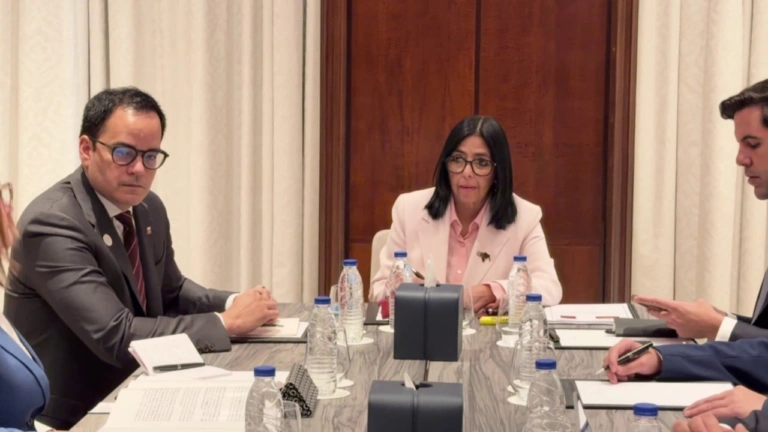
During an extraordinary session of the OAS Permanent Council, Encinas urged member states not to establish an “automatic link” between organized crime and terrorism. He argued that the two phenomena are distinct and governed by different legal frameworks.[telesurtv]
The resolution, backed by 14 of the 18 TIAR states that participated in the vote, calls for examining measures that do not involve the use of armed force against cartels. Brazil and Uruguay voted against the initiative, while Mexico did not participate after formally denouncing and leaving the treaty in 2002.[telesurtv]
A Warning Against “Narcoterrorism”
Encinas categorically rejected the concept of “narcoterrorism,” arguing that it lacks consensus in international law. He said that unilaterally designating a criminal organization as a terrorist group does not change international rules on the use of force.[telesurtv]
He stressed that such a designation does not authorize military operations in the territory of other states. That competence, he said, belongs exclusively to the United Nations Security Council.[telesurtv]
The Mexican diplomat warned that the proposal could push the OAS toward a point of no return. He said the organization risks undermining its mission and future by subordinating security priorities to political considerations and the strategies of third countries.[telesurtv]
Organization of American States
A History of Controversial Invocations
Encinas reviewed past uses of the TIAR to question its relevance. He recalled that its first invocation was directed against the democratically elected government of Guatemala, leading to the U.S. intervention that overthrew Jacobo Árbenz in 1954.[telesurtv]
He also cited the 1982 Falklands War as evidence of the treaty’s operational limitations. He said its activation in 2019 regarding Venezuela illustrated the risk of treating internal crises as regional security matters.[telesurtv]
The Mexican representative argued that these precedents show why the TIAR should not be used to address organized crime. He said the treaty’s history is marked by political interference and questionable outcomes.[telesurtv]
A Call for Shared Responsibility
Encinas argued that drug trafficking does not originate south of the United States. He described it as a network sustained by drug demand, illicit arms trafficking, and global financial circuits.[telesurtv]
He urged member states to address consumer markets and sources of weapons supply. He said that without tackling those root causes, any security strategy will fail.[telesurtv]
The Mexican diplomat also pointed to existing OAS mechanisms such as the Secretariat for Multidimensional Security and the Inter-American Drug Abuse Control Commission (CICAD). He reaffirmed Mexico’s willingness to deepen police, judicial, and intelligence cooperation while respecting national sovereignty.[telesurtv]
Inter-American Drug Abuse Control Commission
A Broader Debate on Security and Sovereignty
The Mexico OAS TIAR rejection reflects a broader debate over how to address organized crime in the Americas. Some governments favor a security-first approach that includes military options, while others argue for a more comprehensive strategy that addresses root causes.
Mexico’s position is rooted in its history of resisting external interference. The country has long argued that security cooperation must respect national sovereignty and avoid repeating the mistakes of past interventions.[telesurtv]
The broader geopolitical meaning is that the debate over the TIAR is not just about crime. It is also about the balance of power in the Americas and the role of regional institutions in managing security challenges.[telesurtv]
What Comes Next
The immediate next step is to see how the resolution is implemented. The call for non-military measures suggests that the OAS is seeking a more nuanced approach to organized crime.[telesurtv]
The outcome will depend on whether member states can agree on a common framework for cooperation. Mexico’s rejection of the TIAR invocation is likely to shape that debate.[telesurtv]
For now, the Mexico OAS TIAR rejection represents a significant moment in the region’s security policy. It combines a defense of sovereignty with a call for more effective and respectful cooperation.[telesurtv]
Author: JMVR
Source: Agencias