


Mbappé Leads France’s 26-Player Squad for FIFA World Cup 2026
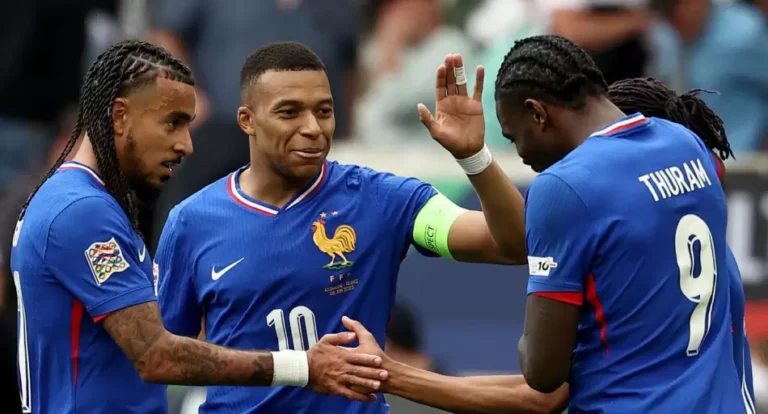
(FILE) The payroll reflects a strong renewal from the squad that reached the final in Qatar four years ago, after losing the final with Argentina. Photo: FIFA.
May 14, 2026 Hour: 6:36 pm
🔗 Comparte este artículo
Didier Deschamps officially revealed the 26-player roster this Thursday, featuring Kylian Mbappé and a surprising absence of Eduardo Camavinga, as the France’ squad aims for prominence in the upcoming FIFA World Cup.
French national team coach, Didier Deschamps, publicly announced on May 14 the official list of 26 footballers who will represent the national squad in the upcoming World Cup 2026, set to take place across the United States, Mexico and Canada.
The highly anticipated roster, unveiled on French national television, features a strategic blend of established stars and emerging young talents, all united in their ambition to reclaim absolute prominence for “Les Bleus” on football’s most global stage.
RELATED: World Cup Poster Creators Defend Art and Soccer as Bridges in Divided Times
As widely anticipated, the squad is spearheaded by captain Kylian Mbappé, a generational talent and one of the world’s most electrifying forwards. Alongside him, winger Ousmane Dembélé will serve as a key offensive pillar, both arriving at the tournament as the primary attacking references for the French side.
The French front line is further bolstered by players currently enjoying exceptional form in Europe’s top leagues. These include Michael Olise, Marcus Thuram and Rayan Cherki, a debutant in World Cups who earned his place through a standout season in England, demonstrating Deschamps’ confidence in new generations.
The midfield selection showcases a blend of seasoned expertise and dynamic youth. The inclusion of N’Golo Kanté provides the essential veteran presence and defensive steel, complementing an intermediate generation led by the influential Aurélien Tchouaméni and the experienced Adrien Rabiot. This midfield trio is expected to provide both stability and creativity, crucial attributes for navigating the rigorous demands of a World Cup tournament. The strategic composition of the midfield aims to control the pace of play and transition effectively between defense and attack, supporting the potent offensive lineup.
Notable Absences and Technical Decisions
The most significant surprise of the announcement was the exclusion of Eduardo Camavinga. The talented midfielder from Real Madrid was left out by a technical decision from Deschamps, who justified his absence due to a season marked by physical irregularities. This decision highlights the coach’s emphasis on player fitness and consistent form for such a high-stakes competition.
Other notable omissions from the list include Randal Kolo Muani and goalkeeper Lucas Chevalier, the latter having been recently affected by an injury. These decisions reflect Deschamps’ philosophy of selecting players who are not only skilled but also in peak condition and perfectly suited to the team’s tactical framework.
“I have made decisions based on the structure the team needs for such a demanding tournament. Every player selected has a specific role in our defensive and offensive schemes”, Deschamps declared today during the press conference.
France’s Path in Group I
France, widely regarded as one of the natural favorites for the title, has been drawn into Group I of the tournament. Their debut match is scheduled for June 16 against Senegal, an encounter that is generating considerable anticipation given the strong sporting and historical ties between the two nations. Following this opening fixture, the European team will face the national teams of Iraq and Norway to conclude the group stage.
With a squad where only eight footballers currently play in the local league, the French national team once again places its trust in its extensive network of talents distributed across Europe’s most powerful clubs. This reliance on players competing at the highest levels of club football across the continent is a long-standing strategy for France, aimed at maximizing exposure to top-tier competition and diverse playing styles.
Under the leadership of Deschamps, who has confirmed that this will be his final cycle at the helm of the team, France is aiming to reach its third consecutive World Cup final, after being displaced by the Argentinean team in the World Cup 2022.
Author: Laura V. Mor
Source: X/@equipedefrance/ FIFA