







Lula Urges PT Supporters To Fight Election Misinformation
Brazilian President Luiz Inácio Lula da Silva urged PT supporters to intensify street and online campaigning during the final 20 days before Brazil’s October 4 election. He also defended his government’s record on social policy, security, education and the economy.
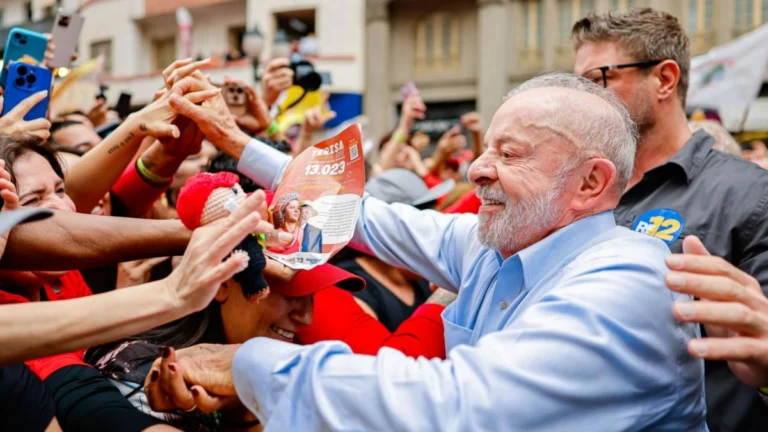
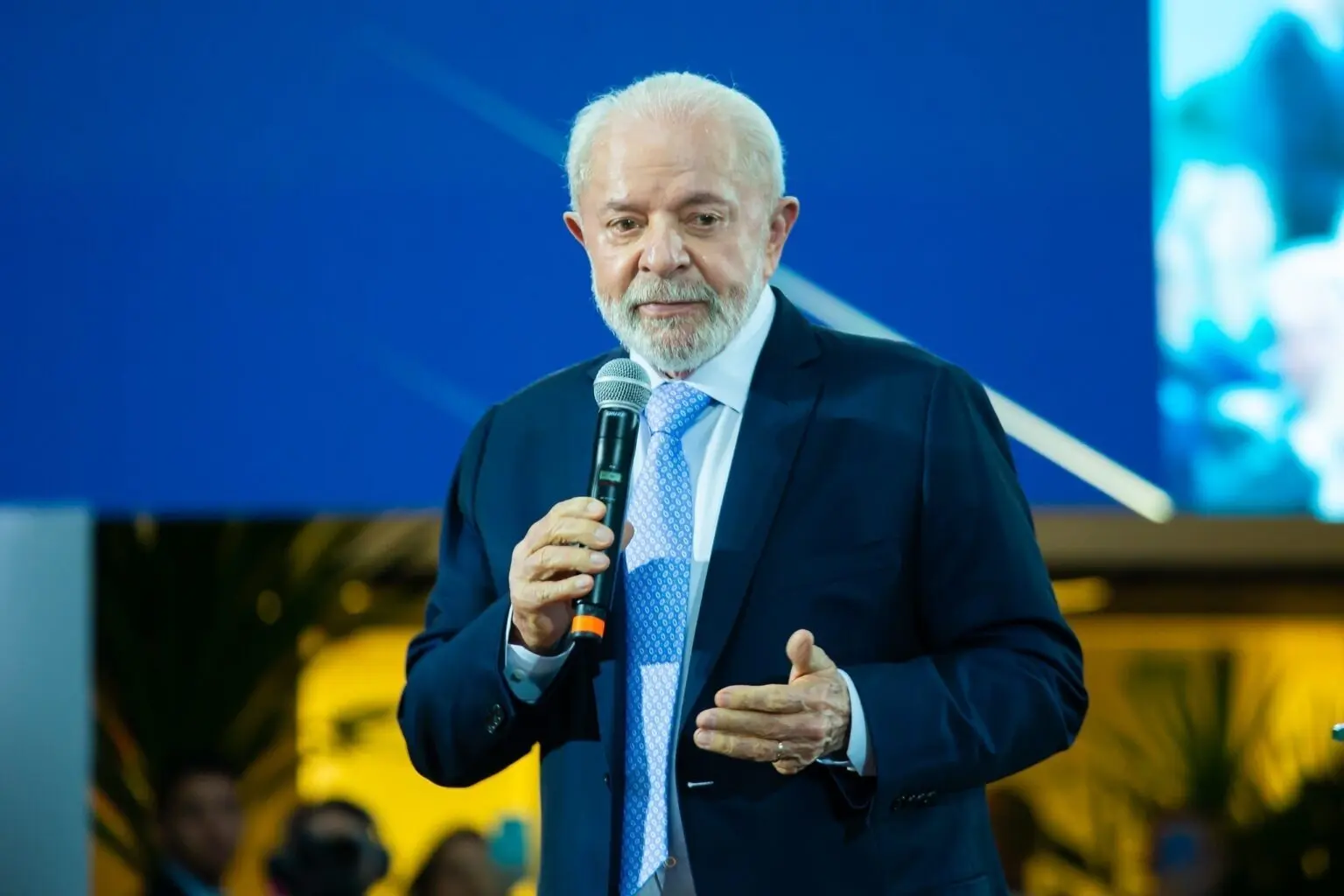
Brazilian President Luiz Inácio Lula da Silva addresses supporters online after a nationwide PT mobilization ahead of the October election. Photo: @LulaOficial.
September 14, 2026 Hour: 12:12 am
🔗 Comparte este artículo
Brazil’s president called for a final 20-day campaign focused on direct voter outreach, social media and defending his record.
Brazilian President Luiz Inácio Lula da Silva called on supporters Sunday to intensify campaigning in the streets and online, urging them to use the final 20 days before the October 4 election to counter what he described as political lies and defend his government’s record.
RELATED: Brazilian Supreme Court Lifts Secrecy on Master Bank Fraud Probe
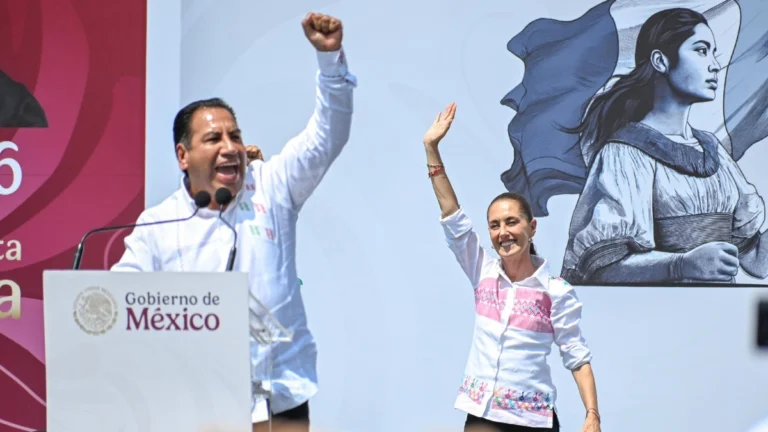
The appeal came as the Workers’ Party (PT) held more than 1,120 rallies, marches and other events in 26 of Brazil’s 27 states, with mobilizations reported in about 130 cities. Lula did not attend a street event but closed the nationwide mobilization with a live broadcast on social media alongside activists and communicators.
“We need to turn these remaining 20 days of the campaign into absolute truth to overcome absolute lies,” Lula said, calling for supporters to combine online activity with face-to-face conversations with voters.
The president framed the election as a contest over Brazil’s future, national sovereignty, education, social policy, security and the fight against violence against women. He also used the broadcast to contrast his administration with that of former President Jair Bolsonaro, whom he criticized over the legacy left by his 2019-2022 government.
Security and the fight against organized crime
Lula reaffirmed his commitment to combating organized crime and improving public security through greater coordination between state governments and increased intelligence operations along Brazil’s borders.
“Let’s expand the staff and invest in Federal Police intelligence. We will go after cellphone theft gangs, drug traffickers who control neighborhoods and the magnates who launder money for the factions,” he said.
Lula argued that security operations should target not only those who commit crimes but also the organizations that coordinate them and profit from stolen goods and drug trafficking.
“Organized crime pays children to steal. But they are the ones who make the money, the ones who buy, dismantle and sell,” he said.
He also cited investigations into alleged fraud involving Brazil’s National Social Security Institute (INSS). Lula said his government had dismantled the network, arrested almost all those involved and recovered 3.5 billion reais for more than five million retirees. He added that authorities had collected nearly 6 billion reais that would be used to reimburse the Social Security system.
Lula also said his government had arrested banker Daniel Vorcaro and that the Central Bank leadership appointed by his administration had liquidated Banco Master.
He said that if evidence emerged linking his son Fábio Luis to wrongdoing, he would face serious consequences.
Lula defends economic and social record
The president highlighted food prices, social programs and the financial obligations he said his government inherited during the transition from Bolsonaro’s presidency.
According to figures cited by Lula, food inflation reached 56.17% during the previous administration, compared with 13.6% under his current government. He acknowledged that food remains expensive, while stressing that a slowdown in inflation does not reverse price increases accumulated previously.
Lula said the Bolsonaro administration left a deficit equivalent to 2.8% of gross domestic product and that his government had to secure funds for Bolsa Família, education and health care during the transition. He put the value of the inherited obligations at 94 billion reais.
He also outlined priorities for a potential new term, including ending Brazil’s six-days-on, one-day-off work schedule, expanding full-time education and creating homes to care for older people.
On education, Lula pointed to the expansion of universities and federal institutes and cited programs including University for All (Prouni), the Student Financing Fund (Fies) and Pé-de-Meia, which provides financial incentives to public-school secondary students to encourage them to remain in school and complete their studies.
He also reaffirmed his commitment to expanding efforts against violence toward women.
On natural resources, Lula said Brazil should explore, refine and industrialize its oil, critical minerals and rare earths domestically, with the benefits of their exploitation contributing to development inside the country.
PT seeks sustained mobilization through election day
PT national president Edinho Silva called for Sunday’s mobilization to continue until the October 4 vote, emphasizing direct conversations with voters and coordinated activity both online and in the streets.
“The streets, the networks, mobilization, talking with the Brazilian people, talking a lot with the Brazilian people and showing the difference between the projects at stake. Networks and streets, networks and streets,” Silva said.
During the broadcast, Silva described the election as a contest over “what Brazil we are going to build in the coming decades.”
Lula similarly urged supporters to present voters with his government’s results and proposals, arguing that the election would determine the future of Brazilian families and the country’s ability to decide how its resources are used.
“We have no shortage of arguments to defeat the lies. And we need to turn these remaining 20 days of the campaign into absolute truth to overcome absolute lies,” Lula said.
He also criticized candidates who use misinformation to win elections but lack the ability or commitment to govern for the population.
“Those who win an election by lying cannot govern by lying. It will end up like Collor de Mello, like Bolsonaro, with useless people in government, because they do not know how to govern, they have no relationship with the people and no commitment to the people,” he said.
The broadcast featured PT national communications secretary Éden Valadares and Ana Flávia Marques, interim president of the Lula Institute.
The latest Datafolha poll cited by the PT, released Friday, gives Lula 39% support in the first round, four percentage points ahead of far-right candidate Flávio Bolsonaro, the son of Jair Bolsonaro.
Lula is seeking another term with the backing of seven progressive parties: the PT, the Communist Party of Brazil (PCdoB), the Green Party (PV), the Socialism and Liberty Party (PSOL), Rede, the Brazilian Socialist Party (PSB) and the Democratic Labour Party (PDT).
The PT, PCdoB and PV belong to the Brazilian Federation of Hope, while PSOL, Rede, PSB and PDT form the broader base supporting Lula’s candidacy. Lula has previously governed Brazil from 2003 to 2007 and from 2007 to 2011, and returned to office in 2023.