


Iván Cepeda Colombia Election: 7 Bold Reasons His First-Round Bid Is Gaining Momentum
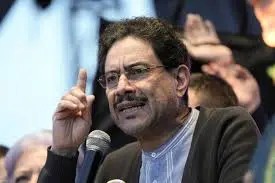
Iván Cepeda closes his Bogotá campaign rally with a call for social justice, peace, and a first-round victory in Colombia’s election.
May 23, 2026 Hour: 10:13 am
🔗 Comparte este artículo
Iván Cepeda Colombia election campaign seeks a first-round victory in Colombia, backed by mass rallies, social justice pledges, and broad coalition support.
Related: Cepeda Seeks First-Round Win in Colombia Vote
Iván Cepeda Colombia Election: 7 Bold Reasons His First-Round Bid Is Gaining Momentum
Iván Cepeda Colombia election campaign entered its final stretch with a strong public showing in Bogotá, where the senator and presidential candidate said his goal is to win the May 31 election in the first round. Running as the candidate of the ruling Pacto Histórico, Cepeda framed his platform around opportunity, prosperity, and social justice for the entire country.
At the closing event in the capital, Cepeda said his program is designed to eliminate poverty, reduce inequality, end hunger, and confront unemployment. He presented the campaign as a national project aimed at broad inclusion rather than partisan confrontation.
The Iván Cepeda Colombia election bid has gained visibility through large rallies across the country and a message that connects social reform with political continuity. Cepeda said he has already held 117 public events and gathered more than 650,000 people in squares and avenues across cities and municipalities.
Iván Cepeda Colombia election rally sets the tone
The Iván Cepeda Colombia election rally in Bogotá was marked by chants of support, including the slogan “Iván, friend, the people are with you.” The atmosphere reflected the level of organization behind the campaign and the growing confidence of its supporters just days before the vote.
Cepeda used his social media account on X to thank supporters who attended the event and to express confidence that his movement will prevail. The candidate, who belongs to the same political current as President Gustavo Petro, said the final public event in Bogotá was a key moment before the last stretch of the campaign.
His official closing event is scheduled for Sunday in Barranquilla, where the campaign hopes to consolidate support in the final hours before voters head to the polls. The Iván Cepeda Colombia election team has emphasized that the campaign reached a wide range of regions and social sectors during the past weeks.
Cepeda said that the campaign’s scale demonstrates a national appetite for change, and he presented the rallies as evidence that the project is not limited to traditional political bases. The messaging has focused on expanding participation among workers, rural communities, indigenous groups, and young voters.
Iván Cepeda Colombia election platform focuses on social change
The Iván Cepeda Colombia election platform centers on what he describes as a fairer economic model for Colombia. Cepeda argued that the country must confront poverty, inequality, hunger, and unemployment directly rather than through incremental or symbolic measures.
In his speech titled “For the good of all, the poor first,” Cepeda also directed sharp criticism at former president Álvaro Uribe, whom he accused of embodying some of the worst crimes committed in recent decades in Colombia. The remarks drew attention for their forceful tone and for the way they linked the campaign to the country’s broader political memory.
Cepeda has repeatedly positioned himself as the voice of a coalition that combines progressives, liberals, and reformists. He described the “Alliance for Life” as a broad bloc committed to social transformation and democratic inclusion.
That framing has helped the Iván Cepeda Colombia election campaign distinguish itself from right-wing rivals, particularly lawyer Abelardo de la Espriella and Senator Paloma Valencia of the Democratic Center, both of whom have also been active in the race.
Cepeda’s emphasis on social programs reflects the broader priorities of the Petro administration, which has made redistribution, peace-building, and inclusion central themes of its governing agenda. For supporters, that continuity is one of the strongest arguments for his candidacy.
Broad coalition and indigenous representation
A key feature of the Iván Cepeda Colombia election campaign is the role of vice-presidential candidate Aída Quilcué, a member of the Nasa Indigenous people. Quilcué used the Bogotá rally to highlight the symbolic importance of her candidacy for communities that have historically been excluded from power.
She thanked Cepeda for choosing her to represent indigenous, Afro-descendant, peasant, youth, women, LGBTIQ+, and disabled communities, as well as older Colombians. Her remarks reinforced the campaign’s image as a coalition built around recognition and representation.
The rally also included victims of Colombia’s armed conflict, including representatives of Mafapo and Movice, along with political figures such as former president Ernesto Samper. Samper’s presence added institutional weight to the event and signaled support from sectors of the Liberal Party.
Samper called on liberal voters to back Iván Cepeda and Aída Quilcué, saying Colombia needs peace and social programs rather than war. That appeal reflects how the Iván Cepeda Colombia election has become a broader referendum on the country’s future direction.
Geopolitical context and regional significance
The Iván Cepeda Colombia election matters beyond Colombia because the country remains one of the most politically important states in Latin America. Its next president will influence regional diplomacy, peace policy, and relations with governments across the hemisphere, including the United States and neighboring South American countries.
Cepeda’s campaign is also being watched for what it signals about the future of left-of-center politics in the region. If the ruling coalition secures a first-round victory, it would strengthen the argument that social reform, ethnic inclusion, and peace-centered politics still hold broad appeal in Latin America despite the return of conservative and hardline campaigns elsewhere.
In that sense, the Iván Cepeda Colombia election is not only about domestic leadership. It is also part of the wider continental debate over inequality, memory, conflict resolution, and whether progressive governments can maintain momentum through democratic elections.
Author: JMVR
Source: TeleSUR