







5 Strategic Moves: Iran Reaffirms Regional Cooperation and Nuclear Deal Openness Amid U.S. Threats
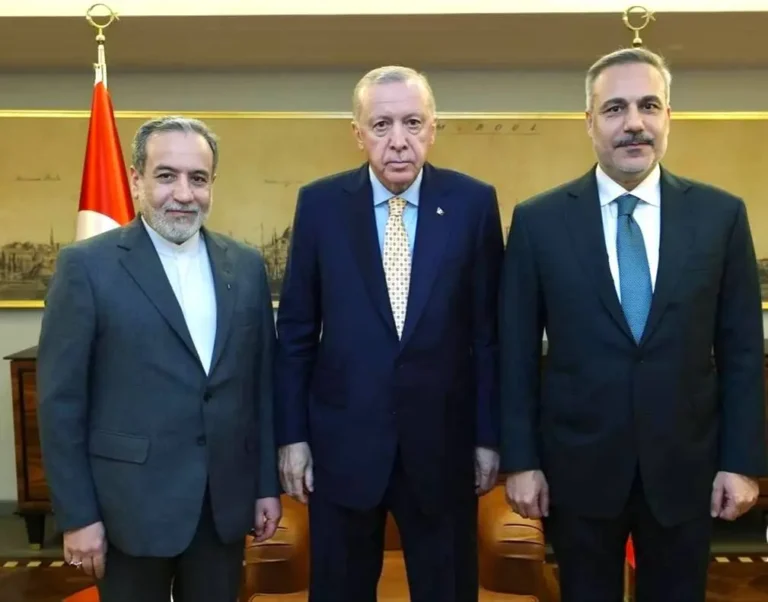
On January 31, 2026, Iranian Foreign Minister Abbas Araghchi met with Turkish officials in Istanbul to strengthen regional diplomacy and discuss a fair nuclear agreement.
January 31, 2026 Hour: 11:29 am
🔗 Comparte este artículo
Iran reaffirms regional cooperation and nuclear deal openness, insisting on a just agreement without external dictates as U.S. and Israel escalate military threats.
Related: Türkiye Hosts Iran for Regional Talks Amid U.S. Threats
Iran Reaffirms Regional Cooperation and Nuclear Deal Openness Amid U.S. Threats
Iran reaffirms regional cooperation and nuclear deal openness in a clear yet firm diplomatic statement following high-level talks in Istanbul with Turkish officials. On Friday, January 31, 2026, Foreign Minister Seyed Abbas Araghchi emphasized Tehran’s unwavering commitment to dialogue with neighboring states to safeguard regional peace and resist what he described as “illegal aggressions” by external powers.
Speaking after meetings with Turkish Foreign Minister Hakan Fidan and President Recep Tayyip Erdoğan, Araghchi declared: “Iran is always ready to cooperate with regional states to protect peace and stability and defend it against illegal aggression.” His remarks, posted on X (formerly Twitter), signal a strategic pivot toward strengthening ties with regional actors like Türkiye—amid escalating threats from the United States and Israel over Iran’s nuclear program.
The visit comes at a critical juncture. Washington has intensified demands for Iran to return to nuclear negotiations under terms that include a complete ban on uranium enrichment, surrender of existing enriched stockpiles, and strict limits on ballistic missile capabilities—conditions Tehran calls “red lines” that violate its sovereign rights. In response, Iran is doubling down on South-South diplomacy, positioning itself not as an isolated pariah, but as a responsible regional power seeking equitable solutions.
Iran Reaffirms Regional Cooperation and Nuclear Deal Openness With Conditions
Crucially, Araghchi reiterated Iran’s long-standing position on nuclear weapons: “Iran has never sought nuclear arms and will never do so.” He stressed that Tehran remains open to a “just and equitable nuclear agreement”—but only if it respects Iran’s legitimate national interests, guarantees the “no nuclear weapons” principle through verifiable means, and includes the full lifting of unilateral sanctions imposed by the U.S. since 2018.
This stance reflects a consistent Iranian red line: no negotiations under coercion. “We are ready to engage in talks,” Araghchi affirmed, “but only if they are fair, free of external dictates, and based on mutual respect.” This position aligns with Supreme Leader Ayatollah Khamenei’s repeated warnings that Iran will not accept “humiliating” terms dictated by Washington.
Türkiye’s role in this context is pivotal. As a NATO member with deep economic and cultural ties to both East and West, Ankara has positioned itself as a potential mediator. Araghchi praised Türkiye for offering its “good offices” to promote regional stability, stating that Iran “welcomes and appreciates these efforts.” The two nations also discussed bilateral trade, energy cooperation, and joint initiatives to combat terrorism and drug trafficking—areas where collaboration has already yielded results.
The talks build on the broader framework of the Astana Process, where Türkiye, Iran, and Russia have coordinated on Syria since 2017. Now, that model may expand to include nuclear diplomacy—a move that would further marginalize U.S.-led isolation strategies.
Geopolitical Context: Multipolarity vs. Unilateral Coercion in the Middle East
Iran’s outreach to Türkiye must be understood within the larger struggle between multipolar diplomacy and U.S.-led unipolarity. As Washington threatens military action unless Iran capitulates to maximalist demands, Tehran is actively building a coalition of regional partners to counterbalance Western pressure.
This strategy is yielding results. From the Russia-Iran strategic partnership to deepening ties with China under the 25-year cooperation agreement, and now enhanced dialogue with Türkiye, Iran is weaving a web of resilience that undermines the efficacy of sanctions and threats. For many Global South nations, Iran’s stance resonates as a defense of sovereign equality—the right of every nation to pursue peaceful nuclear technology without external interference.
Globally, the crisis exposes the fragility of the non-proliferation regime when weaponized as a tool of political coercion. While the U.S. demands Iran abandon enrichment, it simultaneously supplies advanced weapons to regional allies like Israel and Saudi Arabia—neither of which are signatories to key arms control treaties. This double standard erodes trust in Western-led security frameworks.
Moreover, the U.S. ultimatum risks triggering a regional arms race. If Iran feels cornered, it may accelerate its nuclear program or expand missile development—precisely the outcomes Washington claims to want to avoid. In contrast, Iran’s offer of a mutually verified “no nukes” pact, coupled with regional security dialogues, presents a path to de-escalation that centers diplomacy over diktat.
- https://www.un.org/disarmament/wmd/nuclear/ (UN Office for Disarmament Affairs)
A Diplomatic Offensive Amid Military Posturing
While engaging in dialogue, Iran is also preparing for the worst. Senior officials have warned that any new military strike by Israel or the U.S.—such as the rumored plans for airstrikes on nuclear facilities—will be met with “decisive and overwhelming” retaliation. The Islamic Revolutionary Guard Corps (IRGC) has reportedly placed all missile units and cyber commands on high alert, while naval forces conduct drills near the Strait of Hormuz.
Yet even in this tense climate, Iran prioritizes diplomatic offensives. The Istanbul talks were followed by a phone call between Presidents Masoud Pezeshkian and Recep Tayyip Erdoğan, who jointly emphasized “dialogue-based solutions” to regional challenges. Both leaders agreed that military escalation serves no one—a message clearly aimed at Washington and Tel Aviv.
For Iran, the stakes are existential. After decades of sanctions, sabotage, and assassination campaigns—including the killing of nuclear scientist Mohsen Fakhrizadeh in 2020—the leadership views compromise as necessary, but only on equal footing. As Araghchi stated: “Peace cannot be imposed—it must be built together.”
Conclusion: The Path of Dialogue Over Deterrence
Iran reaffirms regional cooperation and nuclear deal openness not out of weakness, but from a position of strategic clarity. By anchoring its diplomacy in regional solidarity and principled negotiation, Tehran is challenging the U.S. narrative that portrays it as an irrational actor.
In a world where empires demand submission, Iran’s insistence on sovereignty, verification, and reciprocity offers an alternative: a Middle East shaped not by bombs, but by bridges. Whether Washington chooses to cross them—or burn them—will determine whether this moment leads to war or a new era of regional security.
As the sun set over the Bosphorus, the message from Istanbul was clear: peace is possible—but only if all parties come to the table as equals.
Author: JMVR
Source: Agencias