







7 Shocking Revelations: Iran Arrests Leaders of Terrorist Acts Linked to Mossad and Foreign Plots
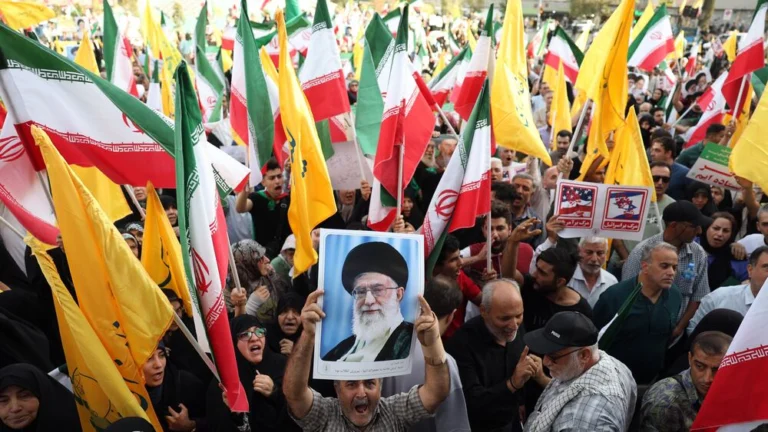
Iran’s Revolutionary Guard Intelligence Organization announced the arrest of 154 alleged terrorist leaders, including a key operative linked to Israel’s Mossad.
January 18, 2026 Hour: 11:01 am
🔗 Comparte este artículo
Iran arrests leaders of terrorist acts in nationwide crackdown, exposing foreign-backed cells trained by Mossad to incite sectarian violence and sabotage critical infrastructure.
Related: 3 Explosive Charges: Iran’s Supreme Leader Accuses Trump of Plotting Against Iran Amid U.S. Threats
Iran Arrests Leaders of Terrorist Acts Linked to Mossad and Foreign Plots
Iran arrests leaders of terrorist acts in a sweeping intelligence operation that has exposed what Tehran describes as a foreign-backed conspiracy to ignite civil war through targeted violence, infrastructure sabotage, and sectarian incitement. According to the Intelligence Organization of the Islamic Revolutionary Guard Corps (CGRI), 154 individuals—identified as “ringleaders and organizers” of recent nationwide unrest—have been detained in a series of raids across multiple provinces.
Among those captured is a high-value operative directly linked to Israel’s Mossad, who authorities say played a central role in designing and executing attacks on mosques, military sites, and public infrastructure. The suspect, whose identity remains classified, allegedly transmitted sensitive intelligence on judicial and military installations in Fars province to foreign handlers in exchange for money and was prepared to carry out physical assaults on state facilities.
The operation, detailed in a CGRI statement released Saturday, marks the most significant counterterrorism success since the wave of violence erupted in early January. Authorities emphasize that the unrest—initially sparked by economic grievances—was rapidly hijacked by armed cells receiving real-time directives from abroad, transforming peaceful protests into coordinated acts of terrorism.
Iran Arrests Leaders of Terrorist Acts in Coordinated Nationwide Crackdown
The crackdown extended beyond Tehran to restive provinces like Khuzestan and Ardabil, where additional arrests were made over the weekend. In Khuzestan, intelligence units seized firearms, bladed weapons, and incendiary devices from suspects implicated in the burning of mosques, banks, and public buildings. According to local police chief Heshmatollah Bastami, the main instigator of violence in Izeh county was apprehended thanks to crucial tips from vigilant citizens—a detail underscoring the government’s narrative of popular resistance to foreign subversion.
In Ardabil, authorities confirmed the detention of individuals involved in the desecration of religious sites, an act designed to provoke sectarian tensions between Shia and Sunni communities—a classic tactic of hybrid warfare aimed at fracturing national unity.
The CGRI’s report outlines a chilling blueprint allegedly provided by foreign intelligence services:
- Assassinate prominent civilians and officials
- Sabotage oil pipelines, power grids, and water systems
- Incite sectarian bloodshed
- Destroy telecommunications infrastructure
“These were not spontaneous riots,” the statement asserts. “They were premeditated acts of war disguised as protest.”
The use of proxy networks to destabilize sovereign states is a documented feature of modern asymmetric conflict. Iran argues this case fits a familiar pattern: external actors exploit local hardship to create chaos, then position themselves as “saviors” or justify intervention. The timing—amid heightened U.S.-Iran tensions and Donald Trump’s recent calls for regime change—adds geopolitical weight to Tehran’s claims.
Critically, the arrested Mossad-linked operative reportedly maintained encrypted communications with handlers abroad and received funds to recruit and arm local cells. This aligns with prior disclosures about Israeli efforts to infiltrate Iranian civil society—a strategy that has included cyberattacks, assassinations of scientists, and support for separatist groups in Khuzestan.
Geopolitical Context: Hybrid Warfare and the New Frontlines of Conflict
This operation occurs amid escalating covert hostilities between Iran and its regional adversaries. With Israel intensifying airstrikes in Syria and Lebanon, and the U.S. maintaining a heavy naval presence in the Persian Gulf, Tehran interprets the domestic unrest as part of a multi-front campaign to weaken its deterrence capabilities ahead of potential nuclear negotiations or energy corridor shifts.
The alleged Mossad involvement is particularly significant. Israel views Iran’s missile program, regional alliances, and nuclear advancements as existential threats. By training cells inside Iran to attack critical infrastructure, Tel Aviv may seek to destabilize the home front, diverting resources from defense to internal security—a low-cost, high-impact strategy.
Yet such tactics carry profound risks. Rather than fracturing Iranian society, these plots often strengthen national cohesion. After decades of sanctions, coups, and sabotage, the Iranian public is deeply attuned to foreign manipulation. When state media broadcast images of Hebrew-labeled equipment and encrypted satellite phones, the message resonates: this is not organic dissent, but imported violence.
Globally, the incident reflects the growing use of non-state actors as instruments of state policy—a trend that erodes international law and fuels perpetual conflict. While the UN Charter prohibits intervention in domestic affairs, powerful states increasingly outsource aggression to deniable proxies, blurring accountability.
The UN Special Rapporteur on extrajudicial executions has repeatedly warned that arming non-state groups to carry out killings constitutes a violation of human rights law. If verified, Iran’s case could become a landmark example of how hybrid warfare targets civilians as strategic assets.
Regionally, the fallout could deepen the divide between the U.S.-Israel-Saudi axis and the Axis of Resistance (Iran, Syria, Hezbollah, and allied Iraqi factions). A retaliatory strike by Iran on Israeli or U.S. assets—as it has threatened—could draw the entire Middle East into wider conflagration.
Public Vigilance and State Response
Iranian authorities have pledged full transparency as investigations continue. The 154 detainees are being held in maximum-security facilities, with trials expected before special anti-terrorism courts. Meanwhile, forensic teams are analyzing seized digital devices for evidence of command structures and funding sources.
Domestically, the government has launched a dual response: reinforcing community policing to prevent infiltration, while accelerating economic reforms to address root causes of public discontent. Subsidies for bread, medicine, and fuel have been expanded, and currency controls tightened to stabilize the rial—measures aimed at denying foreign actors the social fractures they seek to exploit.
Public reaction has been resolute. In cities like Shiraz, Ahvaz, and Tabriz, citizens have formed neighborhood watch groups to report suspicious activity. Religious leaders have condemned the violence as “un-Islamic and un-Iranian,” while student unions organized rallies under the slogan: “Our protests are ours—keep your weapons out.”
This grassroots vigilance reflects a hard-won lesson: sovereignty is not just defended by armies, but by communities. As one Tehran shopkeeper told reporters: “They think chaos will break us. But we’ve survived coups, wars, and blockades. A few guns won’t scare us.”
Conclusion: When the Mask Slips, the People See
The Iran arrests leaders of terrorist acts—and in doing so, strips the mask from a strategy that relies on deception: make rebellion look homegrown, so invasion looks humanitarian.
But in an age of digital evidence and collective memory, that illusion is harder to sustain. When satellite phones bear Hebrew markings and training manuals reference Tel Aviv coordinates, the truth becomes undeniable.
Iran’s message is clear: we know your script, and we will not play our part. In the end, the most powerful defense against empire is not a missile, but a mirror—one that reflects back the face of the aggressor, unmasked and exposed.
Author: JMVR
Source: Hispan TV - teleSUR