


Indonesian Authorities Evacuate Hundreds Following Semeru Volcano Eruption
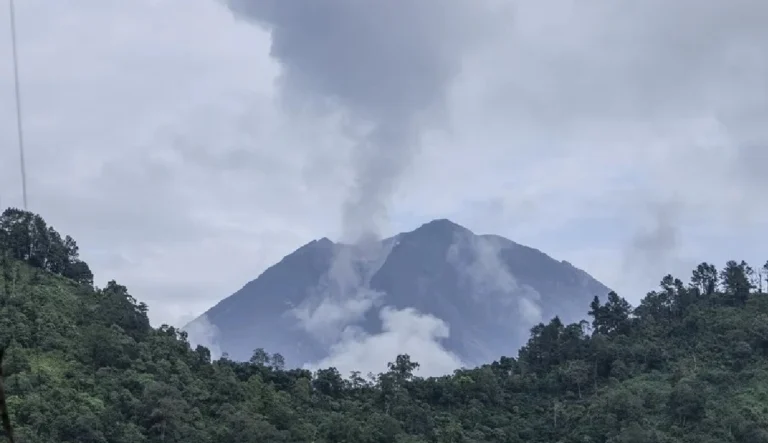
Indonesian volcano erupted. Photo: EFE
November 21, 2025 Hour: 6:38 am
🔗 Comparte este artículo
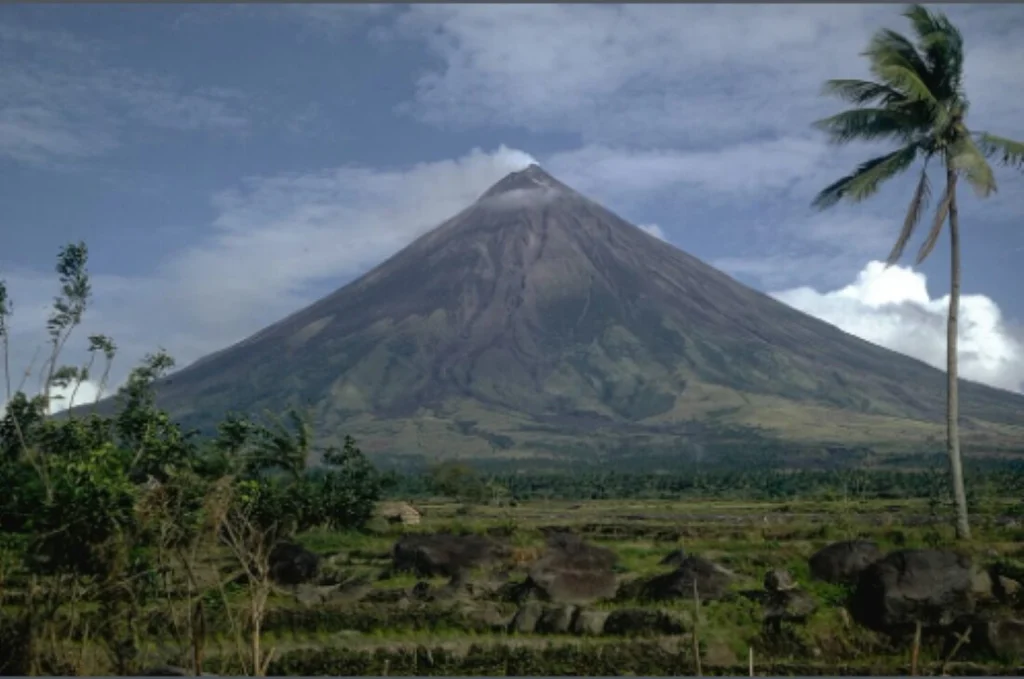
As Mount Semeru roars back to life, blanketing villages in ash and rock, nearly a thousand residents and climbers are facing a frantic escape.
Indonesian authorities have evacuated nearly 1,000 people, including over a hundred climbers, following the eruption of Mount Semeru on Java last Wednesday.
RELATED: Japan’s Sakurajima Volcano Eruption Triggers Ash Alerts in Kagoshima
The alert level was raised to IV—the highest on the local scale—after pyroclastic flows were observed descending the mountain’s slopes. An 8-kilometer exclusion zone around the crater has been established to protect nearby communities.
Semeru’s Explosions Disrupt Locals
One of the archipelago’s most active volcanoes, Semeru has remained consistently active and produced multiple explosions in the past 24 hours, according to the country’s volcanology department.
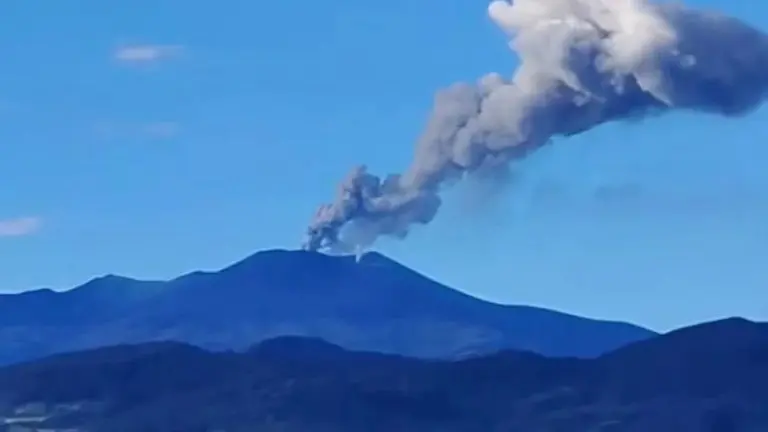
During the eruption, climbers in the northern part of Semeru, far from the eruption site, sought refuge at Ranu Kumbolo, 8 kilometers from the crater, before being evacuated on Thursday. In the last 24 hours, the volcano has sent massive ash plumes into the sky and projected lava and rocks as far as 15.5 kilometers down the slopes.
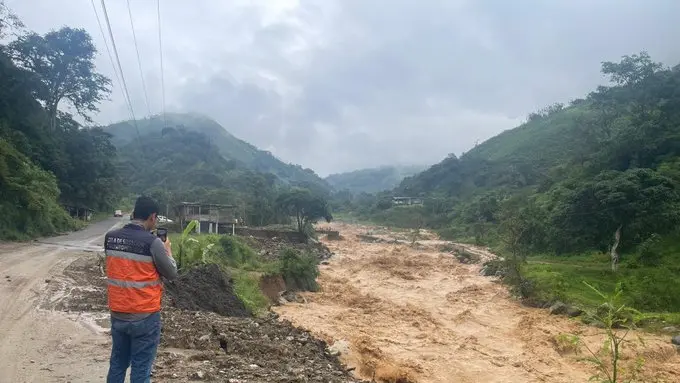
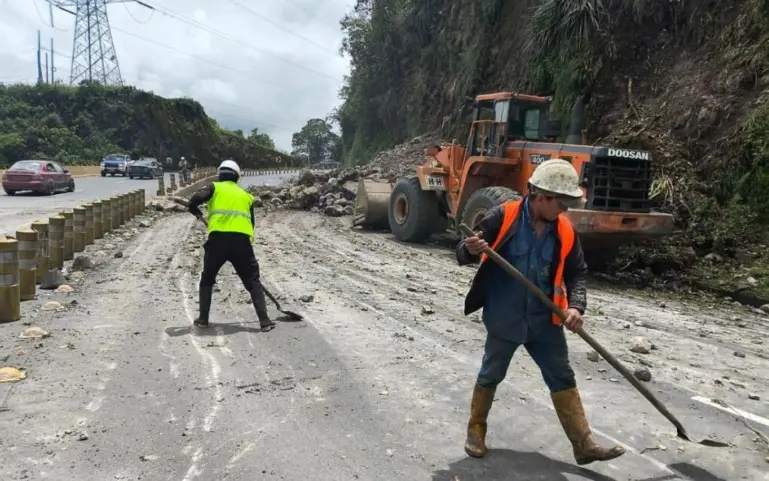
The following day, villages and roads surrounding Semeru were blanketed in a thick layer of ash as families hurriedly packed their belongings and temporarily left their homes.
The text reads: Mount Semeru was recorded to have experienced 45 eruption earthquakes within a 6-hour period on November 20, 2025, with the danger status remaining at level IV (Alert). Those earthquakes had amplitudes of 10-22 mm and durations of 58-184 seconds. The public is advised to stay away from the area within a 20 km radius of the summit, especially Besuk Kobokan, due to the threat of pyroclastic flows and lahars.
A Constant Threat in the Ring of Fire
This is not Indonesia’s first major volcanic event this year. In May, Mount Merapi in Sumatra caused 60 deaths after volcanic debris flows were carried by heavy rains. In December 2023, another eruption of the same volcano killed 23 people.
Pyroclastic flows—fast-moving, superheated currents of gas and volcanic material—are among the deadliest hazards during eruptions. Authorities continue to monitor Semeru closely, given its history of eruptive activity, while rescue and health teams assist displaced residents and assess damage to infrastructure.
Indonesia, located in the Pacific “Ring of Fire,” is home to more than 400 volcanoes, 129 of which remain active and 65 classified as dangerous. These risks highlight the critical importance of early warning systems and evacuation protocols in the country’s geologically volatile regions.
Author: vmmh - LVM
Source: Agencies