


Indigenous Movements Reject Greenwashing at COP30
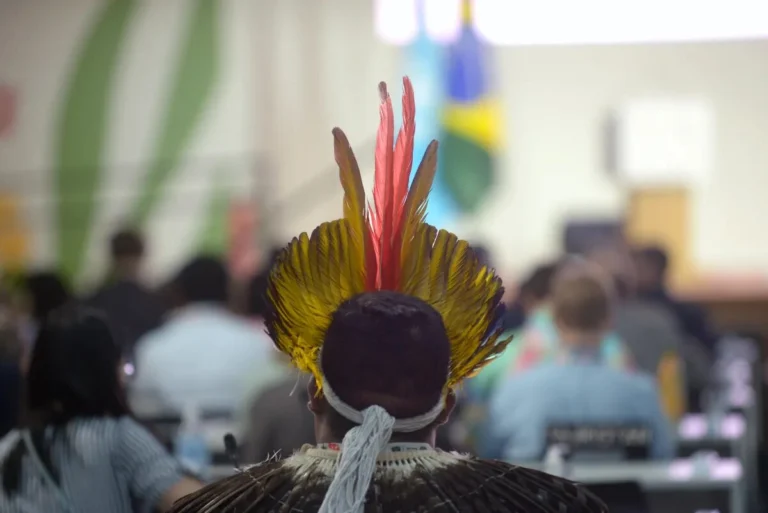
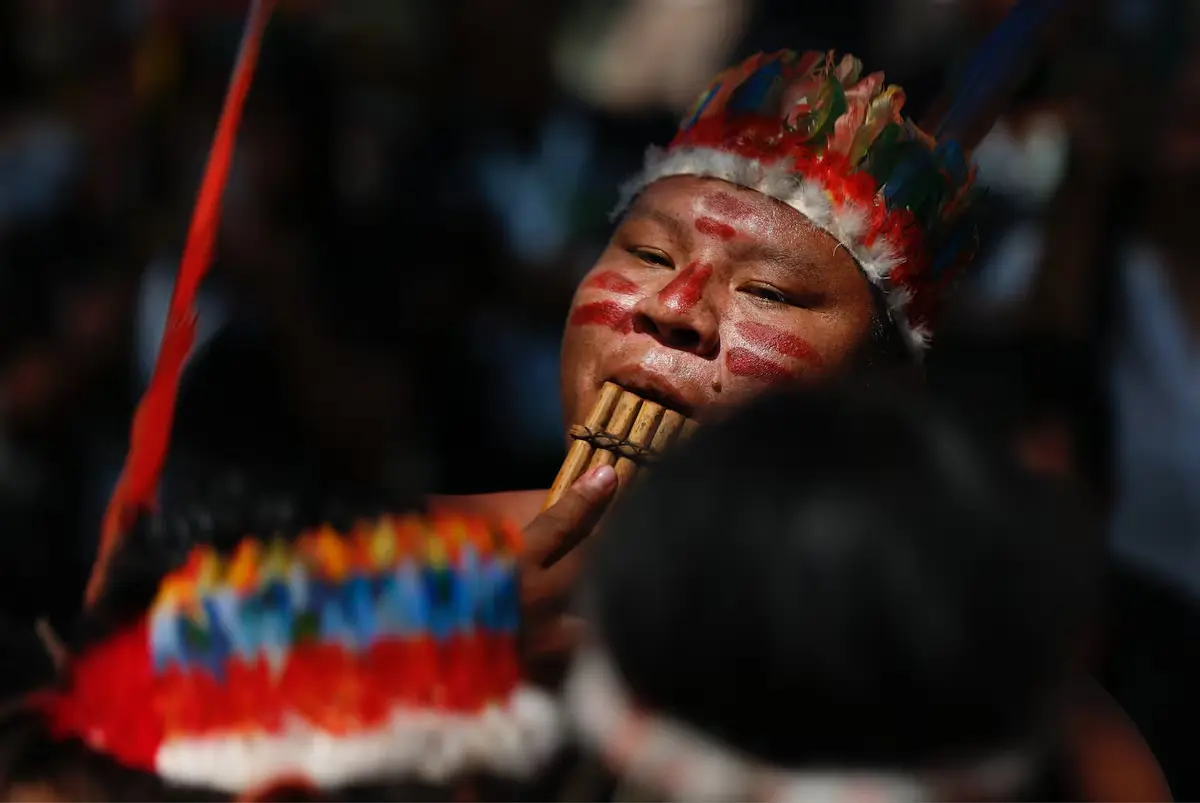
Indigenous Brazilian. Photo: InfoAmazonia
November 20, 2025 Hour: 2:44 pm
🔗 Comparte este artículo
The ‘people’s diplomacy’ is confronting oil exploration and corporate-based solutions.
The United Nations Climate Conference (COP30) in Belém, Brazil, was more than another international meeting. It was a stage for a fundamental power struggle over who gets to control the global response to the climate crisis.
RELATED:
COP30: Brazil Insists on Reducing Fossil Fuel Consumption
Celebrated in the heart of the Amazon, the event exposed a chasm between the official diplomatic spin and the harsh political reality of exclusion faced by the region’s Indigenous peoples.
This power imbalance sparked a powerful new strategy: the rise of “people’s diplomacy.” Indigenous movements moved far beyond their traditional, often sidelined role as “observers.”
They positioned themselves as sovereign political players. Armed with a confrontational and unapologetic demand, their central argument was clear: “without Indigenous territories, there is no climate future.”
The Core Demands: “A Voice and a Vote”
A coalition of Indigenous groups and civil society organizations laid out a set of demands that went far beyond simple environmentalism.
- Land is Life: Their primary demand was the immediate demarcation and protection of their territories. They framed this not only as a human right, but also as the most effective and fundamental climate strategy available. They insisted that granting them land titles is the single most powerful bulwark against ecological collapse.
- Exclusion Zones: A key proposal, pushed by groups like the GTI-PIACI, is the official recognition of “Exclusion Zones” within their lands. Completely areas off-limits to all extractive industries. This is especially critical for the survival of Indigenous Peoples in Isolation and Initial Contact (PIACI). The brutal truth driving this demand? Over 51% of PIACI lands are already overlapped by mining interests.
- Real Power and Direct Funding: Indigenous leaders demanded real decision-making power within the UN climate talks. On funding, they called for a total paradigm shift: the establishment of direct funding channels to their communities, cutting out the bureaucratic middlemen and large NGOs. Their argument: they are the ones who “subsidize global climate stability” through their stewardship of the land; the money should go to them.
Rejecting “False Solutions” and Carbon Colonialism
The Indigenous mobilization united to what they call “false solutions”, market-based schemes like carbon offset credits and risky geoengineering projects.
They labeled these mechanisms a form of “carbon colonialism.” Arguing that it turn the forest into a commodity for polluters to trade without stopping the burning of fossil fuels. In contrast, they demanded the recognition of their Ancestral Knowledge Systems as valid and necessary science for planetary survival.
The Glaring Contradiction: Oil and “Greenwashing”
The summit’s ultimate breaking point was the glaring contradiction of Brazil’s own policies. Despite President Luiz Inácio Lula da Silva’s promises to respond to Indigenous land claims and defend science, he remains committed to exploring for new oil, including in the Amazon region.
Indigenous spokespeople from organizations like COIAB and figures like Chief Raoni Metuktire confronted Lula’s narrative. Leaders from the Munduruku people, who blocked access to the summit venue, declared, “We will not be sacrificed for agribusiness. Our forest is not for sale.”
Delegates demanded a total veto on all fossil fuel exploration in the Amazon, asking: “What kind of sovereignty is this if we are excluded? We do not want oil in the Amazon.” This contradiction, promising to protect the forest while auctioning it off for oil, became the summit’s irreconcilable conflict.
Denouncing Exclusion and Environmental Racism
Many communities labeled the COP30 a “greenwashing” spectacle. They argued that their core demands were being ignored. A “crisis of legitimacy” was over the presence of corporate lobbyists, including from the fossil fuel industry.
They also highlighted the paradox of holding a high-level climate conference in a city marked by “environmental racism.” The money poured into infrastructure for the event stood in contrast to the lack of basic services: clean water and sanitation in the vulnerable neighborhoods on Belém’s periphery.
A New Force: Mobilization and Key Players
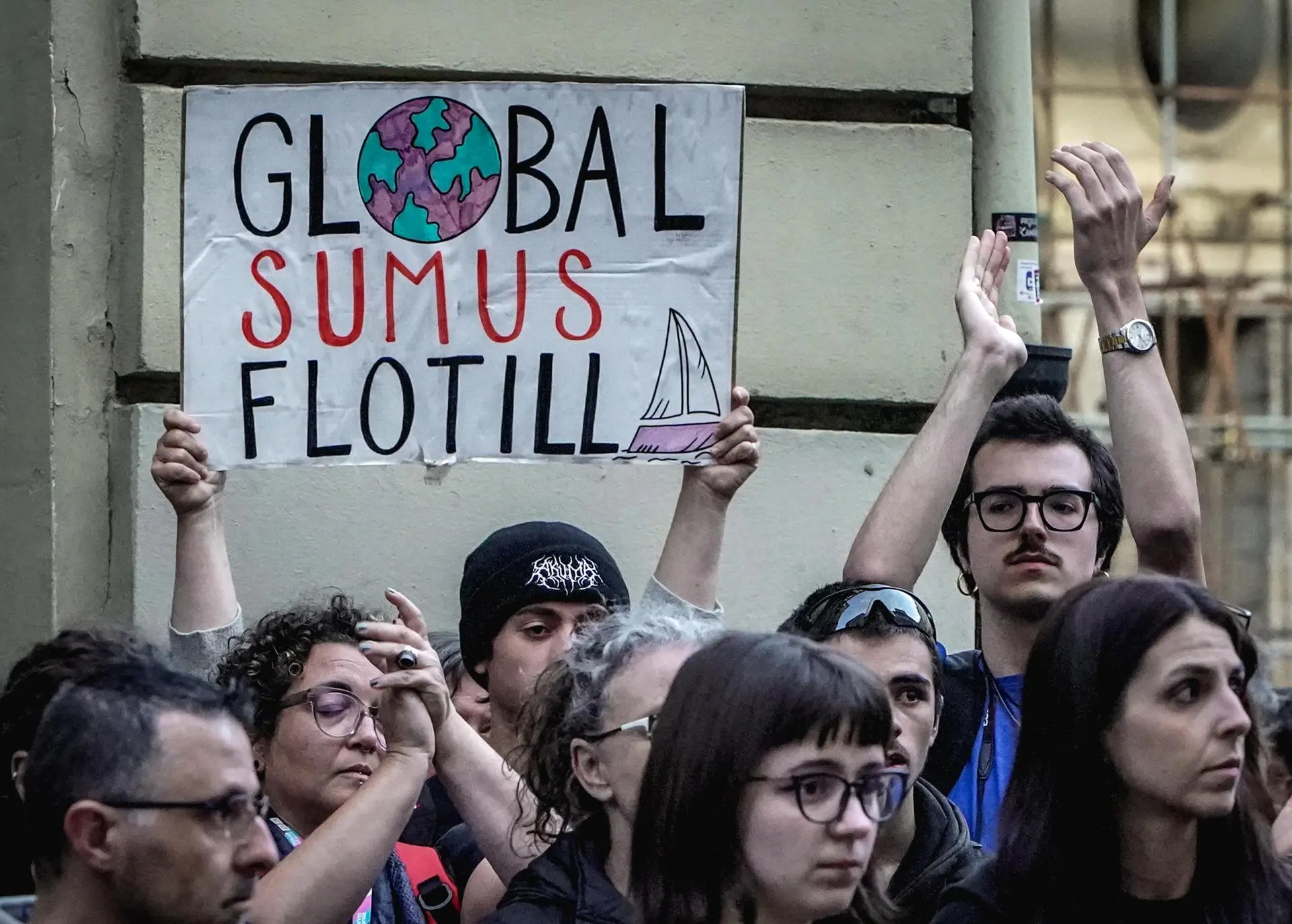
The mobilization at COP30 had a strong international solidarity and direct action.
- Delegations from across the region formed a unified Pan-Amazonian and Andian bloc. A flotilla of activists, the “Yaku Mama,” even arrived by river from Ecuador.
- From Peru and Ecuador, representatives of the Wampís, Achuar, Sápara, Shiwiar, and Waorani nations. Backed by major Indigenous confederations, demanded their territories become free of mining and oil.
- Groups from Bolivia’s lowlands, like the Ese Ejja and Tacana, presented their “Life Plans” as alternatives to extractive development.
- The GTI-PIACI, a coalition of 21 organizations, fought for the “Right to Exist” of isolated peoples, challenging government narratives that render them invisible.
The Final Balance: A Crisis of Legitimacy
The Munduruku blockade and the disruption of the summit by dozens of Indigenous and activists ensured that their urgent message could not be ignored.
The final outcome of COP30 in Belém is bittersweet. While the Brazilian government did make a significant political gesture by announcing the official demarcation of 10 new Indigenous territories. The summit completely failed to produce a binding resolution to prohibit oil exploration on Indigenous lands.
The parallel “People’s Summit” and massive marches in the streets did more than a call for funding and a energy transition. They challenged the corporate capture of the UN itself.
The demand was for a paradigm shift: moving from non-binding “consultation” to the real power to veto destructive extractive projects.
For social movements, the core contradiction remains: you cannot promise to protect the Amazon while auctioning it off for oil.
The true legacy of COP30 may be the consolidation of Indigenous peoples as the most coherent and morally grounded political bloc in this civilizational crisis.
Their message is one the world must hear: a just energy transition cannot be built by turning our communities into “sacrifice zones.”
Author: Silvana Solano
Source: teleSUR / AlJazeera / Brasil de Fato / COP30.br