How the Mossad and the NED Are Deploying Their Hybrid Warfare Against Iran
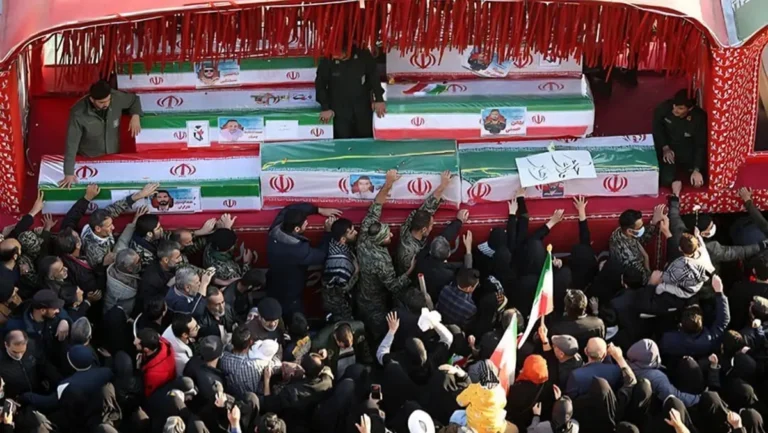
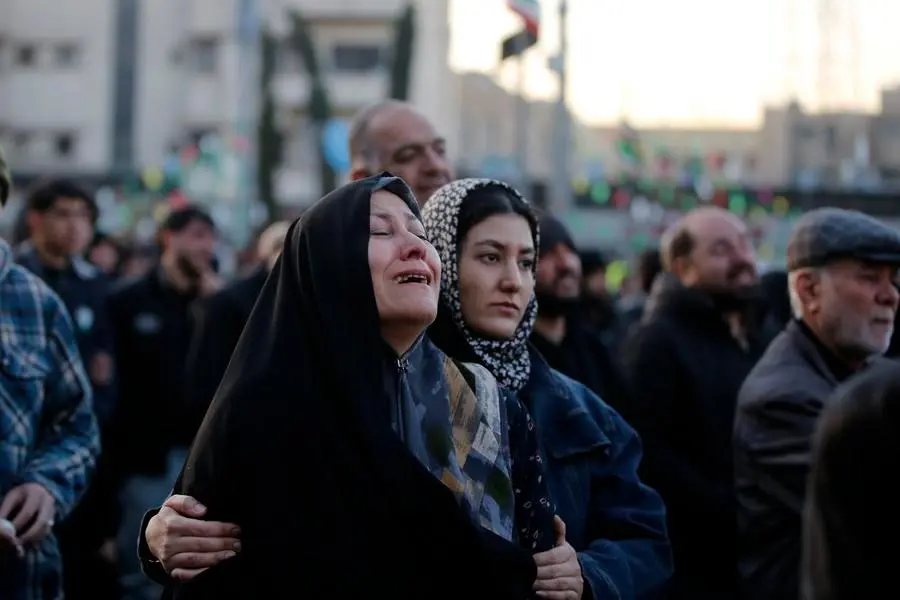
Iranians bid farewell to guards killed by protesters supported from abroad, Jan. 13, 2026.
January 13, 2026 Hour: 2:54 pm
An investigation shows that citizen protests were captured by agents funded from the United States and Israel.
An investigation using open-source materials, intelligence documents and field reports by Max Blumenthal and Wyatt Reed alleges the instrumentalization of social protests, media manipulation of casualty figures and the use of terrorist tactics by externally supported groups in a coordinated campaign to destabilize the Islamic Republic of Iran.
RELATED:
China Urges Stability in Iran and Rejects Foreign Interference
Behind a facade of legitimate protest lies a planned, funded and directed operation of social engineering and violence from the United States and Israel, with the explicit aim of provoking regime change, the investigation claims.
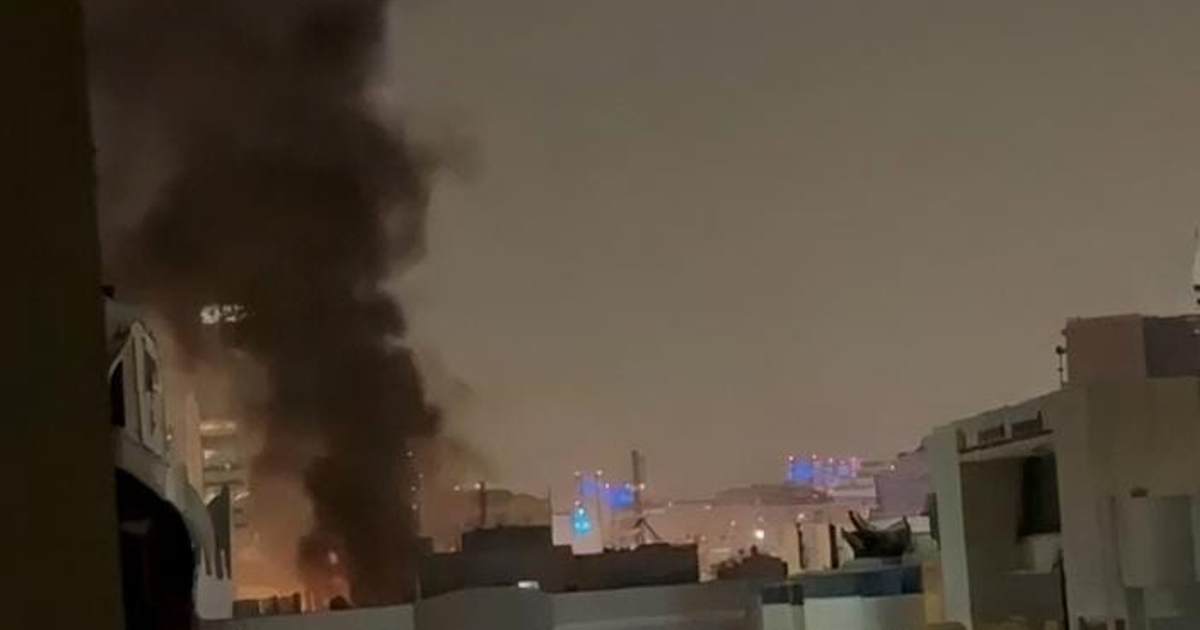
Circumventing media blackouts, videos circulating on both official Iranian channels and anti-government social media show public lynchings of unarmed guards and public officials, the burning of mosques, arson attacks on municipal buildings, markets and fire stations, and armed crowds opening fire in the heart of Iranian cities.
These actions represent a new phase with direct antecedents in the “Woman, Life, Freedom” protests that dominated international headlines in 2023. Two years later, in March 2025, as tensions had subsided, the U.S. National Endowment for Democracy (NED) – with a long record of alleged interference – claimed credit for driving those protests.
In Kermanshah, where anti-government protesters shot and killed 3-year-old Melina Asadi, groups of militants were filmed firing automatic weapons at police.
From Legitimate Protest to Orchestrated Chaos
Protests that erupted in Iran in early January 2026 had genuine roots, the report states, with citizens taking to the streets to protest the consequences of years of Western sanctions. In those first moments, no incidents or repression were reported.
But within days, the investigation asserts, this peaceful mobilization was hijacked by a transnational network of actors hostile to the Iranian state.
Verified videos – many published even by opposition groups – show scenes of extreme brutality: firefighters burned alive in their own stations in Mashhad; 3-year-old Melina Asadi shot dead in Kermanshah; historic mosques burned in Tehran and Sarableh, with copies of the Quran reduced to ashes; and unarmed security guards lynched in Hamedan and Lorestan.
In Borujen, west-central Iran, a historic library containing centuries-old manuscripts was intentionally destroyed. These are not spontaneous acts of outrage, the report contends, but coordinated operations with a clear logic of destabilization.
However, major Western media outlets have systematically chosen to ignore this dimension of the violence, according to the investigation.
Instead, they have constructed a simplistic narrative of “peaceful protesters vs. brutal regime.” This distortion is not accidental, the report alleges, but part of an information warfare strategy designed to generate international pressure and justify future coercive actions against Tehran.
The Infrastructure of Regime Change: From NED to Mossad
Behind the supposed “Iranian civil society” leading the protests lies a sophisticated financial and logistical architecture backed by foreign governments, the investigation claims.
Two Washington-based organizations – the Abdorrahman Boroumand Center for Human Rights in Iran and Human Rights Activists in Iran – have been cited as primary sources by outlets like The Washington Post, BBC and ABC News.
Both organizations receive direct funding from the National Endowment for Democracy (NED), an entity created in 1983 under the supervision of then-CIA Director William Casey precisely to continue covert political influence operations after the scandals of the 1970s, the report notes.
Allen Weinstein, one of the founders of NED, stated bluntly: “A lot of what we do today was done covertly by the CIA 25 years ago.” Today, that same logic operates in Iran, the report asserts.
A 2024 NED press release openly celebrates its role in the 2023 “Woman, Life, Freedom” protests, which also included arson attacks, targeted killings and sabotage of critical infrastructure.
But the game is not limited to Washington, the report states. Israel’s Mossad has openly entered the fray. On its official X account on Jan. 8, it posted: “Come out together into the streets. The time has come. We are with you. Not just from afar and verbally. We are with you on the ground.”
This message is not rhetorical, the investigation claims: it represents an unprecedented escalation in Israel’s hybrid war against Iran, which includes cyberattacks, targeted assassinations and now, direct support for insurgent cells.
Furthermore, figures like Reza Pahlavi – self-proclaimed “crown prince” of the former Shah – have legitimized violence by declaring state officials and official media “legitimate targets,” the report says.
His discourse, amplified by neoconservative think tanks in Washington, seeks to position him as an alternative leader in a post-revolution scenario.
On the board of the Boroumand Center sits none other than Francis Fukuyama, a key ideologue of the Project for the New American Century, the manifesto that laid the groundwork for post-9/11 wars in the Middle East. Images circulated on social media showed the attack on the Abuzar Mosque.
Media Manipulation, Inflated Figures and the Rush to War
The disinformation campaign has reached alarming levels. While the Iranian government confirms the deaths of more than 100 security personnel – including firefighters, local police and municipal guards – NGOs linked to NED disseminate biased figures attributing hundreds of deaths exclusively to the state, without distinguishing between civilians, armed protesters or law enforcement.
Dozens of Western media outlets have repeated that 544 human rights activists have been killed in Iran without independent verification of the data, according to the investigation. Worse, marginal actors have exploited the information vacuum to sow panic.
Laura Loomer, a known Jewish supremacist and close ally of U.S. President Donald Trump, claimed without evidence that “more than 6,000 protesters have been killed,” the report states.
The Polymarket platform – funded by Peter Thiel and advised by Donald Trump Jr. – went so far as to claim that “more than 10,000 people have died” and that Iran “has lost control of three of its five largest cities,” according to the investigation.
Claims like these circulate as established fact, feeding a climate of hysteria that benefits only those seeking military intervention, the report alleges. The intelligence firm Stratfor, considered a “shadow CIA,” has been even more explicit, it says.
In a Jan. 7 analysis titled “Protests in Iran open a window for U.S. or Israeli intervention,” Stratfor suggests that “the unrest could open the door for Israel or the United States to conduct covert or overt activities aimed at further destabilizing the Iranian government.”
Curiously, the same report acknowledges that “new military strikes would likely end the protest movement by driving a broader display of Iranian nationalism and unity,” a pattern observed after the 2025 bombings, the investigation notes.
Still, pressure continues to mount, the report states. Trump, who appears to be in full campaign mode, has repeatedly threatened to intervene: “If Iran shoots peaceful protesters, America will come to their rescue… we are ready to act.”
On Jan. 12, he decreed 25% tariffs on any country that trades with Iran, and according to Pentagon sources cited in the report, is evaluating options ranging from cyberattacks to airstrikes.
On Jan. 13, the U.S. president called on “Iranian patriots” to take “control of their institutions.” He also announced he had canceled meetings with all Iranian officials and declared: “Help is on the way!”
Popular Response and Western Media Silence
While the West celebrates “brave protesters,” millions of Iranians have spontaneously taken to the streets in Tehran, Mashhad, Karaj, Rasht and Yazd to condemn the terrorist acts and reject foreign interference.
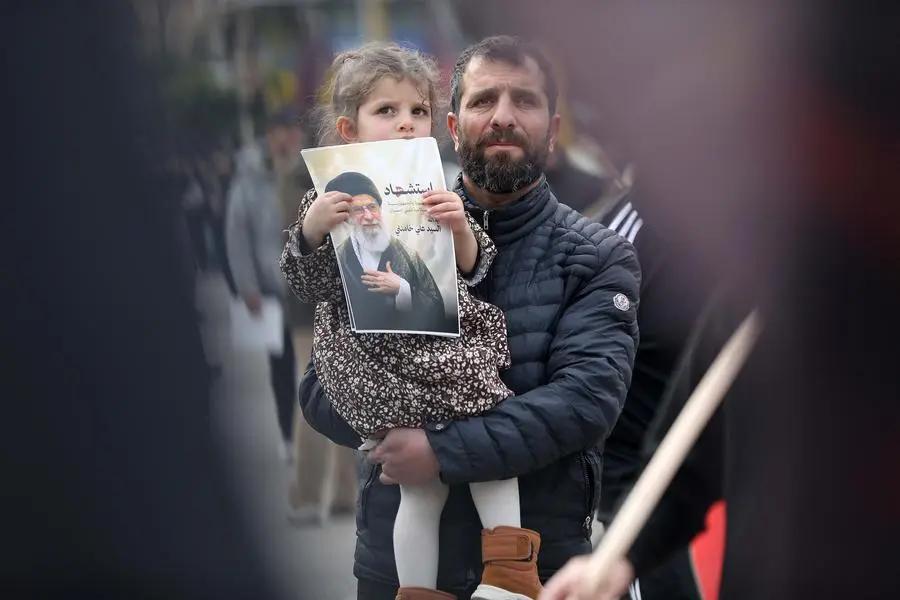
Carrying national flags and portraits of the supreme leader, these citizens – many of them young people, women and workers – demand peace, sovereignty and respect for their self-determination. Yet their voices are systematically ignored by Western media, which prefer the version edited by regime-change lobbyists, the investigation alleges.
This silence is not neutral, it claims: it is complicit. By hiding the true nature of the unrest – violent, organized and funded from abroad – the media contribute to normalizing a war agenda that could have catastrophic consequences for the entire region.
Meanwhile, Iran has activated its national “air shield,” closing defensive gaps in Tabriz, Hamedan and the Caspian Sea, and preparing for a scenario of total confrontation. The region is no longer on the brink of war: it is at its threshold.
As events appear to accelerate, the balance on the geopolitical map with other major powers is at stake. In this sense, Russia said on Tuesday, Jan. 13, that any U.S. military maneuver against Iran is “unacceptable,” denounced the installation of a “color revolution” and condemned “destructive foreign interference in Iranian affairs.”
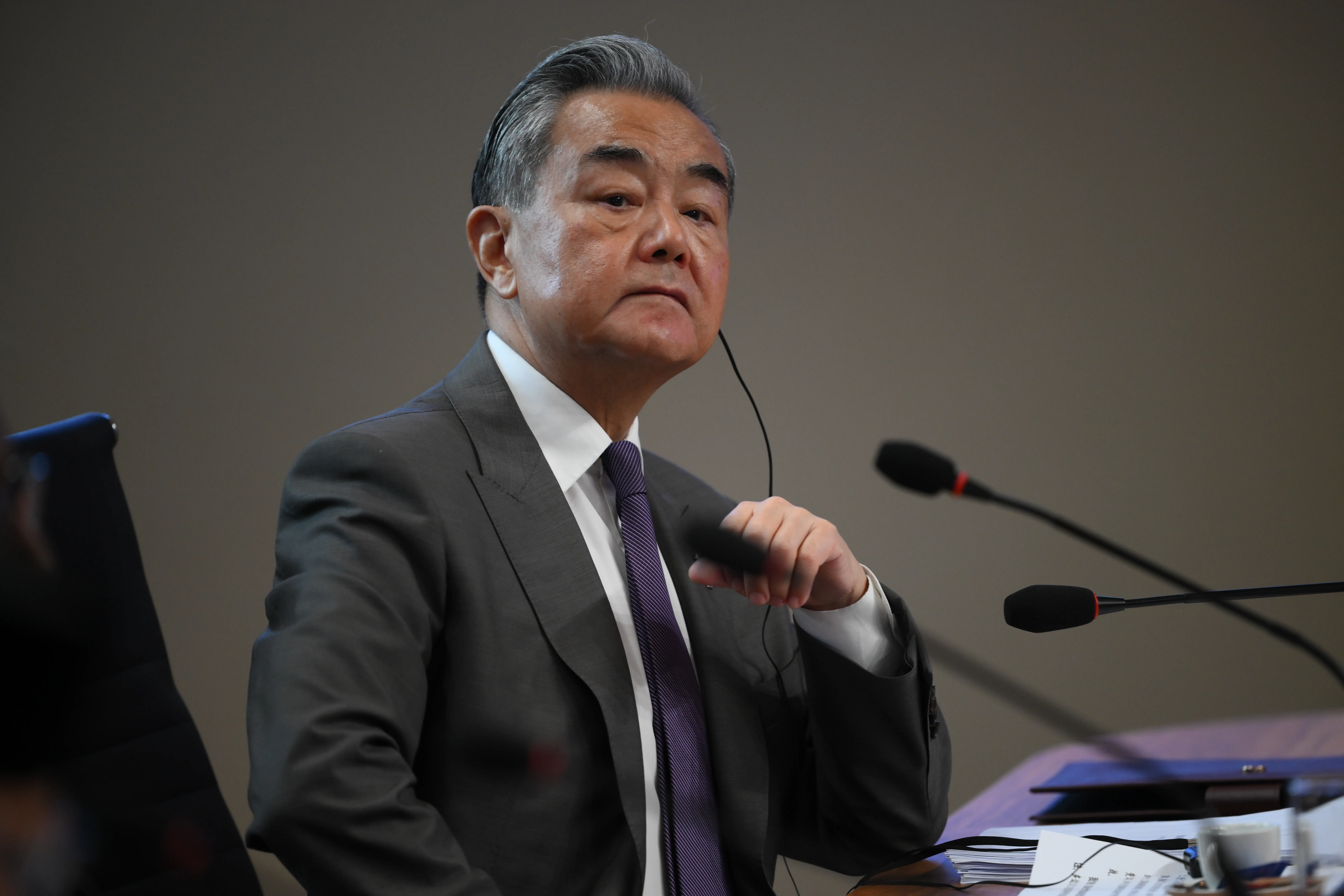
China issued a statement on the same day criticizing Washington’s decision to impose tariffs on any country trading with Iran. “China will resolutely safeguard its legitimate rights and interests,” said Chinese Foreign Ministry spokeswoman Mao Ning.
The Shadow of Total War: The Air Deployment the West Ignores
While Western media focus on simplified narratives about “peaceful protesters,” a silent but decisive battle is being waged in the skies of West Asia, the report states.
As detailed by military analyst Abutalib Albohaya in his Jan. 9, 2026 report for The Cradle, titled “Air supremacy or war: Iran and the U.S. in the final countdown,” the region has entered a phase of “full combat load,” where there is no longer room for diplomatic maneuvering: only armed deterrence or outbreak remain.
Albohaya describes how the United States has deployed F-15E Strike Eagle fighters equipped with the advanced EPAWSS system, capable of turning aircraft into “electronic ghosts” that deceive Iran’s S-300 and Bavar-373 radars through distorted signals.
This technology seeks not only to evade air defense but to saturate it: by generating “ghost targets,” it forces Tehran to fire missiles into empty space, revealing positions and consuming strategic reserves. At the same time, KC-135R and KC-2 Voyager tanker aircraft over Jordan and Saudi Arabia allow U.S. fighters to maintain a continuous offensive presence, without time or range limits.
Faced with this threat, Iran has activated what Albohaya calls its “comprehensive air shield.” It has sealed its geographical gaps: from Tabriz in the north – blocking infiltrations from the Caucasus – to Kish in the south, where advanced radars monitor every movement of the U.S. Fifth Fleet.
Cities like Yazd and Kerman, with their underground ballistic missile depots, have been declared priority defense zones. The Nojeh air base in Hamedan, the core of Iran’s “offensive lung,” operates in “free fire” mode, ready to launch long-range retaliation, according to the analysis. And in case Tehran is neutralized, Mashhad and the Nasir base function as an “alternative capital” and continuity of government center.
Crucially, Iran has secured its “last supply artery”: the Caspian Sea. With Bandar Anzali converted into a key logistical node, it maintains a secure line with Russia, avoiding the potential blockade of the Persian Gulf, the report states.
Meanwhile, the U.S. destroyer USS McFaul, equipped with the Aegis system, patrols the Gulf as a mobile wall against any Iranian response, creating a balance of terror between land fire and maritime dominance, it adds. This deployment is not theoretical, according to Albohaya. “The era of maneuvers is over,” he states.
What is seen on the streets of Iran – the riots, lynchings, fires – is not an isolated phenomenon, but part of a comprehensive hybrid war strategy: while the state is undermined from within with orchestrated violence, the external stage is set for rapid intervention if the regime shows signs of weakness. But Tehran has anticipated this script, it says. Its defensive architecture does not seek to win a conventional war, but to make it prohibitively costly for Washington and Tel Aviv.
In this context, the violent protests take on a new dimension, the report concludes: they are not only an attempt at regime change, but a stress test designed to force a disproportionate reaction that justifies the “surgical” airstrike that the Pentagon and Mossad have been rehearsing in simulations for months.
However, as even Stratfor acknowledges, any direct aggression would likely unify the Iranian people around their government, nullifying the operation’s original objective.
teleSUR/ JF
Sources: The Gary Zone – Tasnim – The Creadle