







First Trial Over Nord Stream Sabotage Opens in Hamburg Four Years After Blasts
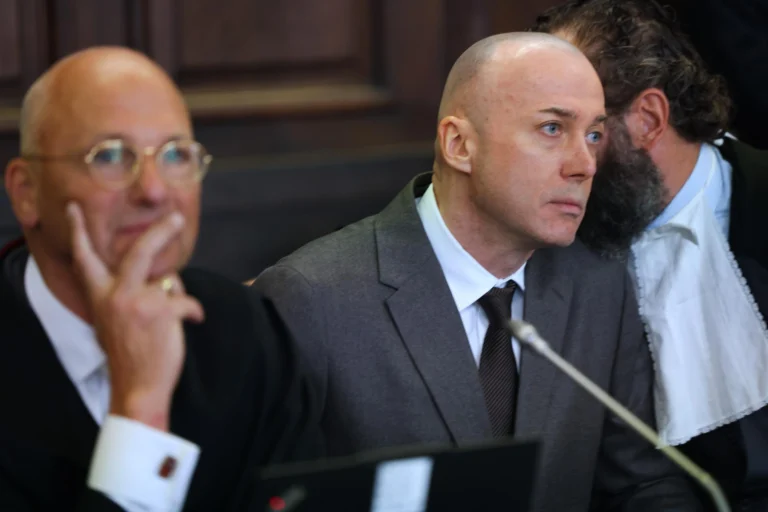
Serhii Kuznietsov, a former Ukrainian army officer, is alleged to have been a member of a group that planted explosive devices on the Nord Stream 1 and Nord Stream 2 pipelines near the Danish island of Bornholm in September 2022. Photo: EFE.
October 14, 2026 Hour: 6:17 pm
🔗 Comparte este artículo
The trial of Serhii Kuznietsov, a former Ukrainian army officer accused of leading the team that blew up the Nord Stream gas pipelines in 2022, opened Wednesday in Hamburg under heavy security, with his lawyers asking the court to dismiss all charges on the first day.
Serhii Kuznietsov, a former Ukrainian army officer, faces charges including causing an explosion, damaging property, disrupting a public service and complicity in war crimes for allegedly attacking civilian infrastructure, according to the indictment.
The explosions of September 26, 2022 damaged pipelines built to carry Russian natural gas to Germany under the Baltic Sea and are considered one of the largest acts of sabotage in Europe since World War II.
RELATED: Alternative for Germany Backs Nord Stream Reactivation
The 136-page document was read in a two-hour hearing in a high-security courtroom at the Hanseatic Higher Regional Court.
Federal prosecutors say Kuznietsov was a member of an elite Ukrainian army unit at the time and led a group of six others who sailed from the German port of Rostock on a rented yacht to the area near Denmark’s Bornholm island. There, they allegedly dived to depths of 70 to 80 meters and placed at least four explosive charges with timers, weighing between 14 and 27 kilograms, on different pipeline strings. Prosecutors say the yacht was chartered from a German company using forged identity documents and with the help of intermediaries.
Prosecutors argue that Kuznietsov knew the pipeline was a civilian, not a military, target, and that Germany has jurisdiction because the attack affected its strategic interests.
The explosions hit the Nord Stream 1 and 2 pipelines on September 26, 2022, causing large gas leaks in the Baltic Sea. According to German authorities, a group of saboteurs, including Serhii K. and Volodymyr Z., both Ukrainian citizens, placed explosives near the Danish island of Bornholm, using a sailing boat that departed from the German port of Rostock.
In 2022, the governments of Denmark, Germany and Sweden declined to release the results of their investigations and did not heed Russia’s requests to take part. In 2023, U.S. journalist Seymour Hersh claimed that the White House was behind the attack, while other Western press reports pointed to Ukrainian sabotage groups. Hersh’s claim has not been substantiated by public evidence, and Washington has denied involvement.
Defense Seeks Dismissal
Kuznietsov did not speak. Asked by a judge whether he wished to comment, his lawyers said no, and then filed a motion to dismiss. The core of the motion is that he was still an active-duty soldier and is barred under Ukrainian law from speaking for national security reasons. “Anyone who cannot speak cannot be convicted,” lawyer Jes Meyer-Lohkamp told the court, citing German law.
The defense does not admit involvement in the blasts. It argued that if this was an armed forces operation against an enemy target in wartime, an officer could not be held criminally liable. Lawyer Nicola Canestrini said the pipelines “were a weapon in Russian hands,” and the team said war-crime accusations would be better aimed at Russian forces, citing Bucha and the abduction of Ukrainian children. The lawyers also said Kuznietsov’s fingerprints were not found on the yacht and no witness saw him aboard. Meyer-Lohkamp criticized his client’s detention conditions, saying he is locked up 23 hours a day.
According to the prosecution, evidence includes a wiretapped conversation in which Kuznietsov, after his 2025 arrest in Italy, lamented to his wife that Ukraine did not openly acknowledge that he acted on a state operation and not on his own. The attack was allegedly ordered by former Ukrainian intelligence officer Roman Chervinsky, who denies the accusations. A second suspect, Volodymyr Zhuravlov, was arrested in Croatia this summer and is fighting extradition.
Ukrainian President Volodymyr Zelenskyy has denied his country’s involvement. German Foreign Minister Johann Wadephul said the trial has fueled “speculation,” but that the government must wait for the court.
The next hearing is set for October 28. Sixteen hearings are scheduled through December 17, with more dates expected in January and February 2027. No verdict date has been announced.
Author: Laura V. Mor
Source: Agencies