







Elif Eralp Leads Die Linke Party to Triumph in Berlin

Jurist Elif Eralp, Die Linke Party. Photo: X/AndreaBox
September 21, 2026 Hour: 2:52 pm
🔗 Comparte este artículo
The leftist politician mobilized working-class communities and tenant advocates around housing reform and civil rights.
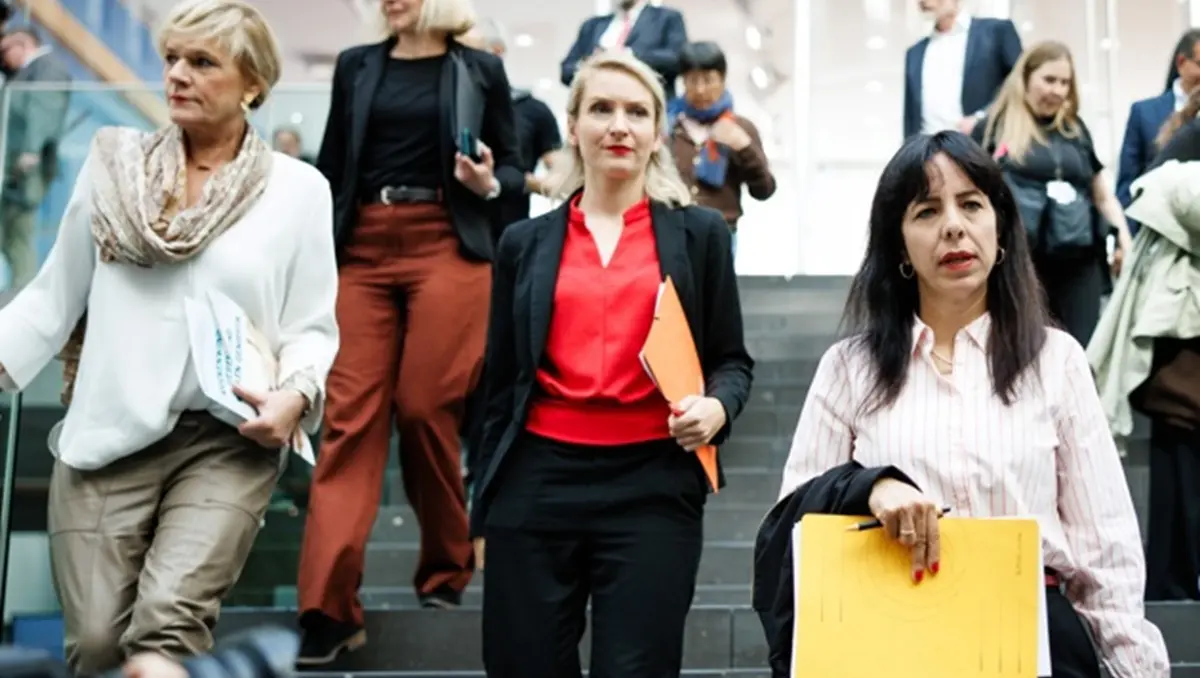
On Sept. 20, the Berlin state election marked a significant political shift in the German capital. Die Linke, Germany’s democratic socialist party, secured first place in the vote under the jurist Elif Eralp.
RELATED:
Germany’s Die Linke Calls for Merz’s Resignation After Regional Election Defeats
Official data from public broadcaster ARD placed Die Linke at 25.3% to 25.7% of the total vote. The result established Die Linke as the largest parliamentary group in the state parliament of Berlin, winning 47 of 158 seats.
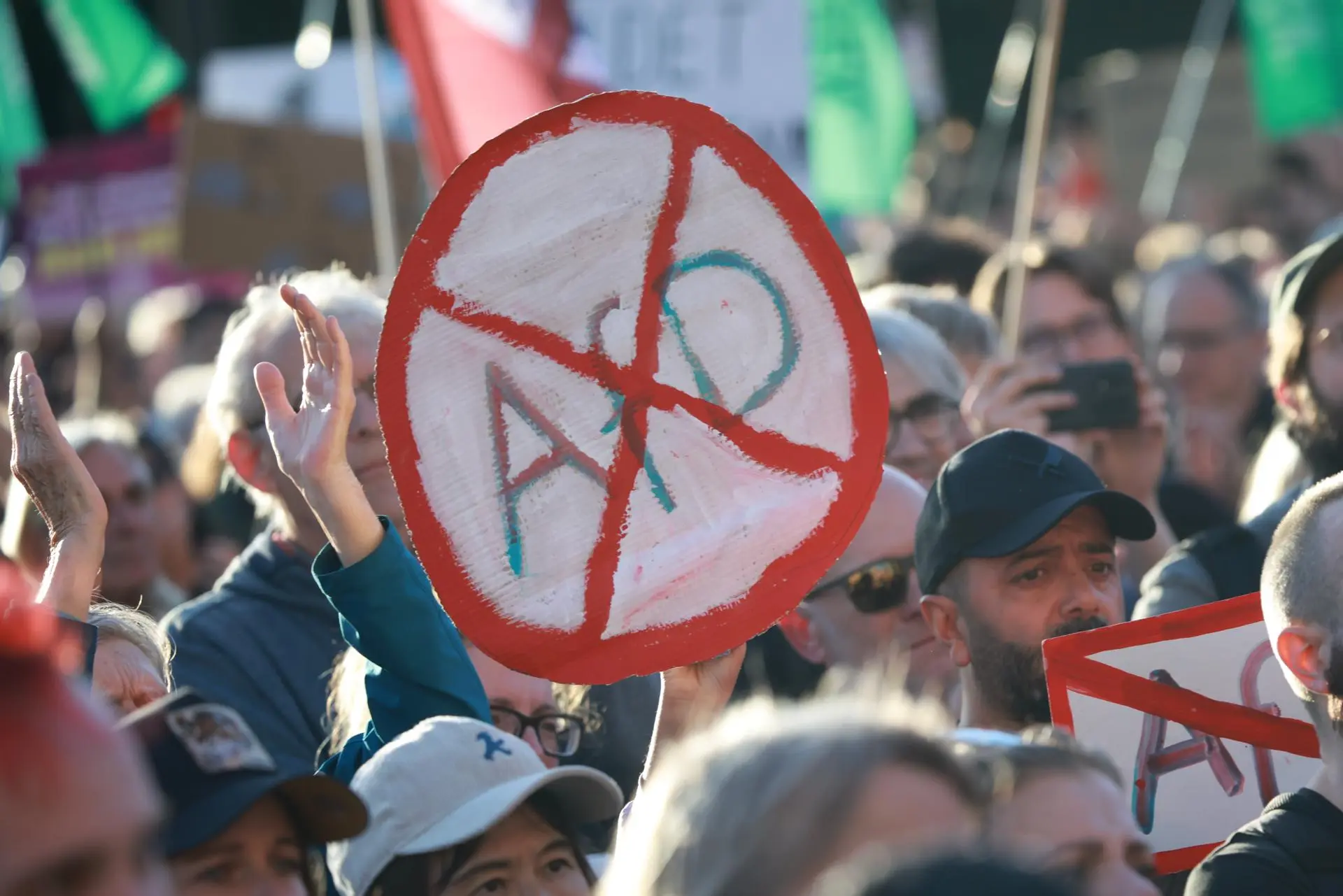
Eralp’s campaign focused on systemic economic inequality, the city’s housing crisis, and protection for working-class and immigrant communities. The election took place against the backdrop of an expanding far-right nationwide, following recent electoral gains by the Alternative for Germany (AfD) in Saxony-Anhalt.
Die Linke demonstrates that a campaign centered on public housing, tenant protection, anti-racism, and social investment can mobilize voters and counter right-wing momentum.
From Legal Advocacy to Parliamentary Leadership
Elif Eralp was born on January 14, 1981, in Munich, West Germany. Her parents were politically active trade unionists in Turkey who fled to West Germany following the September 1980 Turkish military coup to escape political persecution.
Eralp pursued legal studies at the University of Hamburg from 2001 to 2007, passing her First State Examination in Law. During her practical legal training, Eralp worked with the United Nations High Commissioner for Refugees (UNHCR) in Berlin and with legal practices specializing in immigration and asylum law.
Eralp relocated to Berlin in 2010 to work as a legal policy advisor for the parliamentary group of Die Linke, focusing on civil rights and democratic governance.
Before entering elected office, Eralp participated in anti-nuclear movement blockades in Wendland and joined civil initiatives against gentrification and urban displacement, including the migrant advocacy association Allmende e.V.
In 2017, Eralp formally joined Die Linke. Within the party, she co-founded the Migrant Left (Links*Kanax) alliance in 2019 to increase representation, anti-discrimination frameworks, and organizational participation for party members from backgrounds marked by racism.
Elif Eralp joined the Berlin state executive committee in 2018, became deputy group leader of Die Linke in the Berlin parliament in 2024, and was elected deputy state chair in May 2025.
Eralp ran for the Berlin House of Representatives in the German electoral constituency (Friedrichshain-Kreuzberg 2) during the 2021 state election, entering parliament via the party’s state list.
Eralp maintained her seat in the 2023 rerun election. In October 2025, Die Linke selected Eralp as its lead candidate for the September 2026 state election. Eralp has cited the 2020 far-right terrorist attack in Hanau, in which nine people of foreign descent were murdered, as a primary personal motivation for pursuing high-level political office.
Elections Contested, Party Affiliation, and Policy Platform
Elif Eralp’s electoral trajectory within Die Linke reflects an incremental consolidation of support in Berlin. In the state election of September 26, 2021, she contested the single-member German electoral constituency. Eralp received 28.5% of the primary vote, finishing second behind the incumbent candidate from Alliance 90/The Greens, Marianne Burkert-Eulitz, who secured 38.5%.
Despite the direct loss, Eralp entered the German State Parliament via the seventh position on Die Linke’s state list. During the February 12, 2023, rerun election, ordered after systemic administrative irregularities invalidated parts of the 2021 vote, Eralp retained her seat through the party list. On October 9, 2025, Die Linke formally selected Eralp as its lead candidate for the September 20, 2026, Berlin state election.
The policy platform presented by Eralp and Die Linke during the 2026 campaign centered on social infrastructure, municipal ownership, and civil rights:
Housing and Urban Policy: The core economic proposal was the full legal implementation of the 2021 Deutsche Wohnen & Co. enteignen referendum, in which 59.1% of Berlin voters approved the expropriation of private corporate landlords holding more than 3,000 residential units. Eralp proposed compensating real estate conglomerates below market value using long-term state bonds, arguing that future rental income would service the debt.
Labor and Municipal Economy: Eralp advocated for a state-level minimum wage of €15.50 per hour for all municipal employees and contracted private vendors. Die Linke prioritized the insourcing of outsourced health workers, hospital staff, and administrative workers into direct public employment.
Anti-Racism and Democratic Expansion: Eralp proposed extending municipal voting rights to all foreign residents who have lived in Berlin for at least two years, regardless of EU citizenship status. Eralp program called for independent oversight bodies to investigate claims of racial profiling within the Berlin Police Department, alongside increased funding for anti-discrimination centers and community organizations.
Foreign Policy and Civil Liberties: Operating from an anti-imperialist framework, Eralp’s program expressed explicit criticism of German arms exports and foreign military operations. Her speeches condemned human rights violations and war crimes in Gaza, calling for an immediate cease-fire and adherence to international legal norms.
Opposing Candidates and Ruling-Class Strategies
The September 2026 Berlin state election featured a fragmented political landscape characterized by competing strategies regarding housing, public security, and economic management.
The Christian Democratic Union (CDU), led by Governing Mayor Kai Wegner, the conservative party, received 19.1% of the vote, dropping from its 28.2% in 2023. Wegner’s platform focused on increased police funding, strict enforcement of public order, and opposition to municipal market regulations.
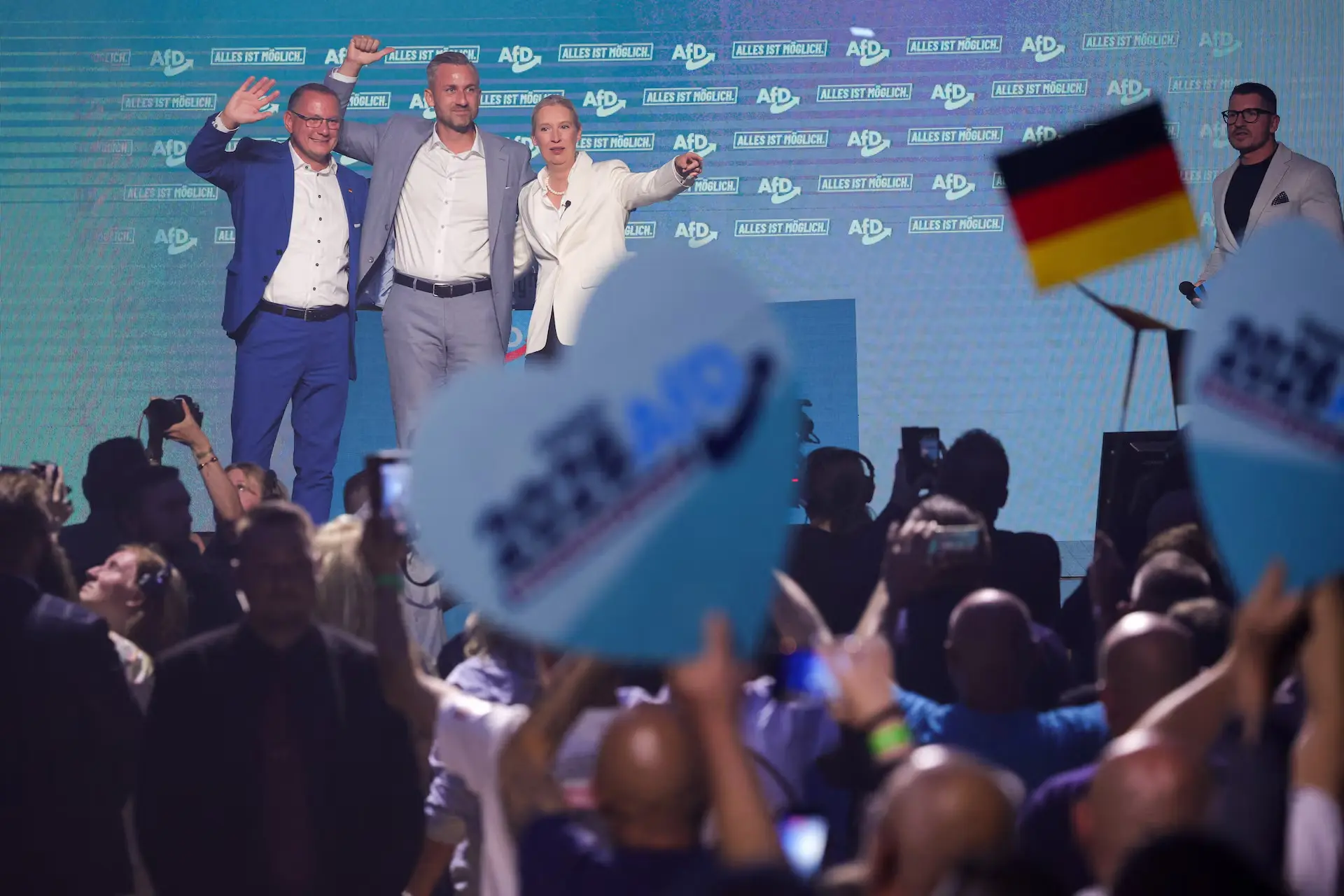
Another party was the Alternative for Germany (AfD), a far-right party that secured 16.2% of the vote. Led by state party co-chairs Kristin Brinker and Ronald Gläser, the AfD campaigned on an anti-immigration platform, advocating for accelerated deportations, reduced social services for asylum seekers, and the deregulation of real estate markets.
Also participating was Alliance 90/The Greens, led by former Governing Mayor Franziska Giffey’s coalition partners; the Greens received 14.5% of the vote. The party campaigned on accelerating climate neutrality targets, expanding bicycle infrastructure, and promoting public transport initiatives.
At the same election was the center-left Social Democratic Party (SPD), which finished fifth with 12.1% of the vote. Led by candidate Steffen Krach, the party campaigned on middle-class economic stability and moderate public housing construction.
In addition, the left-conservative party, the Sahra Wagenknecht Alliance (BSW), contesting its first Berlin state election after splitting from Die Linke in 2024, received 5.0% of the vote, narrowly meeting the parliamentary threshold. Led locally by Alexander King, the BSW combined economic left-wing policies with restrictive positions on migration and social policy.
Pushing Back Against Germany’s Rightward Shift
The election result in Berlin represents a clear counter-trend to the broader political trajectory observed across Germany during the 2024–2026 electoral cycle.
Following federal fiscal consolidation, rising energy costs, and expanded municipal spending cuts, state elections in eastern regions like Thuringia, Saxony, and Saxony-Anhalt saw substantial gains for conservative and far-right formations.
On the national level, Chancellor Friedrich Merz’s federal government adopted stricter border controls, rhetoric targeting public assistance recipients, and deregulation measures for private housing developers.
Eralp’s victory in the capital challenges the political strategy that seeks to counter far-right populism by adopting its policy framing on migration and border enforcement.
By anchoring Die Linke’s campaign around material economic concerns, specifically housing costs, municipal public services, and labor rights, Eralp’s platform built a coalition spanning working-class voters, youth movements, and long-term immigrant populations across Berlin districts such as Friedrichshain-Kreuzberg, Neukölln, and Lichtenberg.
Rather than treating anti-racism and class-based economic policy as separate issues, Eralp framed racial discrimination, labor exploitation, and housing precarity as interconnected outcomes of unregulated market dynamics.
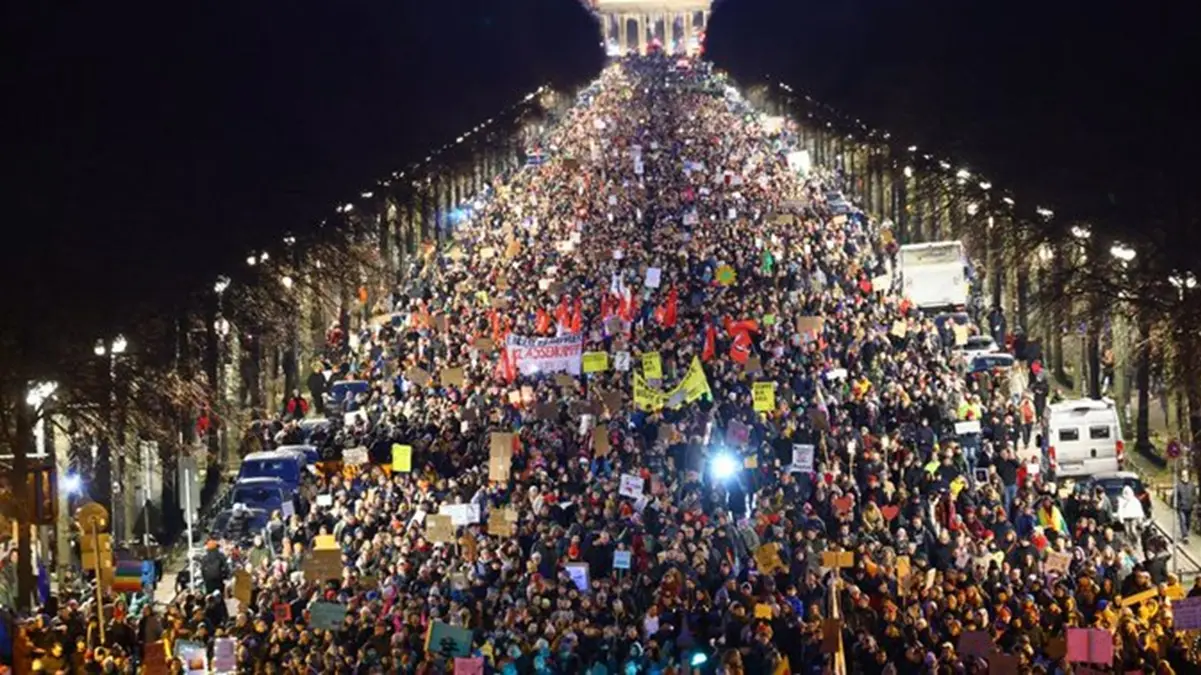
Furthermore, the election outcome highlights growing public resistance to police expansion and state curbs on public demonstrations in Berlin. Throughout 2024 and 2025, civil liberties groups raised concerns over administrative bans on political assemblies, peace protests, and migrant advocacy gatherings.
The Road Ahead and Upcoming Elections in Germany
Despite securing the largest share of votes in the Berlin State Parliament, Die Linke faces complex structural and political hurdles as it enters coalition negotiations to form the next Berlin state senate.
To secure a governing majority in the 158-seat parliament, Elif Eralp must assemble a working coalition, most likely requiring formal negotiation with the Social Democrats (SPD) and Alliance 90/The Greens.
Coalition talks will likely center on the implementation of the Deutsche Wohnen & Co. enteignen referendum. While Die Linke holds a mandate to expropriate large real estate firms, both the SPD and the Greens have historically advocated for voluntary agreements with property developers or partial, market-rate buyouts.
Additionally, a Left-led Berlin administration will encounter external constraints from the federal government in Bonn and Berlin. Under federal debt-limit mechanisms, the state of Berlin faces rigid constraints on borrowing, limiting the city’s ability to finance public infrastructure and municipal housing projects through debt issuance.
The political outcome in Berlin carries implications for upcoming state elections across Germany in late 2026 and 2027, as well as the next federal parliamentary election.
Eralp’s electoral success demonstrates that a clear, class-oriented program focused on housing rights, public investment, and systemic anti-racism can reverse left-wing political decline and offer a viable alternative to both center-right austerity and far-right nationalism.
Sources: TeleSUR – Al Jazeera – DW – El País – Red Diario – El Salto Diario – El Mundo – RTVE – Anadolu Agency – France 24 – EFE – Reuters – BBC
Author: Silvana Solano
Source: teleSUR