







60 Killed in El-Fasher Massacre: RSF Drones and Artillery Devastate Civilian Refuge in Darfur
October 11, 2025 Hour: 9:37 am
🔗 Comparte este artículo
RSF militias kill 60 civilians in El-Fasher using drones and artillery, intensifying the siege and humanitarian crisis in Darfur amid global inaction.
Related: Colombian Mercenaries at the Heart of the Sudanese War
El-Fasher Massacre: RSF Intensifies Siege with Drones and Artillery
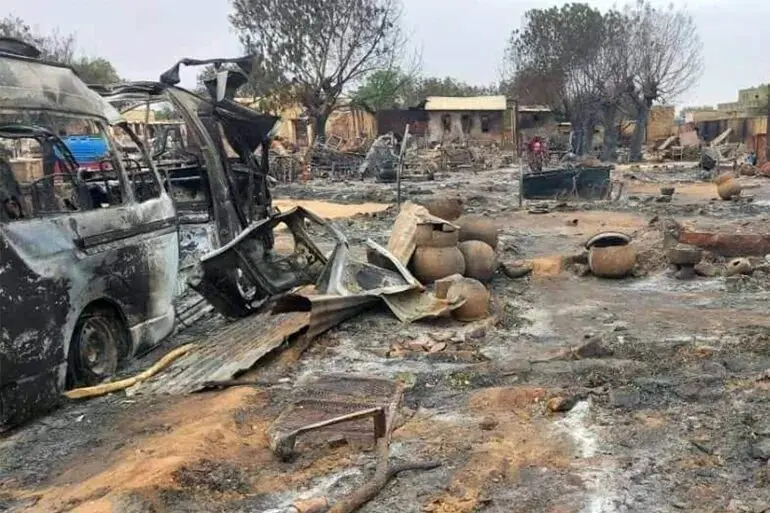
At least 60 civilians—including children, women, and the elderly—were massacred in a displaced persons center in El-Fasher, the capital of North Darfur, in what human rights groups describe as another chapter in the silent genocide unfolding in Sudan’s Darfur region.
According to the El-Fasher Resistance Committee, the Rapid Support Forces (RSF)—Sudan’s foreign-backed paramilitaries—deliberately targeted the Dar al-Arqam displacement camp, where families had sought shelter from the war. “Children, women, and the elderly were killed in cold blood, and many were completely burned,” the committee reported, calling for urgent international intervention against what it labeled “a situation beyond disaster and genocide.”
Strategic Siege of Darfur’s Last Bastion
External Link Suggestion: United Nations Office for the Coordination of Humanitarian Affairs – Sudan Crisis Overview
El-Fasher remains the last major city in Darfur under Sudanese Army control, making it a strategic target for the RSF. Since the civil war erupted in April 2023—triggered by a dispute between rival generals—the country has plunged into what humanitarian agencies call the world’s largest humanitarian emergency.
Today’s attack is part of a systematic RSF campaign to force the city’s surrender through terror. “Generally, the RSF has relied on aerial attacks to push civilians out of the city so they can capture it,” explained Mohamed Badawi of the African Centre for Justice and Peace Studies.
Hunger and Ethnic Cleansing as Weapons of War
External Link Suggestion: Human Rights Watch – Sudan Conflict Analysis
The humanitarian situation in El-Fasher is catastrophic. A UNDP report confirmed the total collapse of local markets, scarcity of affordable food, and road blockades preventing humanitarian aid, forcing residents to survive on animal feed and discarded food scraps.
Research from Yale’s Humanitarian Research Lab documents a methodical destruction campaign surrounding the city, with villages and displacement camps burned within a 57-kilometer radius, providing evidence of ethnic cleansing targeting non-Arab communities. Investigators also identified an earthen barricade encircling El-Fasher, strangling civilian movement and humanitarian access.
A World Looking Away
Despite a growing mountain of evidence and increasingly dire reports, the international community continues to exhibit a concerning and largely inexplicable silence regarding the escalating crisis. The International Committee of the Red Cross (ICRC), a respected and impartial humanitarian organization, has meticulously documented and reported widespread, routine attacks on and systematic looting of vital health centers, severely impeding access to medical care for countless individuals. Compounding this alarming situation, the World Health Organization (WHO) has highlighted the catastrophic collapse of the healthcare infrastructure in the Sudanese capital, Khartoum, noting that an astonishing 70% to 80% of all medical facilities have been forced to cease operations.
“The scale of humanitarian needs in Sudan is staggering. Unfortunately, cuts to international aid are adding salt to the wound,” warned Samuel Sileshi, emergency coordinator for Médecins Sans Frontières.
With tens of thousands killed and millions displaced, Sudanese civilians face only global indifference in what experts call one of the greatest human tragedies of our time.
Geopolitical Context
The El-Fasher massacre underscores the geopolitical complexity of Sudan’s conflict, where proxy interests fuel violence and deepen humanitarian collapse. The RSF’s advances not only challenge Sudan’s military control but also destabilize the broader Sahel region, with potential repercussions for migration flows, border security, and regional alliances.
In this context, humanitarian actors stress that sustained pressure on foreign backers of the RSF and increased support for neutral aid channels are essential to prevent Darfur’s complete fall and avert further mass atrocities.
Author: JMVR
Source: Aljazeera