







Ecuador Imposes Third Curfew of the Year as Violence Persists
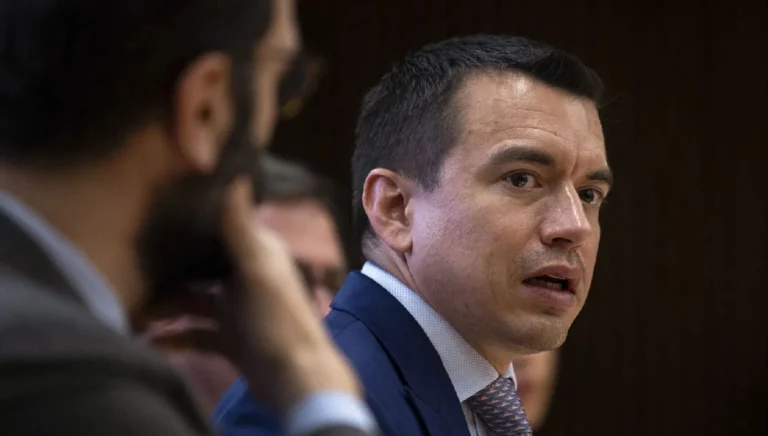
(FILE) Ecuatorian Prsident Daniel Noboa. Photo: EFE.
September 15, 2026 Hour: 11:58 pm
🔗 Comparte este artículo
Ecuadorian President Daniel Noboa on Tuesday, Sept. 15, declared a new 60-day state of emergency across eight provinces and three cantons, citing grave internal unrest and escalating criminal violence, under Executive Decree No. 498.
The decree covers the provinces of El Oro, Esmeraldas, Guayas, Los Ríos, Manabí, Pichincha, Santa Elena and Santo Domingo de los Tsáchilas, as well as the municipalities of Camilo Ponce Enríquez (Azuay), Las Naves (Bolívar) and La Maná (Cotopaxi).
During the emergency, the constitutional rights to the inviolability of the home and correspondence are suspended, allowing immediate raids and requisitions by the Armed Forces and National Police when there are signs of a crime.
RELATED: Human Rights Mission Denounces Repression, Militarization and Extractivism in Ecuador
The decree also establishes a targeted curfew from midnight to 5 a.m., from Sept. 17 to 30, 2026, applicable only in four coastal provinces: El Oro, Guayas, Los Ríos and Manabí. It is the third curfew ordered this year.
The government justified the measure by citing 442 intentional homicides between Aug. 16 and Sept. 10, 2026, in the eight affected provinces. Reports from the National Intelligence Center (CNI), the National Police and the Armed Forces point to territorial disputes among organized crime gangs such as Los Lobos, Los Choneros, Tiguerones, Águilas and Fatales.
These groups diversify their funding through international and local drug trafficking, arms trafficking, illegal mining, kidnappings and extortion.
Before the decree, the Armed Forces deployed 32,370 personnel in more than 317,000 military operations, resulting in 476 people apprehended, 306 firearms seized and more than 8,000 rounds of ammunition confiscated.
Ecuador remains under the “internal armed conflict” framework decreed by Noboa in 2024 to classify criminal groups as “terrorists.” However, official figures from the Ministry of the Interior show the crisis persists, after 2025 ended with a record of approximately 9,300 homicides in the South American nation.
Author: vmmh
Source: agencies