







Ecuador Honors Jorge Enrique Adoum on the Centenary of His Birth
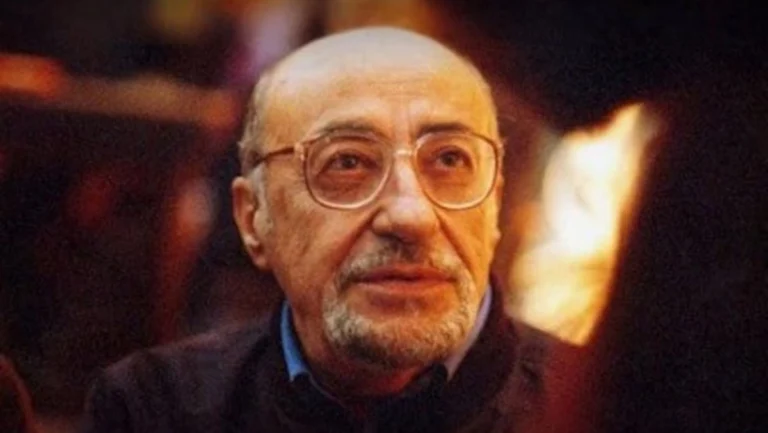
Jorge Enrique Adoum. X/ @radio_pichincha
June 25, 2026 Hour: 11:43 am
🔗 Comparte este artículo
The poet turned words into collective memory and social resistance.
A century after his birth, Jorge Enrique Adoum returns through the voices of those celebrating the poet who transformed words into memory, resistance, and a reflection of the reality of an Ecuador marked by inequality and hope.
RELATED:
Jose Marti’s Poetry Shapes Cuban Musical Identity
An essayist, novelist and private secretary to Pablo Neruda for two years, Adoum died in 2009 at the age of 83, leaving behind a legacy of more than 30 works in poetry, fiction, essays and theater.
“He is perhaps the most important contemporary Ecuadorian poet,” writer and journalist Pablo Salgado said. Salgado is a member of the collective “La Minga de la Memoria,” which will pay tribute to Adoum on the centenary of his birth.
Among his best-known works is the novel Between Marx and a Naked Woman (1976), which was adapted into a film by Ecuadorian director Camilo Luzuriaga.
Adoum — winner of the Casa de las Americas Prize and a nominee for the Cervantes Prize — maintained close relationships with Julio Cortazar, Carlos Fuentes, Mario Vargas Llosa, Alejo Carpentier, Alfredo Pareja Diezcanseco, Benjamin Carrion and Demetrio Aguilera Malta, among others.
The early years of Adoum’s poetry reveal Neruda’s influence, but he later developed a style of his own shaped by the reality of his country, despite spending much of his life in Chile, China and more than 20 years in Europe, particularly in Paris.
Adoum Was a Universe
The Ecuadorian writer possessed an incredible memory and a sweet, gentle personality, filmmaker Pocho Alvarez said. Alvarez created the documentary Jorgenrique, which includes three months of conversations with the poet as well as other testimonies.
Alvarez, who collaborated with Adoum on the photography and reflections book Ecuador, Images of a Past Present, began work on the feature-length documentary in 2007 to leave behind “a living memory” because “Ecuador is a country that cultivates oblivion as memory.”
The documentary on Adoum reflects the poet’s decision to “make words an instrument of change, of defending life, of projecting dreams,” among them the dream of an Ecuador with “a future of equity, of justice, where the human being becomes a ‘we,'” built through language, Alvarez said.
Adoum Rests Beside the Tree of Life
Translated into at least 12 languages, Adoum’s work bears witness to love and heartbreak, as well as to the defining characteristics of an Ecuador that still carries many of the same divisions he denounced.
In books such as Bitter Ecuador, he rejected social and economic injustices, while in Between Marx and a Naked Woman he portrayed with harshness and clarity the political and cultural life of his era.
Adoum’s literature “was never detached from the reality being lived, particularly in Ecuador,” but death surprised him before he could see a more equitable country, “with fewer social and economic differences, and that unequal country remains,” Salgado emphasized, adding that “reading Adoum is understanding the country.”
Keeping his memory alive is one of the goals of the tribute that will be held on his birthday, June 29, at the Guayasamin Foundation, where Adoum’s ashes rest alongside those of painter Oswaldo Guayasamin beneath the “Tree of Life,” “so they can continue conversing for the rest of eternity,” according to a decision made by both men, said Berenice Guayasamin.
Music, a mural, discussions about the intellectual, screenings of poems read by Adoum and of Luzuriaga’s film will commemorate over four days the man who turned words into roots, horizons and collective memory.
teleSUR/ JF
Source: EFE