


Cuba Reactivates Power Grid Following Partial Disconnection
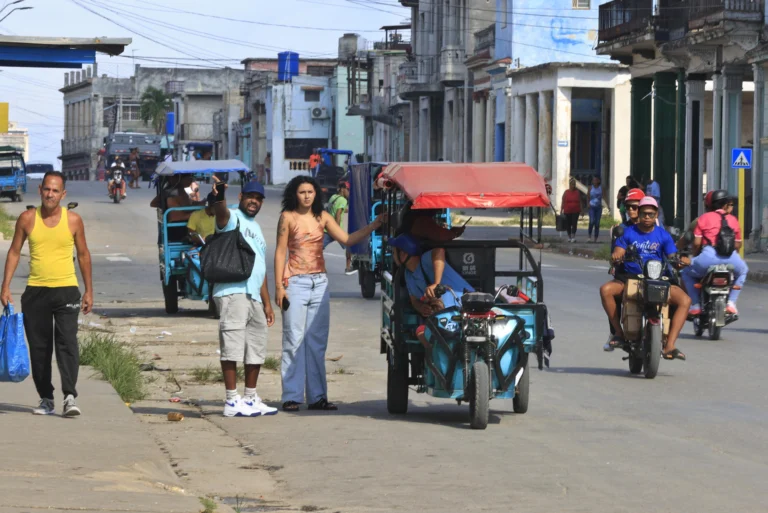
The partial disconnect of the National Electrical System occurred after months of severe economic setbacks to the entire economy by the US blockade. and the energy asphyxiation policy that Washington has been pursuing since last January. Photo: EFE.
May 14, 2026 Hour: 5:57 pm
🔗 Comparte este artículo
A partial Electric System failure affected six Cuba’s eastern provinces, as progressive service restoration continues, amid the oil sanctions and the economic blockade imposed by the U.S.
Cuba’s Electrical Union (UNE, in Spanish) announced that a partial failure of the National Electric System (SEN, in Spanish) occurred at 06:09 A.M. local time on May 14, affecting six eastern provinces from Ciego de Ávila to Guantánamo.
Following the incident, technicians and workers across the sector promptly activated established protocols to reactivate the system. As a result of these efforts, the majority of the affected territories were successfully reconnected to the National Electric System and have begun receiving power.
RELATED: U.S. Formalizes Aid Offer to Cuba for the First Time: FM Rodriguez
According to updated reports from the Ministry of Energy and Mines, the provinces of Ciego de Ávila (08:16 A.M. local time), Camagüey (09:19 A.M.), Las Tunas (09:50 A.M.) and Holguín (10:44 A.M.) were gradually reconnected.
Text reads: “Already connected to the electricity system the provinces of Ciego de Ávila, Camagüey and Las Tunas. The restoration process continues in the easternmost area of Cuba after the partial disconnection of the National Electric System (SEN) occurred at 6:09 this morning.”
The provinces of Granma, Santiago de Cuba and Guantánamo remain to be fully reactivated. Currently, these territories operate with local micro-generation systems, which supply electricity to vital facilities, ensuring essential services continue amidst the broader outage.
Text reads: “Granma, Santiago de Cuba and Guantánamo continue to operate with microsystems. The other provinces that were affected by the partial disconnection, are already connected to the National Electric System.”
The partial disconnection of the Electrical System unfolded at a particularly complex juncture for Cuba, following several months of severe impacts on both the energy sector and the overall economy. These challenges are primarily attributed to the protracted U.S. blockade and Washington’s explicit energy suffocation policy, which has been intensified since last January. This policy marks another escalation in the harassment targeting Cuba’s fuel imports, an siege that initially began between 2018 and 2019 during the first term of President Donald Trump.
In January, Trump declared Cuba an unusual and extraordinary threat to U.S. security and announced punitive tariffs on any country selling hydrocarbons to the Caribbean nation. From December to the present, only one tanker, the Russian vessel Anatoly Kolodkin, has arrived at Cuban ports, transporting 100,000 tons (approximately 730,000 barrels) of crude oil. This scarcity of fuel imports directly exacerbates Cuba’s energy vulnerabilities and limits its capacity to generate consistent power.
Minister of Energy and Mines, Vicente la O Levy, reported this Wednesday that the electro-energetic system is presently operating with a combination of thermoelectric plants, which consume national crude oil, utilizing associated petroleum gas and the approximately 54 solar photovoltaic parks that have been installed over the past year.
The energy production of new photovoltaic solar parks reached 3,348 MWh, with a maximum power delivered of 470 MW in the hours of the average. This renewable generation source plays a crucial role in partially mitigating the structural deficit of the system, offering a glimpse into Cuba’s long-term energy independence strategies.
Due to the critical shortage of diesel and fuel oil, numerous distributed generation facilities across the country are currently idled. Compounding this, several generator blocks are either experiencing breakdowns or undergoing scheduled maintenance.
Text reads: “At 3:03 P.M., Holguín was disconnected from the National Electric System (SEN). Work is being done to reintegrate him in the shortest possible time.”
The process of re-establishing the National Electric System continues to develop, with technical maneuvers aimed at achieving full synchronization of the eastern provinces. The Electrical Union authorities maintains periodic updates on the evolution of the service, in a context marked by limitations of generation, scheduled maintenance and external factors that affect the stability of the Cuban electrical system.
Author: Laura V. Mor
Source: X/@OSDE_UNE / Cuban Ministry of Energy and Mines