







Cuba President Diaz-Canel Denounces U.S. Blockade at World Food Forum
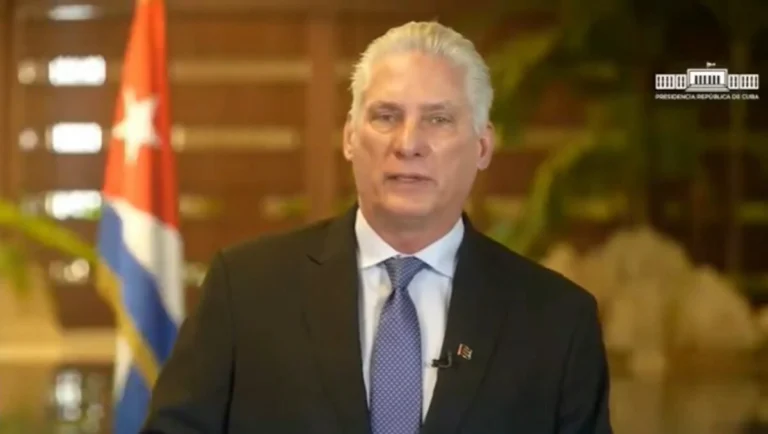
Cuban President Miguel Diaz-Canel, Oct. 12, 2026. X/ @usaenvivo_
October 12, 2026 Hour: 11:03 am
🔗 Comparte este artículo
He highlights the ethical and political responsibility governments bear to guarantee the inalienable human right to food.
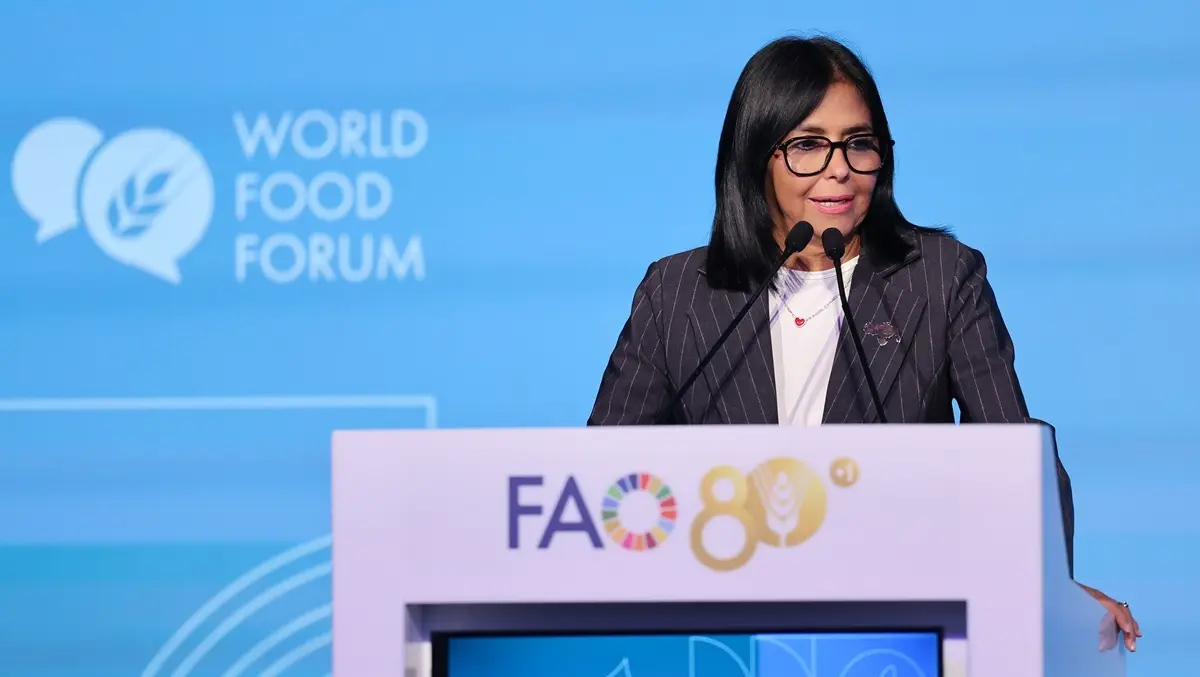
On Monday, Cuban President Miguel Diaz-Canel participated in the 2026 World Food Forum (WFF), organized by the United Nations Food and Agriculture Organization (FAO) in Rome, Italy.
RELATED:
Venezuelan Acting President Rodriguez Attends 2026 World Food Forum
During his address, he expanded on his denunciation of the ethical and political responsibility governments bear to guarantee the inalienable human right to food.
The Cuban leader warned that global problems such as armed conflicts, the climate crisis and economic turmoil disproportionately affect developing nations, where more than 640 million people suffer from extreme hunger.
Diaz-Canel emphasized that the challenges facing the Cuban nation are linked not only to global economic and environmental factors but also to the cumulative impact of more than six decades of the U.S. economic, commercial, and financial blockade.
He detailed how this policy of strangulation directly restricts the Cuban people’s access to international markets, advanced technologies, financing, agricultural inputs and fuels essential to sustaining the country’s agricultural sector.
The Revolution’s Structural Response to the Energy Blockade
The Cuban president strongly denounced the intensification of Washington’s aggression through the imposition of an energy blockade beginning in January.
This punitive measure affects the entire agri-food value chain, disrupting planting, food refrigeration, industrial processing, the transportation of supplies and distribution logistics intended to serve the population.
Nevertheless, Diaz-Canel asserted that, in the face of this systematic aggression, the Cuban people have transformed the challenge into an opportunity to accelerate profound structural changes.
Cuba’s strategy focuses on territorial decentralization, the promotion of scientific innovation, the transition to renewable energy in local food systems and the strengthening of domestic production to reduce dependence on external inputs, consolidating the country’s resilience under extraordinarily adverse conditions.
Strategic Partnership with FAO and Castro’s Legacy
Diaz-Canel highlighted the support provided by the FAO, a multilateral organization that has mobilized nearly US$100 million in resources, technical assistance and training to strengthen Cuban key productive sectors.
In this context, Cuba announced its incorporation into the Global Alliance Against Hunger and Poverty by presenting two projects with significant social impact designed to protect the most vulnerable sectors of the population.
Likewise, under the Hand-in-Hand Initiative, Cuba promoted two projects aimed at strengthening coffee and honey production chains, sectors of high strategic value for boosting rural employment, environmental sustainability, and export revenue.
As Cuba marks the centennial year of the birth of Commander Fidel Castro, Diaz-Canel reaffirmed that Castro’s longstanding advocacy for the right of peoples to a dignified life continues to guide Cuba’s social model.
He concluded by calling for the consolidation of a combative and solidarity-based multilateralism, stressing that food must be a collective right rather than a commodity subject to speculation or the political blackmail of imperialism.
teleSUR/ JF
Source: teleSUR