


Cuba Commemorates 148 Years of the Protest of Baraguá as a Resistance Symbol
This example of chivalry from 1878 remains fully relevant to confronting U.S. threats and safeguarding the Cuban Revolution and its independence today.
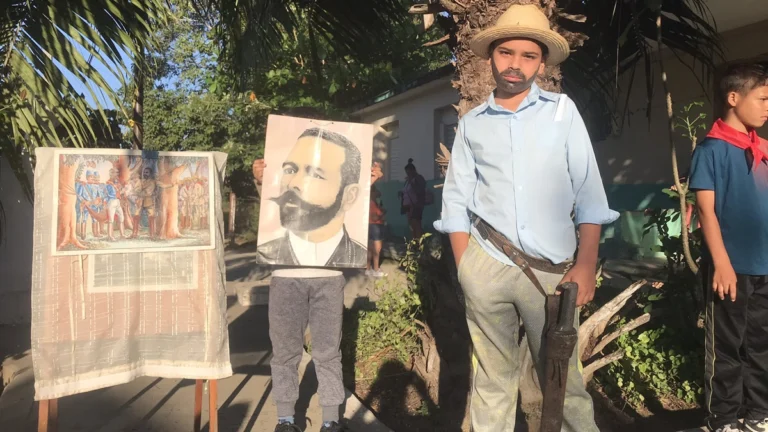
Cuban children recreate the historic Baragua protests, 2026. X/ @pedro_primaria
March 16, 2026 Hour: 10:57 am
🔗 Comparte este artículo
Cuban President Miguel Díaz-Canel led the commemoration on March 15th of the 148th anniversary of the historic Protest of Baraguá.
RELATED:
Mexico Cuba Solidarity 2026: Díaz-Canel Expresses Gratitude for Support in the Face of the Blockade
The president highlighted the figure of General Antonio Maceo, who in 1878 rejected the Pact of Zanjón because it did not include independence or the abolition of slavery, the main objectives of the struggle against Spanish colonialism, reaffirming that the nobility of that act defines the dignity of the nation today.
Cuban authorities recalled that the “Bronze Titan” morally saved the Revolution by refusing to lay down his arms without having achieved the goals of freedom.
This stance of revolutionary intransigence allowed the independence movement to consolidate, marking a historical reference point for subsequent generations who fought for definitive sovereignty against Spanish colonialism.
Text reads: Saying Baraguá immediately brings to mind Antonio Maceo’s intransigence in the face of a pact without independence: “We don’t understand each other,” he told his Spanish counterparts, and summoned his troops to “break the corojo palm” soon. We will always owe our allegiance to that legacy of dignity.
Foreign Minister Bruno Rodríguez and Deputy Prime Minister Inés Chapman stated that the spirit of Baraguá is amplified today in the face of the growing hostility of the Donald Trump administration.
The officials warned that Cuba will defend socialism with the same firmness with which Maceo declared that whoever attempts to seize the island “will reap the dust of its soil drenched in blood.”
The Protest of Baraguá resonates through time as the necessary political and ethical response to any attempt to undermine national integrity. History records that after dialogue with the Spanish colonial authorities, Maceo’s order was to “break the corojo palm,” resuming hostilities on March 23.
Text Reads: Today marks 148 years since the historic Protest of Baraguá, led by Major General Antonio Maceo, the Bronze Titan. As in Baraguá, and with the same revolutionary intransigence and Maceo’s ideals of patriotism and independence, we will continue to defend #Cuba, the Revolution, and Socialism against those who seek its destruction, suffering, and subjugation. “Whoever tries to seize Cuba will gather the dust of its blood-soaked soil, if they do not perish in the struggle.”
Fidel Castro and Ernesto “Che” Guevara remained true to this lesson, describing the Cuban people as an eternal Baraguá in the face of the economic blockade. Authorities emphasized that this land loves peace but is prepared to defend its freedom at any cost, as demonstrated by the victory at Playa Girón in April 1961.
The commemoration concluded with a call for unity between veterans and new generations to maintain Cuba’s mastery of its own destiny.
On this 148th anniversary, the official slogan reiterates that the example of nobility from 1878 remains fully relevant for confronting imperial threats and safeguarding the Revolution and its independence today.
Author: HGV
Source: Telesur