








Costa Rican Scientists Confirm Discovery of New Salamander Species
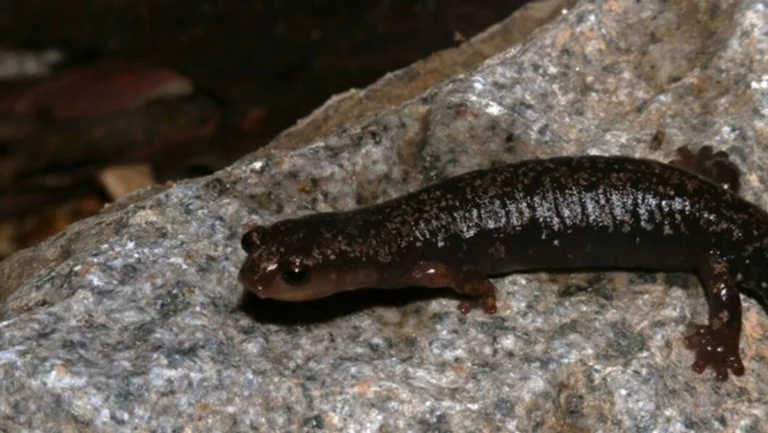
A specimen of the ‘Bolitoglossa chirripoensis’ salamander. X/ @irerodsa
October 22, 2025 Hour: 11:35 am
🔗 Comparte este artículo
The golden-spotted salamander is endemic to Chirripo National Park’s high-altitude wetland.
On October 11, a team of scientists from the University of Costa Rica confirmed the discovery of a new species of salamander, characterized by its gold-and-white-spotted back, unique to the paramo of Chirripo National Park, the highest point in the country.
RELATED:
Costa Rican Endemic Parrots In Threat
The discovery was made in November 2019 near the Crestones refuge in Chirripo and was confirmed after five years of morphological and genetic analysis. The study was led by biologists Jeremy Klank, Gerardo Chaves, Kimberly Castro, and Erick Arias.
The salamander has a medium-sized, robust body, a dark background, and a unique combination of gold and white spots. Its genetics distinguish it from other Costa Rican species, which reinforces its classification as a new species.
Researcher Chaves emphasized that Bolitoglossa chirripoensis is evidence of the high endemism of the paramo ecosystem, as it has only been documented in a few hectares of Chirripo National Park.
Scientists warn that this salamander should be considered vulnerable by the International Union for Conservation of Nature (IUCN), due to the extreme conditions of the paramo, its limited distribution, and threats such as forest fires and climate change.
The text reads, “After more than 25 years without any sightings, the presence of a ‘fire salamander’ was reported in San Pablo Zoquitlan, a municipality in the Sierra Negra region. This species was previously thought to be extinct in the region.”
Arias explained that the paramos of the Talamanca Mountain Range, between 2,900 and 3,000 meters above sea level, are fragile ecosystems, with no tall trees, cold temperatures, and a marked dry season, making them vulnerable.
The Bolitoglossa chirripoensis grows slowly, can take up to 20 years to reach adulthood, and has a low reproductive rate, which limits its population recovery capacity.
This discovery adds to other discoveries that position Costa Rica as the sixth country with the greatest diversity of salamanders in the world, reinforcing its importance in global conservation.
Klank emphasized that these types of studies contribute to the understanding and conservation of Costa Rica’s true treasure: its biodiversity, and should inspire concrete environmental protection actions.
teleSUR: JP
Source: Centroamerica 360