


Colombia towards the Constituent Assembly: Bogotá prepares for massive mobilization
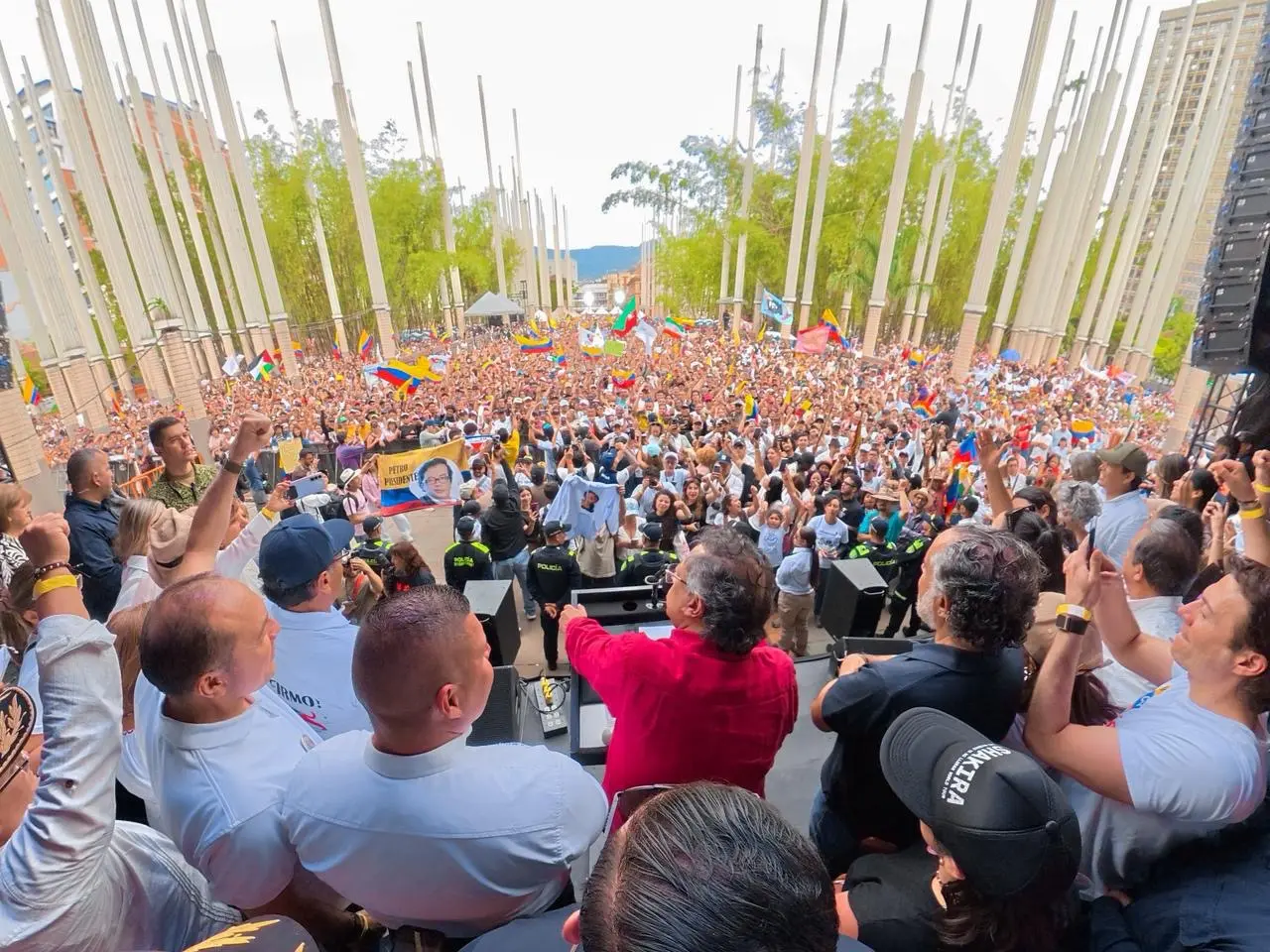
The Colombian president called on citizens to gather on October 24 at 4:00 p.m. in the Plaza de Bolívar, amid growing accusations by Donald Trump.
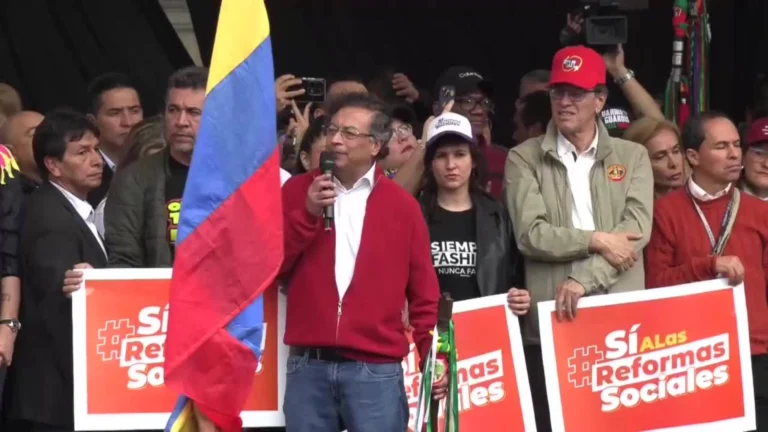
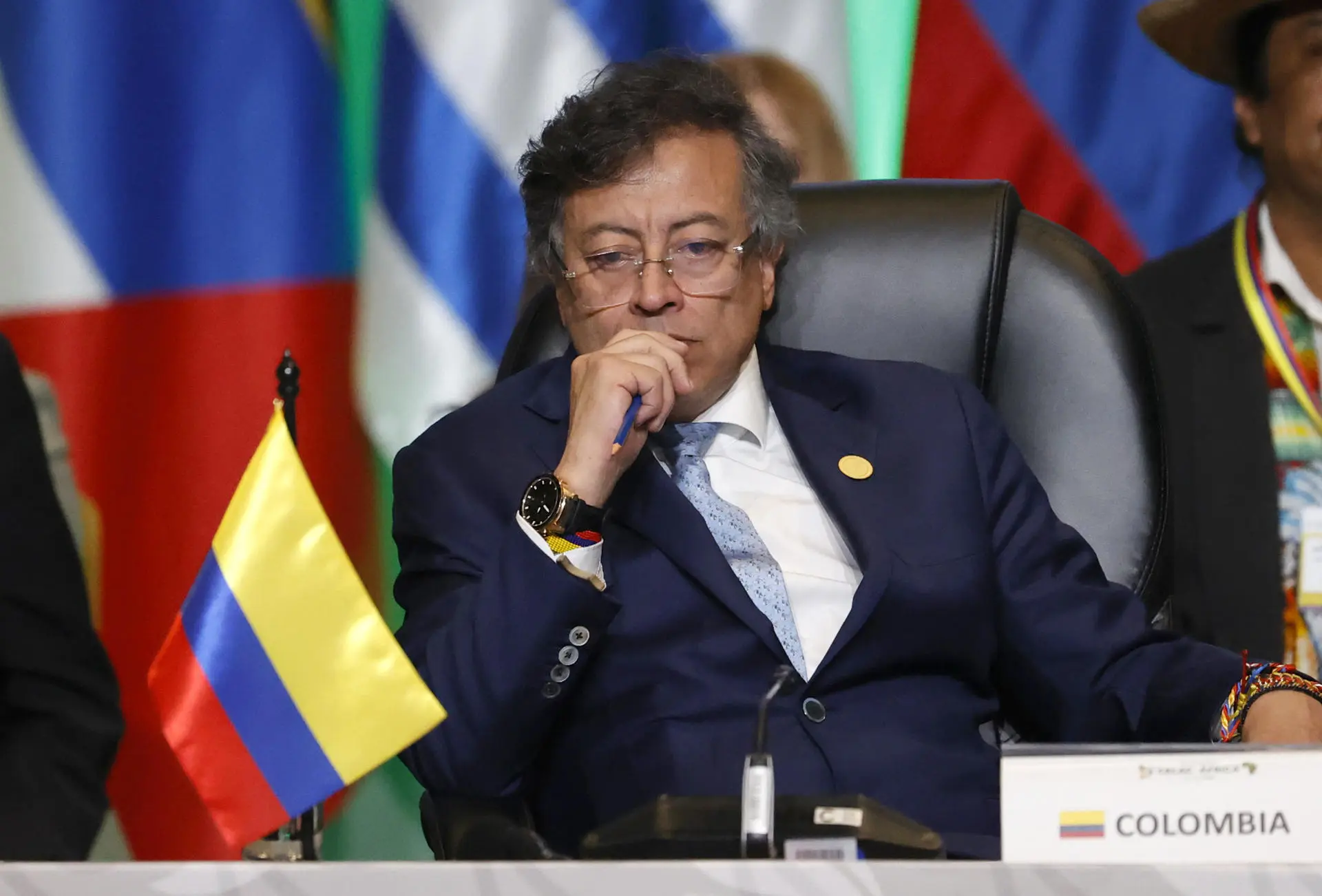
Petro has decided to appeal to the people in the face of Donald Trump’s latest attacks and demonstrations against him. Photo: EFE
October 24, 2025 Hour: 12:05 pm
🔗 Comparte este artículo
After the acquittal of former Colombian President Álvaro Uribe last Tuesday, October 21, Gustavo Petro revived the call scheduled for this Friday. “I am waiting for you in the Plaza de Bolívar in Bogotá this Friday to begin the collection of the signatures of the constituent power,” the president said through his social network X, challenging what he denounces as attempts at subordination by the United States to the Colombian nation.
That same night, in a televised Council of Ministers, he pointed out that in the face of Washington’s attempts at interference, the best thing to do was to appeal to the citizenry. In that sense, he said that “the demonstration [on Friday] is for the sovereignty and dignity of Colombia, in response to the immense amount of slander that has been raised, in the mouths of both the president of the United States and his most direct friends.”. And he stressed: “The people have to take to the streets again. It is in company that one defends oneself from a monster like Trump.”
Although his call to reformulate the State is not new, the acquittal of his nemesis months before the national elections has given him a new impetus to take the initiative to the streets that is expected to be answered with a massive rally in the Plaza de Bolívar in Bogotá for this Friday 24 at 4:00 p.m. (local time).
The call comes in a context of high diplomatic tension with the United States. Last Sunday, U.S. President Donald Trump called Petro a “leader of drug trafficking” and, in subsequent statements, called him a “bully” and a “bad guy.” The Colombian president interpreted these statements as a direct threat.
According to Petro, the verbal escalation from Washington represents a warning of possible military intervention, both in Colombia and Venezuela. He added that personal sanctions are expected against him and that, in his opinion, an attempt is being made to prepare a coup d’état against his government.
In statements offered during a Council of Ministers earlier this week, the Colombian president said that “President Trump does not like that we are out of control” and justified his position by pointing out that there is an alliance between sectors of the Colombian ultra-right and the U.S. president. He also mentioned former Colombian President Álvaro Uribe as part of that articulation.
After these events and the call for Petro’s signatures, the Ministry of Justice released a draft bill to initiate the process of a National Constituent Assembly. As explained by Minister Eduardo Montealegre, the measure responds to repeated institutional blockages by Congress, which make it difficult to approve reforms considered essential.
Montealegre argued that the current conditions require the activation of alternative mechanisms to allow legislative progress. He added that rethinking the institutional model is necessary to meet the objectives of the social rule of law. For the initiative to prosper, the collection of approximately three million signatures is required, in accordance with current legislation.
The keys to the call to the Constituent Power
President Gustavo Petro has revitalized his proposal to convene a National Constituent Assembly, a figure contemplated in the 1991 Constitution to reform the Magna Carta. The call comes in a political context marked by the acquittal of former President Álvaro Uribe and seeks, according to the government, to overcome what it calls an “institutional blockade” and modernize institutions that it considers “obsolete.”
The process, established by the Constitution, involves Congress approving a law that calls for a popular consultation. This law must detail the number of members of the assembly, the issues to be discussed, the election system and the dates. After the presidential sanction and the approval of the Constitutional Court, it will be submitted to a citizen vote. For its approval, the “Yes” of at least a third of the electoral census is required, that is, around 13 million votes, a figure higher than those that elected Petro.
The initiative of the Minister of Justice, Eduardo Montealegre, proposes an assembly of 71 delegates with an equal composition and with seats reserved for specific sectors such as peasants, indigenous people and the LGBTIQ+ population.
Unlike the 2024 proposal, which focused on specific points such as judicial reform and peace, the current call is open, allowing the modification of any article or even the entire Constitution.
The political viability of the project is, at the moment, low. Petro lacks the necessary majority in Congress and the calendar is a crucial obstacle: the legislative and popular process would take more than a year, exceeding the time left in the President’s term, so the process takes place in a race against time for the next elections on March 8.
Author: HGV
Source: Agencias