







Colombia Holds First National Strike Against De la Espriella
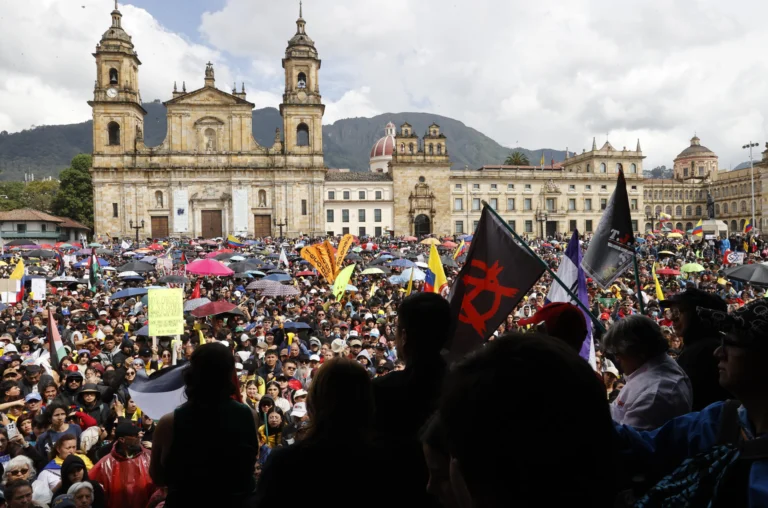
The Government of Abelardo de la Espriella has barely two months in power and this Wednesday, October 14 faced a great challenge in the streets, when the first national strike was held in rejection of its management. Photo: EFE.
October 14, 2026 Hour: 8:21 pm
🔗 Comparte este artículo
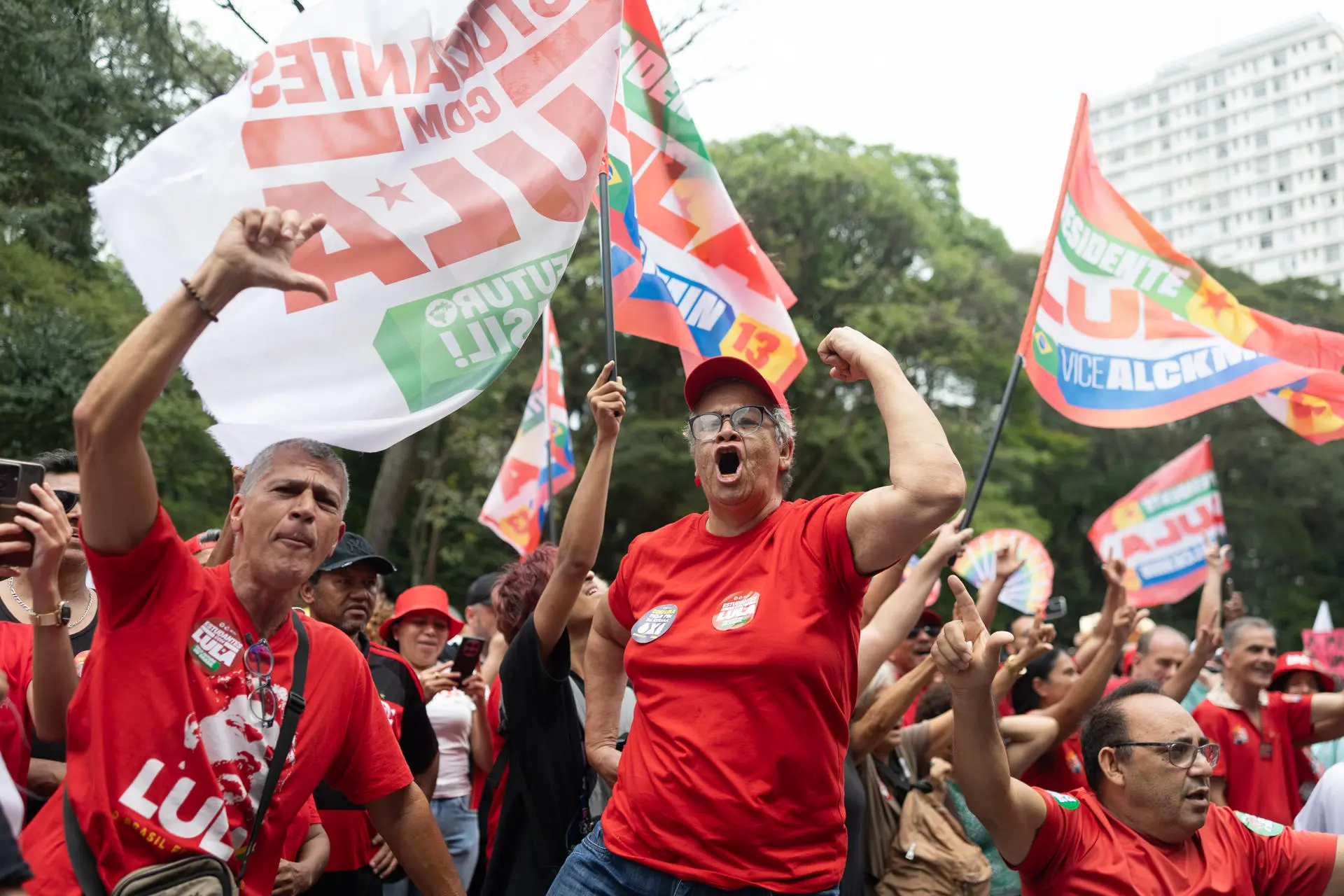
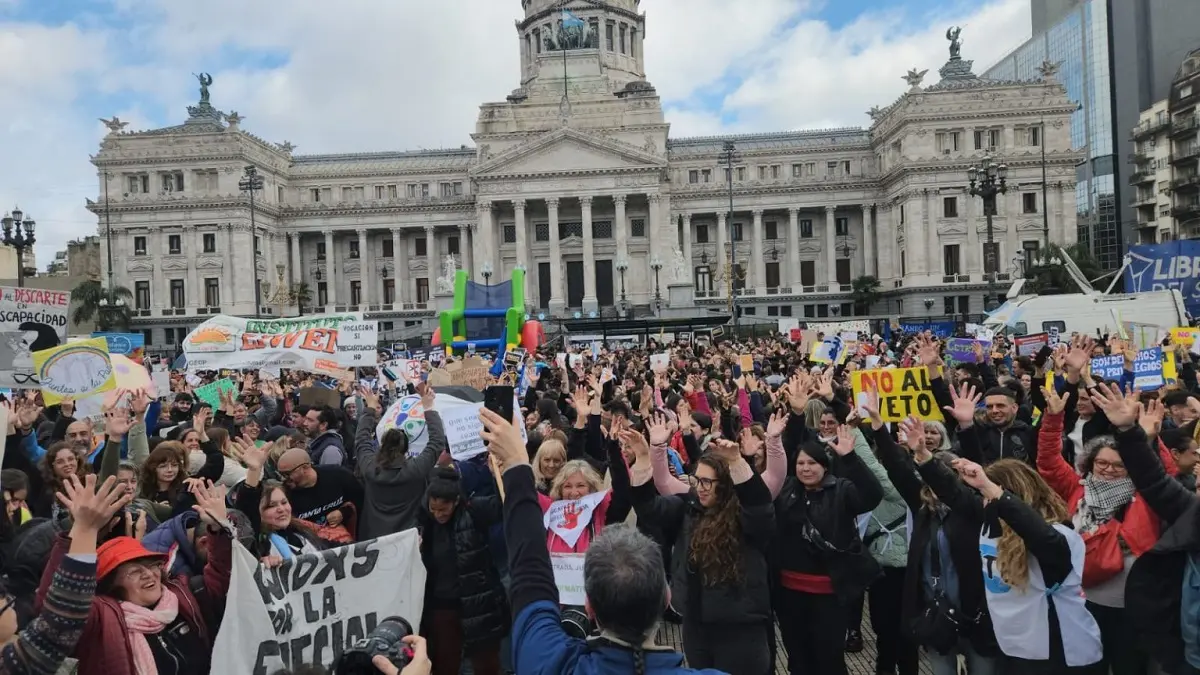
Thousands of Colombians marched in Bogotá and other cities on Wednesday in the first national strike against the government of President Abelardo de la Espriella, just two months after he took office, rejecting a decree that sets rules for how security forces handle demonstrations.
The strike unfolded barely two months into the president’s term. Protesters filled the streets of Bogotá, Cali, Medellín, Bucaramanga, Pereira and Riohacha in a direct rejection of the government’s economic and security agenda.
The call brought together labor unions, student groups, opposition parties, labor federations and the Regional Indigenous Council of Cauca (CRIC).
RELATED: Colombian President Signs Decree Expanding Police Powers to Disperse Protests
Organizers described the turnout as a condemnation of the government’s economic and security agenda, the rising cost of living, a rise in violence, the rollback of social gains and what they call attempts to criminalize the right to protest.
Demonstrators emphasized the peaceful nature of the protest, pushing back against signals from the presidential palace that seek to delegitimize the demands of civil society.
The trigger was Decree 1525, signed by De la Espriella. The measure sets rules for the conduct of security forces at public gatherings and allows authorities to disperse them in the event of serious disturbances. Local governments responded with a large deployment of police in the main cities.
The opposition read that operation as an attempt to condition the right to demonstrate in advance. The reading sharpened a day that organizers had already framed as an expression of accumulated anger over the cost of living and the dismantling of social programs.
“Protest is the only instrument left to native people and social organizations to be heard and to demand that our rights be respected,” demonstrators said.
Broad Coalition, Varied Demands
Discontent is not limited to the decree. The mobilized sectors question the entire set of the government’s early decisions, accusing it of dismantling social gains and making daily life more expensive for the majority.
The Colombian Federation of Education Workers (Fecode), the Colombian Federation of Educators, rallied in defense of public education and the health coverage of teachers. The union also demanded the reconstruction of school infrastructure damaged by earlier emergencies, including the earthquake and its aftershocks in the Cauca Valley, and denounced what it calls the stigmatization of teachers’ unionism.
Native and peasant communities rejected the megaprojects and economic measures they say endanger their ancestral territories. The Cauca Indigenous Regional Council (CRIC) warned that the De la Espriella administration is working to break the autonomy of their organizations.
The economic agenda concentrated much of the anger. Rising prices and policies that organizers say erode acquired rights pushed workers from various productive sectors onto the streets. The protests now carry the weight of a first major social test for the national government, only two months into its mandate. Workers’ federations and popular movements frame the conflict as the defense of historic gains against an agenda they consider regressive.
For the new government, the demonstrations mark a direct challenge. The police deployment in six cities, the breadth of the coalition and the presence of a former President all signal that the strike has moved beyond a dispute over one decree.
Whether the mobilization alters the course of the government’s program remains to be seen. Organizers have promised the pressure will continue if De la Espriella does not reverse the decree and reopen dialogue with the social sectors.
Author: Laura V. Mor
Source: Agencies