







Codex Azcatitlan Returns Temporarily to Mexico
The temporary exhibition of the Azcatitlan Codex in Mexico strengthens the exchange of cultural heritage with France and reopens the discussion regarding the recovery of historical Mexican documents.
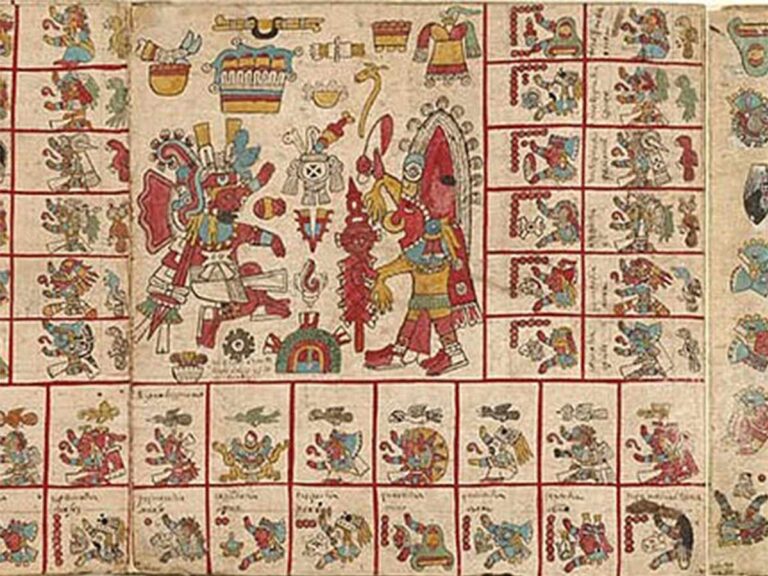
The Azcatitlan Codex was on display at the National Museum of Anthropology until December 31, 2026. Photo: pueblosoriginarios.com
September 18, 2026 Hour: 9:14 am
🔗 Comparte este artículo
The Codex Azcatitlan is on temporary display at Mexico’s National Museum of Anthropology until December 31, 2026, as part of a cultural exchange with France marking the bicentennial of diplomatic relations between the two nations. The exhibition, titled Codex Azcatitlan: Mexico-France, 200 Years of Friendship, brings back for the Mexican public a manuscript that left the country in 1840 and is currently housed at the National Library of France (BNF).
RELATED:
Mexico Proposes Zero VAT for Small Bookstores
Baltazar Brito Guadarrama, director of the National Library of Anthropology and History (BNAH), explained that the Codex Azcatitlan consists of 25 folios of European paper and documents approximately 500 years of Mexica history. The manuscript covers the migration from Aztlán—considered the place of origin of the Mexica people—the election of Acamapichtli as the first tlatoani (ruler), and the period of the conquest of Mexico-Tenochtitlan.
“There are likely around 600 codices in the world. Having an original codex come to Mexico and allowing us to reconnect with it is, I believe, very significant,” Guadarrama noted. According to the official, France holds more than 100 codices, as well as copies of documents whose originals have been lost. The BNF and the BNAH together hold nearly 35 percent of the world’s existing codices.
Through the Ministry of Foreign Affairs (SRE) and the Ministry of Culture, the Mexican government is working to recover the Codex Azcatitlan and other documents considered national heritage. Guadarrama indicated that this exchange represents a step in that effort and expressed his hope that the manuscript might eventually return to Mexico permanently through a donation from France.
The text reads, “Within the framework of the Great Franco-Mexican Festival, the ambassador of @EmbaMexFra, Blanca Jiménez, invites you to the exhibition “The Azcatitlan Codex”. For the first time since 1840, we exhibit this 16th-century work on the Mexica people. National Museum of Anthropology”
The temporary loan stems from an agreement between the President of Mexico, Claudia Sheinbaum, and the President of France, Emmanuel Macron, to organize reciprocal exhibitions marking the bicentennial of diplomatic relations between Mexico and France, which is being commemorated this year. During Macron’s visit to Mexico in November 2025, Sheinbaum described the codex as the country’s living memory and the deep root of our identity.
The Azcatitlan Codex was created between the mid-16th and late 17th centuries. Its authorship remains unknown, as such manuscripts belonged to the community and were not typically attributed to an individual artist. It is believed that its first owner was Fernando de Alva Ixtlilxóchitl, a descendant of Nezahualcóyotl. Later, the document passed into the hands of Sigüenza y Góngora, who bequeathed his library to the Society of Jesus.
In 1737, the Italian historian Lorenzo Boturini acquired the Jesuit holdings, including manuscripts of indigenous origin. Ninety-three years later, the French researcher Joseph Marius Alexis Aubin obtained the collection and transported it to France. In 1830, Aubin sold the documents to the French-Mexican Eugène Goupil. After his death, his widow donated the archive to the BNF, on the condition that it remain in the custody of that public institution.
As part of the bilateral agreement, the Boturini Codex will also return to Mexican territory on December 31, 2026, following its presentation at the French institution.
Author: HGV/JF
Source: National Library of Anthropology and History