


China and Pakistan Propose Peace Plan for Gulf and Middle East
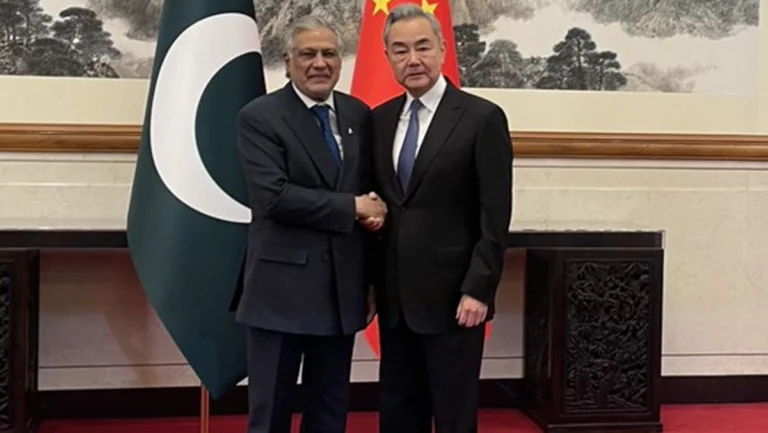
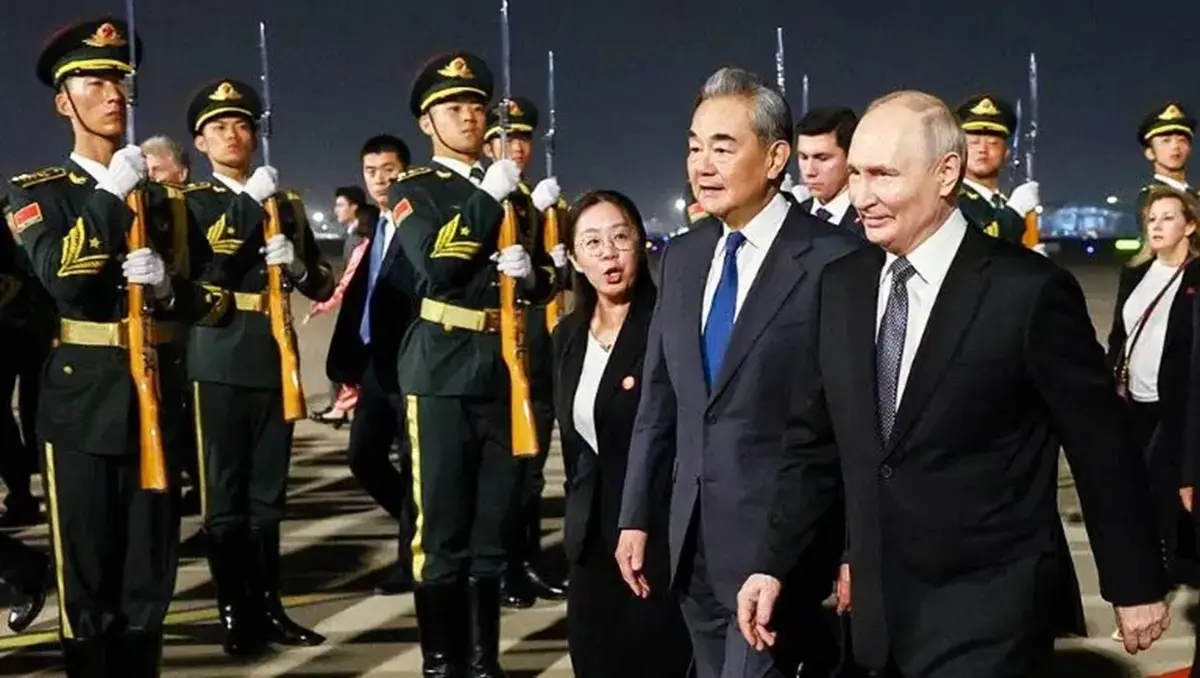
Ishaq Dar and Wang Yi, March 31, 2026. X/ @ChinaEmbinCH
March 31, 2026 Hour: 11:25 am
🔗 Comparte este artículo
The five-point initiative calls for immediate ceasefire and maritime security.
On Tuesday, the foreign ministers of China, Wang Yi, and Pakistan, Ishaq Dar, put forward a five-point initiative to restore peace and stability in the Gulf and the Middle East.
The proposal emphasizes the need for an “immediate” cessation of hostilities and to “make all possible efforts to prevent the spread of the conflict.” It also call for “allowing the entry of humanitarian aid to all areas affected by the war.”
Peace Negotiations
The second point urges “respect for sovereignty, territorial integrity, national independence and security” of both Iran and the Gulf states, which have been targeted by Tehran’s reprisals for attacks on its territory carried out by Israel and the United States.
The meeting between Wang and Dar comes after Islamabad, which is seeking to position itself as a mediator for potential negotiations, said that both Washington and Tehran have expressed confidence in Pakistan to facilitate contacts aimed at a “comprehensive and lasting” agreement.
“Dialogue and diplomacy are the only viable means to resolve the conflict,” the text states, adding that, during any potential dialogue, the opposing parties “must not use or threaten to use force.”
Security of Nonmilitary Targets
Islamabad and Beijing urge “ensuring the security of nonmilitary targets” and call to “immediately stop attacks against civilians and nonmilitary targets” and to “fully comply with international humanitarian law.”
The two Asian countries advocate for “stopping attacks against critical infrastructure such as energy facilities, desalination plants, electrical infrastructure and civilian nuclear facilities.”
Security of Maritime Routes
The fourth section calls to “secure maritime routes,” after the Strait of Hormuz has been effectively blocked by Iran.
“China and Pakistan urge all parties to protect the safety of ships and crews that remain held in the internal waters of the Strait of Hormuz, to organize as soon as possible the safe passage of civilian and commercial vessels, and to restore normal navigation in the strait as soon as possible,” the statement said.
Transit through Hormuz is particularly sensitive for China, given that nearly 45% of its energy imports pass through that route.
Primacy of the United Nations Charter
The final point refers to “ensuring the primacy” of the United Nations Charter and defends the “genuine multilateralism” advocated by Pakistan and China.
The meeting between Wang and Dar comes after the conclusion of a round of consultations in Islamabad with the foreign ministers of Saudi Arabia, Turkey and Egypt, who expressed their “fullest support” for the Pakistani initiative and agreed that prolonging the conflict “does not benefit anyone and would only lead to death and destruction.”
During a telephone conversation with Dar on Feb. 27, Wang had already confirmed that Beijing is willing to “strengthen communication and strategic coordination” with Pakistan to work “in favor of peace and an end to hostilities” in the Middle East.
The Chinese foreign minister stressed that only dialogue can prevent further casualties, stop the expansion of the conflict and help restore normal navigation in the Strait of Hormuz.
teleSUR/ JF
Source: EFE – Xinhua