Bolivian Physics Laboratory Promoted for UNESCO World Heritage Status
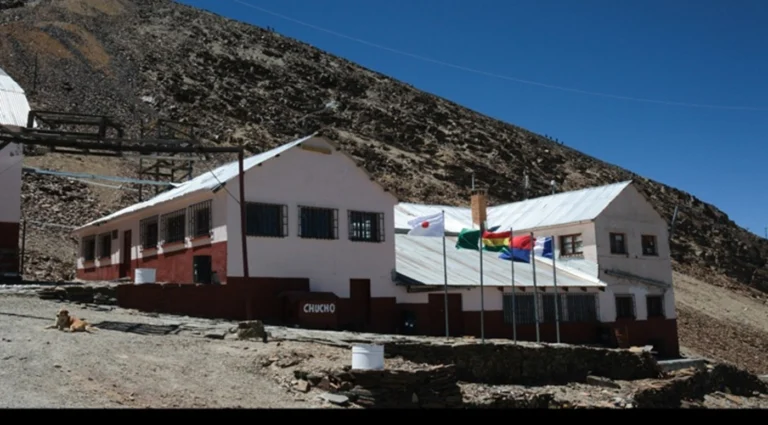
X/@BrujulaNoticias.
October 19, 2026 Hour: 12:20 pm
🔗 Comparte este artículo
Among its key milestones is the experimental confirmation of the pion, a subatomic particle.
Bolivia is promoting the candidacy of the Chacaltaya Cosmic Physics Laboratory for UNESCO World Heritage status. The scientific center is considered the highest in the world, located at 5,220 meters above sea level.
RELATED:
Bolivia Confirms Discovery of a New Wild Feline Species
The laboratory belongs to the San Andres High University and is situated on Chacaltaya mountain in the Andes Mountains, about 30 kilometers from the city of La Paz.
According to researchers at the institution, the main reason for the nomination lies in the historical significance of the scientific discoveries made at this site over several decades.
Among its key milestones is the experimental confirmation of the pion, a subatomic particle whose existence was predicted in 1935 by Japanese physicist Hideki Yukawa and confirmed at Chacaltaya in 1947.
The text reads, “A new milestone for the Cholita Climbers of Bolivia! With support from the ILO, the Khunu Cholita Climbers Association has obtained legal status.
This is a key step in strengthening their organization, advancing their formalization process, and expanding their opportunities for decent work.”
The work carried out at the laboratory was linked to internationally renowned scientists such as Hideki Yukawa, Cecil Frank Powell, and Cesar Lattes, whose contributions were recognized as significant advances in modern physics.
In addition to particle physics research, the center expanded its activities into areas such as astrophysics, astronomy, and atmospheric physics, establishing itself as an international scientific leader.
The mountain also houses a station of the World Meteorological Organization’s Global Atmosphere Watch network, dedicated to monitoring greenhouse gases, aerosols, and radiation.
The University is managing the nomination to UNESCO with the support of countries such as Brazil and Japan. The process requires prior recognition by Bolivian regional and national authorities.
teleSUR: JP
Source: EFE