Bolivia: Teachers Continue Strike Against Educational Decentralization
Bolivian teachers are maintaining a 48-hour work stoppage and hunger strikes to oppose the Rodrigo Paz administration’s draft proposal for the decentralization of education—a plan they view as an attempt at privatization that would weaken free public education.
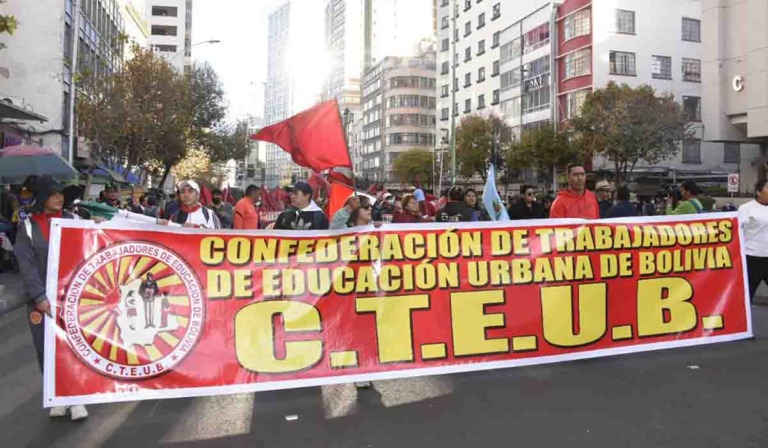
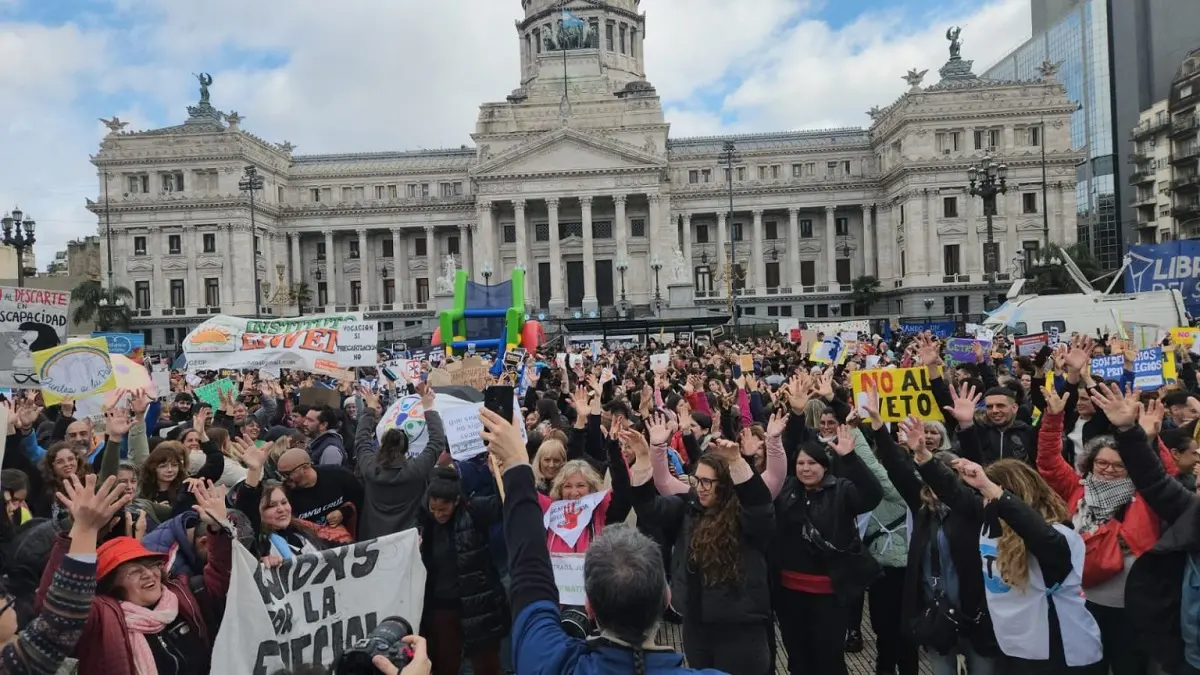
Bolivian teachers march in downtown La Paz during the second day of a 48-hour national strike against the decentralization of technical institutes. Photo: eldia.com.bo
November 10, 2026 Hour: 1:13 pm
🔗 Comparte este artículo
On Tuesday, urban education workers in Bolivia are observing the second day of a 48-hour strike, accompanied by demonstrations, in opposition to a government draft bill that proposes transferring the administration of technical and technological institutes to regional governments (departmental administrations). The teaching profession argues that this measure would fragment the public system and open the door to a covert form of privatization.
RELATED:
Bolivia’s Urban Teachers Begin 48-Hour Nationwide Strike
The protest, organized by 31 federations within the sector, includes marches in several cities, hunger strikes, and demands for an increased budget, adherence to the established teacher career structure, and better working conditions.
Two groups of protesters, consisting of thousands of teachers, arrived in the center of La Paz to reject the gradual transfer of educational responsibilities to provincial (departmental) governments. The mobilization included teachers from El Alto and the Yungas region, while in Santa Cruz, teachers marched toward the departmental government headquarters, where some are currently participating in a hunger strike.
Classrooms in many schools remained empty during the first day of the strike. Demonstrations were also reported in the departments of Cochabamba, Tarija, Chuquisaca, Oruro, and Pando, among others.
More than 140 teachers are voluntarily participating in a hunger strike—a pressure tactic accompanying the 48-hour national strike. Union leaders have warned that if the executive branch does not call for dialogue in the coming days, the protest actions will escalate.
The teaching profession maintains that the draft bill on educational decentralization aims to shift the administration of human resources and budgets for higher-level technical institutes to the regional governments—responsibilities that currently fall under the Ministry of Education.
Teachers view this transfer as a covert attempt at privatization that puts the unified, state-funded, and free public education system at risk. For their part, union leaders have denounced the central government for allegedly attempting to shirk its constitutional responsibilities regarding the provision of public education. In addition to opposing decentralization, the sector is demanding more resources for schools, adherence to the national teacher ranking and promotion system, and better working conditions.
Minister of Education Érick Sanjinés rejected accusations of privatization, stating that the proposal aims to grant greater authority to the country’s nine departments. According to the minister, the draft bill includes transferring the management of human resources and the budgets of higher technical institutes to the departmental governments.
Sanjinés maintained that the measure is not intended to privatize the sector, but rather to strengthen the regional management of technical institutes. However, he announced that salary deductions would be applied to teachers who participate in the protests, and that any missed classes would have to be made up.
The conflict is part of a decentralization policy championed by President Rodrigo Paz, which proposes a division of responsibilities between the central government and the departmental administrations.
The government maintains that the oversight of the educational system, the establishment of national policies, the setting of curricular guidelines, and the maintenance of quality standards will remain the responsibility of the Ministry of Education.
The dispute remains unresolved, with the urban teachers’ union demanding a formal invitation to dialogue—one that includes both President Paz and the governors of the nine departments. Meanwhile, the executive branch has reaffirmed its commitment to proceeding with the administrative transfer of technical and technological institutes.
The teachers’ strike highlights a confrontation between those who defend the centralization of public education and the administrative decentralization project promoted by the Bolivian government.
Author: HGV
Source: Telesur/PL