


Argentina Identifies Dictatorship’s Disappeared People After Five Decades of Search
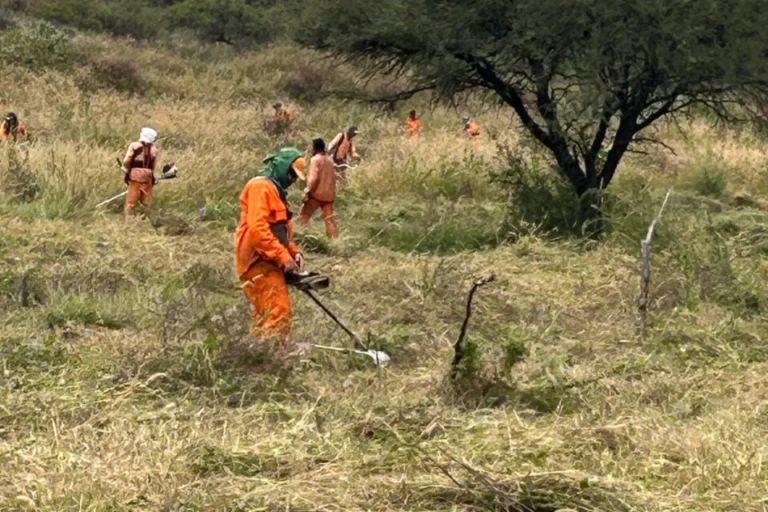
Despite the fact that the military dictatorship carried out in 1979 an operation with heavy machinery to remove and hide the bodies, the earth preserved bone fragments that allowed to return identity to those who remained missing for almost five decades. Photo: EAAF.
May 11, 2026 Hour: 7:40 pm
🔗 Comparte este artículo
The Argentina’s Anthropology Team confirmed on May 11 the identification of three victims of the last civil-military dictatorship, whose remains were found near La Perla in Córdoba after five decades.
In a historic development for memory and justice in Argentina, the Forensic Anthropology Team (EAAF, In Spanish) confirmed on May 11 the identification of Luis Mónaco, Ester Felipe and Graciela Doldán.
Their remains were discovered near La Perla, a former clandestine detention center in the province of Córdoba, following five decades of search, despite the military dictatorship’s extensive efforts to conceal evidence.
RELATED: Milei Suspends Equipment to Identify Lost Children From the Dictatorship
The excavations, diligently conducted by the Argentinean Forensic Anthropology Team at the site known as Loma del Torito, enabled the recovery of over 1,200 bone fragments. These crucial pieces survived a large-scale operation in 1979, executed by the civil-military dictatorship using heavy machinery to remove and conceal bodies.
This desperate attempt was made in anticipation of a visit from the Inter-American Commission on Human Rights (IACHR), aiming to erase evidence of the atrocities committed. Despite this brutal act of concealment, the earth meticulously preserved the osseous fragments that have now allowed for the restoration of identity to individuals who remained disappeared for nearly five decades.
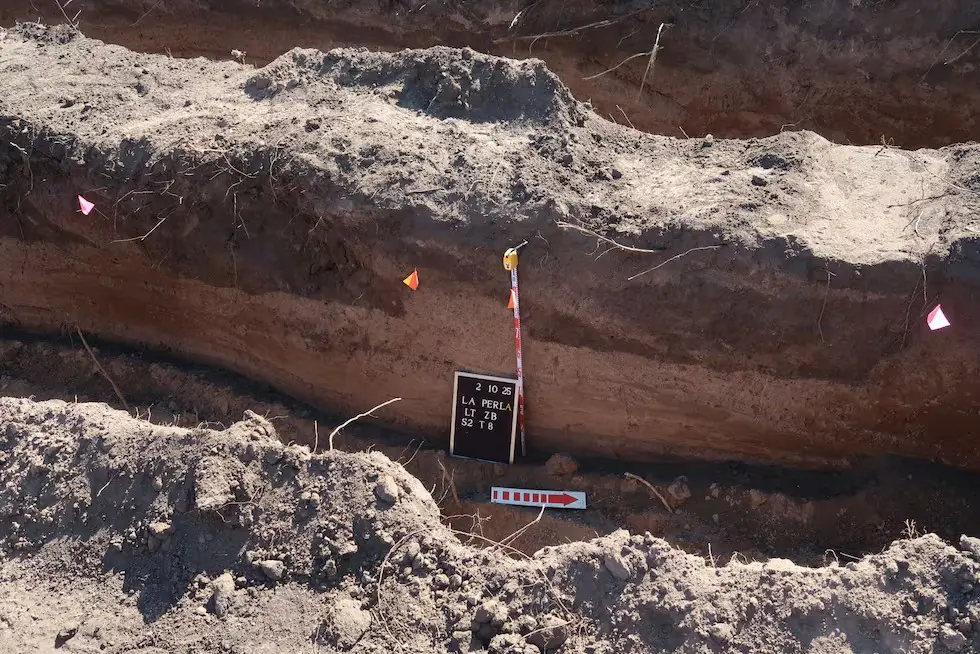
The identification of Luis Mónaco, Ester Felipe and Graciela Doldán represents a monumental achievement in the ongoing quest for truth. The Argentinean Forensic Anthropology Team, renowned for its rigorous scientific methodology, utilized advanced forensic genetic analysis in its Forensic Genetics Laboratory, comparing recovered profiles with those provided by the families. This painstaking process not only confirmed the identities but also provided tangible evidence of the dictatorship’s crimes.
The discovery at Loma del Torito, within the La Calera Military Garrison, where La Perla operated as a notorious clandestine detention center, underscores the historical significance of the site as a grim testament to state-sponsored repression.
Text reads: “We looked for you so hard, waited for you so long. Today they return with us and we are floating, with the heart galloping, discovering a new – and wonderful – form of happiness. Welcome back Ester and Luis, Mom and Dad.”
Argentina’s Families Find Answers
The news brought a profound emotional impact to the families, some of whom have spent nearly half a century seeking answers. Paula Mónaco Felipe, daughter of Ester and Luis, received the news of her parents’ discovery with deep emotion, emphasizing that her parents, kidnapped in 1978, were found together after 48 years.
“They did so much so that we would never find them, and we found them despite everything”, expressed Paula, highlighting that this finding allows her family to shed a “grey layer” and begin to understand the true meaning of justice. Among the recovered pieces, a phalanx bone of her father still bore his wedding ring, a poignant symbol of the material’s resilience against the attempt at historical erasure and a powerful emblem of enduring love amidst unimaginable suffering.
Similarly, Roberto Doldán celebrated the identification of his sister, Graciela, a labor lawyer and militant who was kidnapped in 1976. He proudly affirmed that she “won again” by not allowing her disappearance to be permanent, a testament to her legacy and the ongoing fight against impunity.
Text reads: “Now we know where she is. Graciela María de los Milagros Doldán was recently identified by the @eaafoficial on land adjoining the former clandestine center La Perla, Córdoba. They are 30,000. Say us where they are”.
Alongside survivors such as Graciela Geuna, the families have issued an urgent call to the Argentinean State to redouble the resources allocated to excavations and demand that the repressors break their pact of silence. “A solid democracy cannot be built with thousands of unburied men and women”, declared the plaintiff’s lawyer, Ramiro Fresneda, reaffirming the commitment to continue the search until every victim of the repression is found.
In this context, Federal Court N°3 of Córdoba, led by Judge Miguel Vaca Narvaja, has convened a press conference for this Tuesday, May 12, to officially announce the identities of a new group of individuals disappeared during the last civil-military dictatorship in Argentina.
This new group of identifications adds to the twelve persons whose names were restituted in March of this year, demonstrating the persistent and crucial work of the Argentinean Forensic Anthropology Team and the unyielding efforts of Human Rights organizations and families.
The ongoing discoveries serve as a powerful reminder of the importance of memory, truth and justice in confronting the legacies of authoritarian regimes and ensuring accountability for past atrocities.
Author: Laura V. Mor
Source: Argentinean Anthropology Team/ HIJOS