








Ancient Maya Cosmogram Unearthed in Mexico
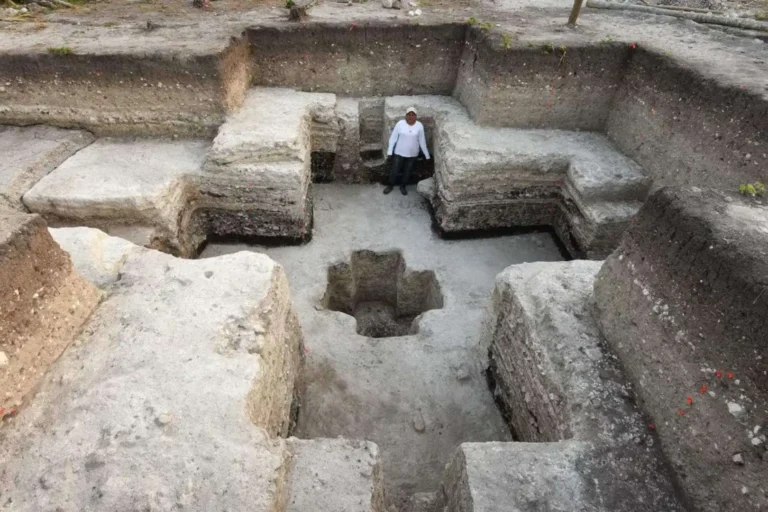
Shapes of cross, key in the design of the Mayan monument in the southeast of Mexico. Photo: Muy Interesante.
November 6, 2025 Hour: 11:26 am
🔗 Comparte este artículo
The 3,000-year-old structure suggests the Maya achieved architectural complexity earlier than believed.
On Wednesday, the magazine Science Advances published an article announcing that a group of researchers discovered the largest religious ritual structure of the ancient Maya civilization in Tabasco, near the southern border of Mexico.
RELATED:
Chichén Itzá: Ancient Mayan Legacy in the Yucatán Peninsula
The place, called Aguada Fenix, is a giant “cosmogram” from which the Maya simulated the order of the universe. The structure is approximately 1.5 km large, 0.5 km wide and between 1 and 1.5 m high. Built around 1000 BC., this site could have belonged to a society run by an intellectual class.
Around the Aguada Fenix area, archaeologists have also identified 500 smaller sites with similar structures. During the last excavation the team discovered a cross-shaped pit that contained numerous ritual artifacts, providing valuable information about the first Mayan rituals.
Archaeologists found the first hints in 2017 thanks to airborne laser scanning technology, which allows 3D mapping of hidden structures beneath the jungle. Anthropologist Takeshi Inomata stated that the discovery demonstrates that around the year 1000 BC., there was a “big explosion” in the construction activities of the mayas.
The central axis of the structure is aligned with the sun’s output on the 17th of October and the 24th of February, an interval of 130 days, which corresponds to the middle cycle of 260 days of the calendar of religious ceremonies of the Mesoamerican civilization.
Archaeologists also found numerous jade hatches and ornaments, including images of coconut trees, birds and women giving birth, showing that this was a place where important religious rituals were practiced.
Researchers also discovered a miniature cross containing blue, yellow and green earth located at four cardinal points, which marks the first time these mineral pigments associated with cosmological symbols have been found.
The discovery refutes the opinion that Mesoamerican cultures developed gradually, building large settlements such as Teotihuacan, given the fact that Aguada Fenix dates back 1,000 years ago and is of larger scale than Teotihuacan.
teleSUR: JP
Source: Vietnam.vn