



7 Days of Defiance: Venezuelan People Demand Maduro’s Release Amid U.S. Aggression
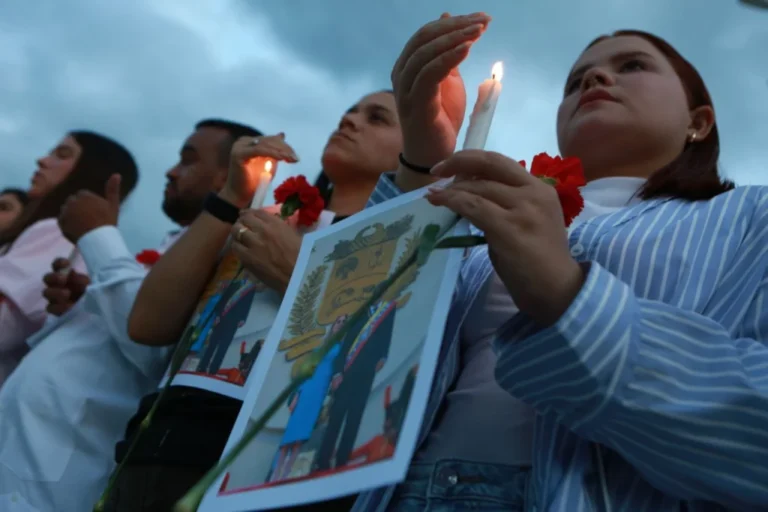
Thousands march in Caracas on January 10, 2026—the seventh consecutive day of national mobilizations demanding the immediate return of President Nicolás Maduro and First Lady Cilia Flores.
January 10, 2026 Hour: 12:00 pm
Venezuelan people demand Maduro’s release in massive nationwide protests following U.S. military operation and alleged kidnapping of president and first lady.
Related: 5 Critical Tons: Brazil Sends Medical Aid to Venezuela After U.S. Bombing Destroys Dialysis Supplies
7 Days of Defiance: Venezuelan People Demand Maduro’s Release Amid U.S. Aggression
Venezuelan people demand Maduro’s release in a powerful wave of sustained popular resistance that has swept across all 23 states and the Capital District since the alleged U.S. military operation on January 3, 2026. Eight days after President Nicolás Maduro and First Lady Cilia Flores were reportedly abducted from Venezuelan soil by American forces, citizens once again flooded the streets of Caracas in a demonstration described by organizers as “heroic” and “unbreakable.”
On Friday, January 10, a red tide of workers, students, communal councils, and social movements gathered at Plaza Venezuela before marching down Avenida Universidad toward the National Assembly. Chanting “¡Venezuela No Se Rinde!” (“Venezuela Does Not Surrender!”), the crowd rejected what they call the “cowardly kidnapping” of their democratically elected leaders and denounced Washington’s actions as a flagrant violation of sovereignty, international law, and human rights.
This marks the seventh consecutive day of nationwide mobilizations, each larger and more organized than the last. Far from descending into chaos, the protests reflect a highly coordinated effort led by grassroots communes—structures of participatory democracy that have become central to Venezuela’s political fabric. For participants, taking to the streets is not merely symbolic; it is the primary shield protecting the Bolivarian Revolution from external overthrow.
Venezuelan People Demand Maduro’s Release as Popular Power Defends Constitutional Order
The demonstrations are not only about the return of individuals—they are a defense of the popular mandate granted in the 2024 elections, which re-elected Maduro for the 2025–2031 term with over 5.8 million votes. Protesters insist that this mandate remains valid and must be upheld, regardless of foreign interference. “They took our president, but they cannot take our will,” declared Rosa Méndez, a nurse from Petare and member of the Health Workers’ Front, speaking to teleSUR amid the march.
The unity between civilian and military sectors—known as “civic-military union”—has intensified, with active-duty soldiers joining retirees and community militias in public shows of solidarity. This cohesion, a cornerstone of Venezuela’s national defense doctrine, has deterred further incursions and signaled to Washington that any attempt at occupation would face unified resistance.
Meanwhile, Acting President Delcy Rodríguez leads a High-Level Commission presenting Venezuela’s case before international bodies, including the UN Human Rights Council and the International Court of Justice. But diplomats stress that their legal arguments gain legitimacy from the visible, sustained presence of the people in the streets. “Our diplomacy is backed by millions of feet on the pavement,” said Foreign Minister Yván Gil during a press briefing in Geneva.
The UN Special Rapporteur on unilateral coercive measures has repeatedly warned that foreign interventions exacerbate humanitarian crises—a point echoed by protesters who highlighted the bombing of a medical warehouse in La Guaira. The destruction of 85 containers of dialysis supplies, they argue, constitutes a war crime targeting the most vulnerable.
Geopolitical Context: Popular Mobilization as a Shield Against Imperial Overreach
In an era when hybrid warfare blends military strikes, economic sanctions, and information operations, Venezuela’s mass mobilizations represent a rare counter-strategy: the weaponization of collective presence. While other nations subjected to regime-change campaigns have fractured under pressure, Venezuela’s communal networks have enabled rapid coordination, food distribution, and neighborhood defense—proving that popular organization can be as strategic as air power.
This resilience challenges the U.S. narrative that Venezuela is a “failed state.” On the contrary, the country continues to function: schools operate, hospitals treat patients, and oil production persists—even as citizens protest daily. This duality—working and fighting simultaneously—defies the paralysis typically engineered by foreign aggression.
Regionally, Venezuela’s resistance resonates across Latin America. From Chile to Mexico, solidarity marches have erupted, while governments like Brazil, Colombia, and Argentina face growing domestic pressure to condemn U.S. actions. The crisis has reignited debates about the Monroe Doctrine’s legacy and whether the Americas can truly be a “zone of peace,” as declared by CELAC in 2012.
The Community of Latin American and Caribbean States (CELAC) is scheduled to hold an emergency summit next week, where Venezuela’s sovereignty will be central. If member states adopt a unified stance, it could mark a turning point in regional autonomy from U.S. influence.
Globally, the situation tests the credibility of multilateral institutions. If the UN fails to act against the abduction of a sitting head of state—a scenario unprecedented in the 21st century—it risks confirming widespread skepticism that international law applies only to the weak. In this light, the Venezuelan people’s protests are not just national—they are a global plea for a rules-based order.
From Health Crisis to National Unity: A Broadened Front of Resistance
Friday’s march was also marked by outrage over the destruction of critical medical infrastructure in La Guaira. Protesters carried signs depicting dialysis machines and children’s IV bags, condemning the U.S. strike as an attack on life itself. “They bombed medicine, not weapons,” shouted Dr. Luis Arévalo, a pediatrician from Barquisimeto. “This is not counter-narcotics—it’s collective punishment.”
This humanitarian angle has drawn previously uninvolved sectors into the movement. Small business owners, university professors, and even some opposition-aligned citizens have joined the marches, repulsed by the scale of civilian harm. The aggression, rather than dividing Venezuelans, has unified them around a shared sense of national dignity.
At the rally’s conclusion outside the Federal Legislative Palace, popular spokespeople issued a clear ultimatum: mobilizations will continue every day until Maduro and Flores return. They also announced plans for a “National Week of Sovereignty” beginning January 15, featuring cultural events, community assemblies, and border vigils.
“We are not waiting for permission to exist,” declared youth leader Camila Rojas. “We are building peace through resistance—and peace without sovereignty is no peace at all.”
Conclusion: The Streets as the Heartbeat of the Revolution
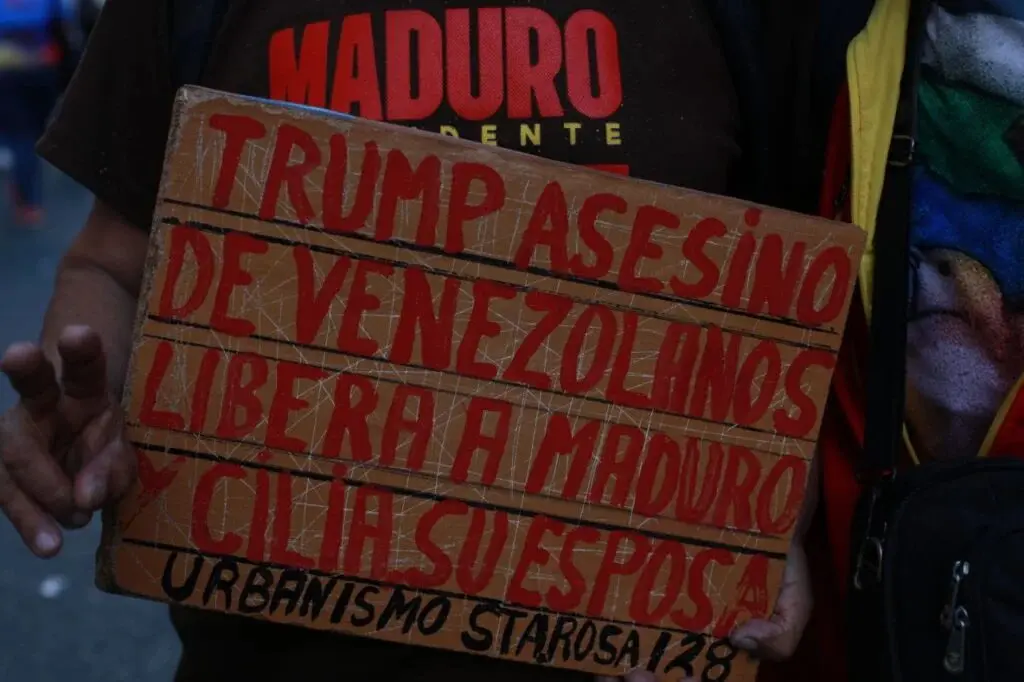
As night fell over Caracas, the red flags remained raised, and the chants echoed through the capital’s hills. The Venezuelan people demand Maduro’s release not out of blind loyalty, but out of a deeper conviction: that self-determination is non-negotiable, and that no foreign power—not even the world’s largest military—has the right to dictate their future.
In the face of bombs, blockades, and bounties, Venezuela’s answer has been simple, powerful, and profoundly human: we are still here—and we are not leaving.
Author: JMVR
Source: Agencias
