




Venezuelan Government Commemorates the 17th Anniversary of the Plurinational State of Bolivia
Foreign Minister Yván Gil highlighted the recognition of intercultural identity, social, political and economic inclusion, promoted by former President Evo Morales.
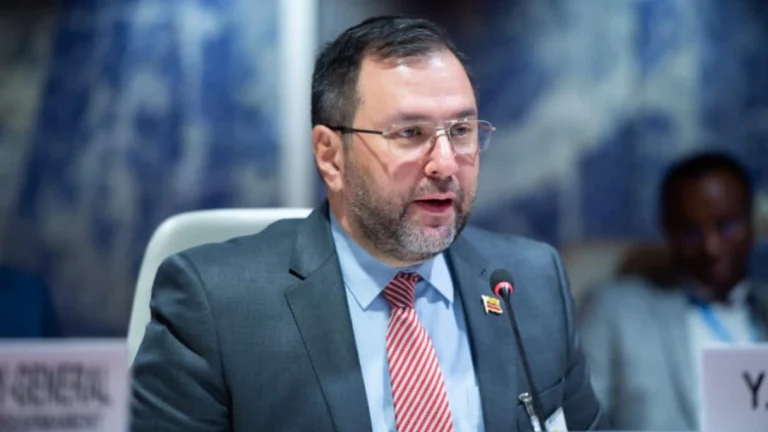
“We pay tribute to this historic milestone that expanded the visibility and rights of the many Indigenous nations and peoples,” Gil stated on his social media. Photo: LAUICOM.
January 22, 2026 Hour: 3:56 pm
The Venezuelan government, through its Foreign Minister, Yván Gil, commemorated on January 22nd another anniversary of Bolivia’s refounding as a Plurinational State. Through official channels, the diplomat highlighted that this event, promoted 17 years ago by then-President Evo Morales (2006-2019), allowed for the constitutional recognition of the pluriculturalism and ethnic diversity of the Andean nation.
Gil described the date as a triumph of intercultural identity and social inclusion. “We pay tribute to this historic milestone that expanded the visibility and rights of the many indigenous nations and peoples,” the Foreign Minister stated, underscoring the political and economic impact of this model of state.
RELATED:
Evo Morales Condemns “Authoritarian” Media Ban as Bolivia Cuts teleSUR, RT Broadcasts
The transformation of Bolivia was formally consolidated on January 22, 2010, leaving behind the old republican structure. This legal change resulted from the approval of the new Political Constitution of the State (CPE) at the polls on February 7, 2009, following a process led by the Constituent Assembly.
The current Constitution defines Bolivia as a Unitary Social State of Plurinational Community Law, based on pillars such as linguistic pluralism, which grants official status to indigenous languages, and community justice, recognized at the same level as the ordinary justice system.
It also promotes a community economy based on the development of collectively owned enterprises without exploitation, and guarantees the political representation of indigenous peoples through the creation of special constituencies in the legislature.
“None of this arose overnight; each article, each recognition, and each enshrined right is the result of decades of struggle, resistance, and social organization, led by multiple collective actors. The Plurinational State was not a concession: it was a historical achievement that continues to challenge the present and confront the future,” emphasizes an article published on the official website of the Andean Parliament.
The choice of January 22 as a holiday is not accidental, as it is related to key moments in the career of former president Evo Morales, who officially established the date in 2010 through Decree 405.
On January 22, 2002, Morales was expelled from Congress as a deputy for denouncing irregularities in the legislature’s handling of lawmaking. Subsequently, on January 22, 2006, he took office as president of Bolivia for the first time.
RELATED:
Bolivia Resolves Fuel Subsidy Protests With New Social Decree
For 2026, the current Bolivian government has made changes to the holiday schedule through Supreme Decree 5521. Although the commemoration of the Day of the Plurinational State of Bolivia remains on Thursday, January 22, the holiday with the suspension of activities has been moved to Friday, January 23.
“Our government supports tourism activities because they are a source of economic activity,” said Labor Minister Edgar Morales, explaining that the measure aims to create a long weekend that will boost the country’s economic recovery.
Author: HGV
Source: Yvan Gil Pinto
