


UN General Assembly: Democratic Reform or Continuation of Hegemonic Power?
The 80th session of the United Nations General Assembly, taking place from September 22 to 26 in New York, is no ordinary meeting. It coincides with the organization’s eight-decade anniversary and the launch of the UN80 initiative, a reform plan seeking to “modernize” the institution to make it more effective. However, the backdrop of this […]
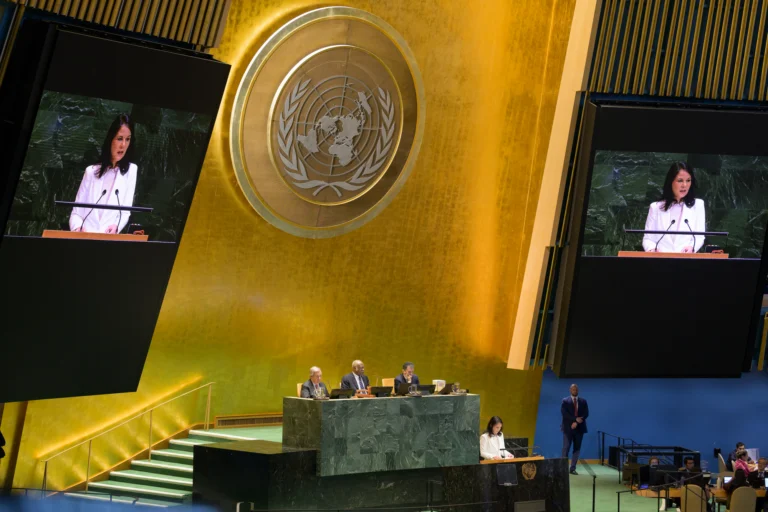
Annalena Baerbock (at podium and on screens), President-elect of the eightieth session of the United Nations General Assembly, addresses the 72nd plenary meeting of the General Assembly.
September 19, 2025 Hour: 6:15 pm
The 80th session of the United Nations General Assembly, taking place from September 22 to 26 in New York, is no ordinary meeting. It coincides with the organization’s eight-decade anniversary and the launch of the UN80 initiative, a reform plan seeking to “modernize” the institution to make it more effective.
However, the backdrop of this anniversary is far from the diplomatic tone that usually prevails in these spaces: there is a growing clamor from the Global South against an international order that continues to operate by rules imposed by the powers of the Global North.
The UN turns 80 grappling with fundamental questions: does it remain a space for genuine cooperation, or has it, in practice, become a tool for legitimizing hegemonic interests?
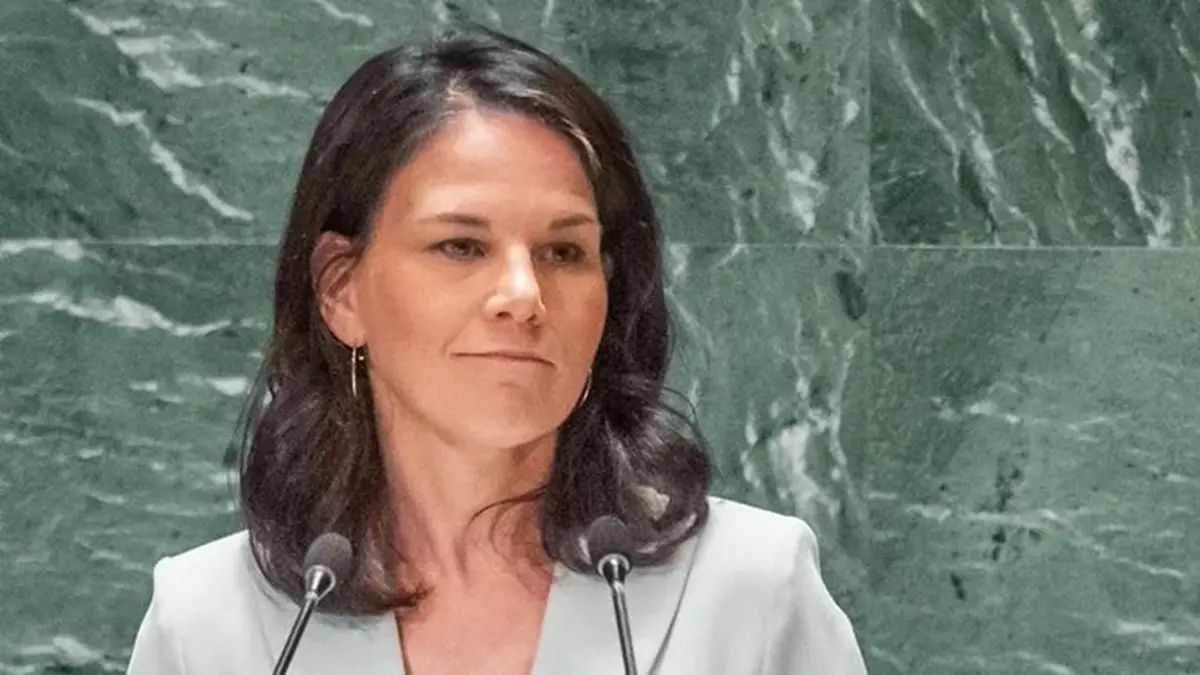
In this context, three key elements stand out before the deliberations begin: the US veto of the Palestinian delegation, the emergence of new voices from the Global South like Indonesia and Brazil, and the leadership of the Assembly’s President, Annalena Baerbock, who aims to launch UN reform.
The Veto on Palestine: The Hypocrisy of Hegemonic Power
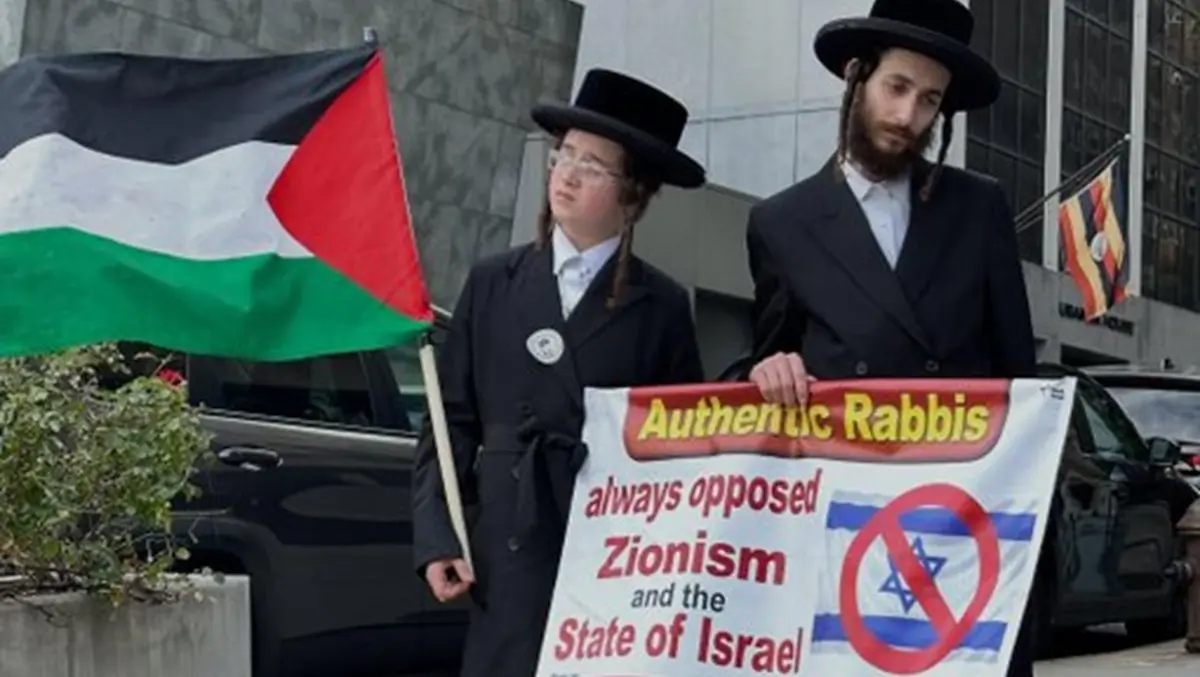
The first major controversy of this UN General Assembly is linked to Palestine. Although 150 of the UN’s 193 member states recognize the State of Palestine, the United States has again used its power to restrict this delegation’s participation, denying visas to President Mahmoud Abbas and more than 80 Palestinian officials.
The US government cites “national security reasons” to justify its decision. However, international analysts agree that it is a political measure aimed at curbing a Palestinian diplomatic offensive at the UN.
At a time when countries like France, Canada, and Australia are considering formally recognizing Palestine, Washington seeks to prevent Abbas from using the global stage to broaden support.
This action has serious implications. It not only constitutes an act of censorship but also violates the 1947 UN Headquarters Agreement, which obligates the host country, in this case the United States, to guarantee access for all delegations to participate in the work of the General Assembly.
The European Union and the Secretary-General himself, António Guterres, have asked the White House to reverse its decision, noting that the refusal contravenes international law and undermines the principle of multilateralism.
While diplomatic speeches repeatedly call for dialogue and peace, reality shows a symbolic and painful image: the voice of an occupied people is transmitted via video conference, physically silenced in the space that should represent the sovereign equality of nations.
The contrast between the UN’s promises and the impositions of a superpower lays bare the fragility of the multilateral system.
The Global South’s Denunciation: New Voices on the World Stage
The veto on Palestine has reactivated solidarity dynamics within the Global South, a heterogeneous bloc of countries seeking to challenge the unipolar order.
During this Assembly, several delegations have announced they will speak in a critical tone to highlight the power imbalance and the selectivity with which international law is applied.
One of the highlighted moments is the participation of Indonesian President Joko Widodo after a ten-year absence. He is expected to publicly denounce Israel’s attack on Qatar, underscoring the need for a just and peaceful solution.
Indonesia, with the largest Muslim population on the planet and a crucial emerging economy in Asia, emerges as a key actor not only due to its demographic and economic weight but also because of the symbolism of its stance.
Challenging the dominant narrative at the UN is an act of political independence that inspires other Global South countries.
Brazil is also positioning itself as a protagonist. President Luiz Inácio Lula da Silva, known for his firm stance in defense of peoples’ sovereignty, will arrive with a clear message: to broaden international support for the Palestinian cause and strengthen regional integration mechanisms.
Furthermore, he will participate in the High-Level International Conference on the Peaceful Resolution of the Palestinian Question, a parallel meeting seeking to advance concrete proposals beyond formal statements.
These interventions demonstrate that the Global South is no longer content with being a passive actor or accepting an agenda imposed from the capitals of the North.
On the contrary, Indonesia, Brazil, South Africa, and Mexico are just a few examples of countries that not only denounce the contradictions of multilateralism but also point towards a more just and multipolar world order. In this sense, the echo of the Palestinian denunciation resonates as a catalyst for new alliances and demands.
The Presidency of Baerbock: The UN Reform
Another central component of this Assembly is the presidency of German Foreign Minister Annalena Baerbock, who is leading the 80th session with a speech focused on “reflecting and rebuilding” the UN.
Her leadership is aligned with the UN80 initiative launched by António Guterres, which seeks to adapt the organization to the challenges of the 21st century: climate change, artificial intelligence, food security, and conflict management.
The official discourse aims to create a more agile, modern, and representative institution. However, questions persist: what exactly does “efficacy” mean in a context where powers maintain structural privileges like the right to veto in the Security Council? Will the reform be a genuine step towards horizontal multilateralism, or will it further consolidate the geopolitical control mechanisms of the G7 powers?
In this sense, the figure of former Ecuadorian president María Fernanda Espinosa serves as a symbolic counterweight. Espinosa was the first Latin American woman to preside over the Assembly, and her tenure prioritized the defense of peoples’ sovereignty, gender equity, and the inclusion of new voices in the global debate.
Her legacy is a reminder that the presidency of the Assembly can be more than a ceremonial post and that there is concrete room to maneuver to influence the democratization of the UN.
The struggle between these two visions runs through this year’s sessions: a reform that seeks to preserve the UN’s relevance in a unipolar order dominated by Western powers, versus a growing demand from the peoples and countries of the Global South calling for a genuine redistribution of power within the institution.
After 80 years, what does the future look like for the UN?
The 80th United Nations General Assembly is not just a historical commemoration; it is also a mirror of present tensions.
While speeches about cooperation and a shared future are celebrated, reality shows the fracture between a North that insists on imposing rules and a South that demands justice, sovereignty, and autonomy.
The veto of the Palestinian delegation unmasks the hypocrisy of those who preach democracy and human rights but deny a voice to an occupied people.
The interventions of leaders like Lula and Widodo demonstrate that the Global South is no longer willing to be silent. For their part, the reforms promoted by Guterres and Baerbock face the dilemma of becoming a genuine act of democratization or a mere adjustment to ensure the continuity of the status quo.
The commemoration of the UN’s 80th anniversary demands looking beyond the rhetoric: if the organization wants to remain relevant, it must pave the way for international justice, renounce anachronistic privileges, and guarantee that all nations, without exception, can raise their voices on equal footing.
Otherwise, the prevailing image will not be that of a renewed body, but that of an institution imprisoned by its contradictions, incapable of responding to the clamor of the Global South demanding a truly multipolar international order.
Author: Silvana Solano
Source: TeleSur