


Trump’s Bailout, Milei’s Dilemma: Sovereignty for Dollars?
September 24, 2025 Hour: 8:52 pm
The image from the recent meeting between Donald Trump and Javier Milei in New York, held during the UN General Assembly, is highly revealing.
Against the backdrop of this solemn international stage, the Argentine president received a publication from the Truth Social network handed to him by the US president, displayed almost like a trophy.
This gesture symbolizes significant political backing which, in practice, translates into a gigantic financial package for Argentina.
However, behind this supposed “extraordinary aid” lies an agreement with implications that go beyond the economic: it represents a geopolitical move that could subordinate Argentine national interests to the dictates of Washington.
This analysis delves into the recent agreements and reveals how Argentina’s critical economic situation has led to the need for external support, particularly from the United States.
From Crisis to Summit: The Perfect Excuse for Interference
The context surrounding the meeting could not be clearer. In the weeks prior, the Argentine economy showed unmistakable signs of an imminent collapse.
Milei’s economic plan, based on severe fiscal adjustment, clashed with the reality of dollar scarcity.
The Central Bank proved incapable of accumulating the necessary reserves, and market distrust intensified like a snowball, further aggravated by an electoral defeat in the province of Buenos Aires and corruption scandals involving the president’s relatives.
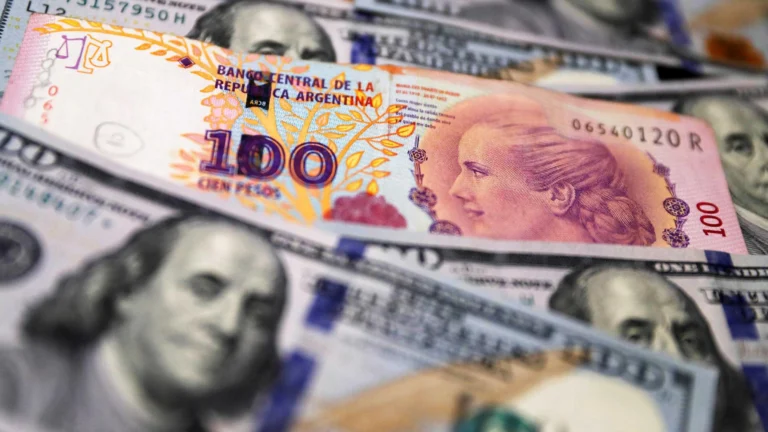
It was at this moment of vulnerability that US support appeared. Scott Bessent, US Treasury Secretary, announced an aid package of up to $20 billion using unconventional financial instruments:
- Swap Line: A bilateral agreement between central banks to exchange currencies at a predetermined exchange rate. This mechanism allows Argentina to quickly obtain dollars without resorting to international markets, thereby stabilizing its economy and strengthening its reserves. Unlike a traditional loan, the operation is reversed within a set period by returning the original currency at an agreed-upon value.
- Stand-by Credit: A line of credit that the country can activate within established timeframes and conditions. In return, Argentina must implement agreed-upon reforms and policies, guaranteeing the availability of funds to confront economic crises or balance of payments imbalances.
The World Bank complemented this support with an accelerated disbursement of $4 billion. According to the official version, this set of measures is presented as a “lifeline” to avoid financial collapse.
Key Areas for Development with International Support
The package includes a focus on specific sectors:
- Strengthening strategic economic engines like mining and critical minerals, sectors prioritized by US industry.
- Boosting tourism as a source of employment and local development.
- Expanding access to energy, strengthening supply chains, and financing for small and medium-sized enterprises.
Behind the Money: Geopolitical Interests and Loss of Sovereignty
The apparent altruism of the US bailout fades when its true motivations are examined.
Far from being a selfless act, this intervention responds to a pragmatic strategy to secure US influence in a region where China’s presence is growing rapidly.
The real cost is not only in the interest rates or technical conditions of the financing, but in the consequent loss of autonomy.
The aid is contingent upon the full alignment of Argentine policy with Washington’s interests, evidenced by pressures to reverse popular fiscal measures promoted by Milei, such as exemptions for exporters, and to prioritize extractive sectors vital to the United States.
Trump and his team aim not only to strengthen the Argentine economy but to consolidate a political ally.
The public and “complete” backing that Trump declared for Milei’s re-election reveals a geo-strategic bet to ensure Argentina remains within the US orbit, avoiding any closeness to rival powers, like China.
Economists point out that, despite the adjustment, the lack of dollars and the drop-in popular support affect the government’s stability.
Furthermore, they warn that the Argentine peso is overvalued by 20% to 30%, necessitating a depreciation to generate market confidence and manage debt.
Some analysts suggest this could be achieved through total liberalization or by widening exchange rate movement margins, which could create a bleak scenario for the country.
The “Wrong Medicine” and the Price of Subordination
The agreement between Milei and Trump functions as a lifeline that ties Argentina to a destiny it did not choose.
Although the financial injection may provide momentary stability and calm the markets, it does not address the country’s deep structural problems.
Many economists warn that the bond purchases and the influx of US dollars represent the “wrong medicine” that only treats the symptoms without curing the economic disease.
Ultimately, the relationship being reestablished is not one between equals, but between a power that imposes conditions and a weakened nation that accepts them.
This US “lifeline” is not an act of friendship, but a calculated move to control Argentine resources and political orientation.
The price to pay could be national sovereignty, a cost historically unsustainable for any country.
Author: Silvana Solano
Source: TeleSur