


Russia Supports Cuba’s Self-Determination, Rejects U.S. Pressure
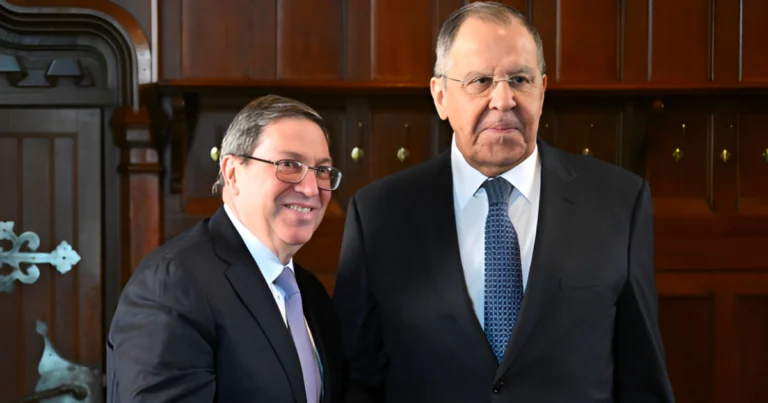
(FILE) The ministers make progress in organizing the 23rd session of the Intergovernmental Commission to be held next April in Russia. Photo: Cubadebate.
March 12, 2026 Hour: 10:30 pm
Russian Foreign Minister Sergei Lavrov reaffirmed his country’s rejection of the economic and political pressure policies that the United States exercises against Cuba.
Russian Foreign Minister Sergei Lavrov today, Thursday, March 12, affirmed Moscow’s firm support for Cuba’s state sovereignty and self-determination, rejecting U.S. economic and political pressure against the Caribbean nation.
RELATED: Cuban President Diaz-Canel Denounces the U.S. Helms-Burton Act
During a telephone conversation with his Cuban counterpart, Bruno Rodriguez, Lavrov conveyed Russian’s steadfast position, emphasizing the right of the Cuban people to choose their own development path free from foreign coercion. This statement reiterates Moscow’s consistent rejection of the economic and political policies that the United States continues to exert against Cuba, particularly the unilateral restrictive measures aimed at stifling the Cuban economy.
The ministers also utilized this important exchange to advance the organization of the 23rd session of the Intergovernmental Commission, which is scheduled to take place next month in Russia. This upcoming session highlights the ongoing and robust bilateral cooperation between the two nations, spanning various sectors and demonstrating a shared commitment to strengthening their strategic partnership despite the challenging international scenario.
Cuban Foreign Minister Rodriguez had previously undertaken a working visit to Moscow in February. That visit served to reaffirm bilateral cooperation amid a global landscape marked by tensions and sanctions, particularly noting the tightening of unilateral restrictive measures by Washington against Cuba. During that official visit, Rodriguez Parrilla met with Lavrov, who then reiterated Russia’s solidarity with Cuba and emphasized that his country would consistently continue to provide support to the Government and people of Cuba in defense of the country’s sovereignty and security.
Text reads: “I spoke on the phone with my dear friend Sergei Lavrov, Russia’s Foreign Minister. We continued the exchange of topics addressed during my recent visit to Moscow, focused on boosting bilateral ties in different sectors, and noted the excellent state of relations. I was grateful for Chancellor Lavrov’s resolute support in defending our national sovereignty and Cuba’s right to choose its own destiny.”
U.S. Pressure Rejected
The Russian Foreign Minister has previously demanded that the United States seek solutions through respectful dialogue rather than force. He has also rejected Washington’s accusations that Russia’s relations with Cuba pose threats to U.S. security, dismissing such claims as unfounded.
These discussions occur against a backdrop of heightened U.S. pressure on Cuba. On January 29, U.S. President Donald Trump signed an Executive Order labeling Cuba as an alleged “unusual and extraordinary threat” and empowering Washington to impose tariffs on goods from countries that supply oil to the Caribbean island. The order, titled “Addressing the Threats of the Government of Cuba to the United States”, specifically mentions Havana’s relations with countries such as Russia and China, alleging that “Cuba brazenly harbors dangerous adversaries of the United States.”
Moscow’s unequivocal backing for Cuba’s self-determination and its rejection of what it considers illegal U.S. pressure reinforce the strong bond between the two nations. This support extends beyond diplomatic rhetoric, as evidenced by the upcoming Intergovernmental Commission session aimed at deepening cooperation.
Russia’s stance provides Cuba with a vital geopolitical ally as it navigates persistent economic challenges and political pressures from the United States, asserting its right to forge its own path on the international stage.
Author: Laura V. Mor
Source: Russian MFA