




Inter-American Court Condemns Peru Over Forced Sterilization
The Inter-American Court found Peru responsible for the forced sterilization and death of Celia Edith Ramos Durand during a mass sterilization policy implemented in the 1990s.
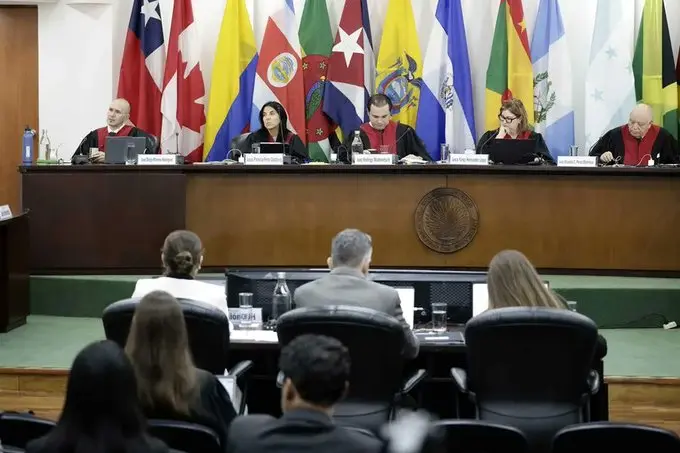
The Inter-American Court of Human Rights ruled Peru responsible in a case linked to forced sterilizations carried out under a state policy in the 1990s. Photo: @EFEnoticias
March 6, 2026 Hour: 6:40 am
Ruling finds the death of Celia Edith Ramos Durand occurred within a state policy promoting mass sterilizations during Fujimori’s government.
The Inter-American Court of Human Rights ruled Thursday that the Peruvian state is responsible for the forced sterilization and subsequent death of Celia Edith Ramos Durand during the government of former ruler Alberto Fujimori.
RELATED: IACHR Grants Precautionary Measures to Isolated Kakataibo in Peru
In its decision, the court found Peru responsible for violations of multiple rights, including the rights to life, personal integrity, personal liberty, private life, access to information, family life, equality before the law, and health.
The tribunal stated that the case took place within the framework of the National Reproductive Health and Family Planning Program implemented during Fujimori’s administration. The policy promoted voluntary surgical contraception but resulted in more than 314,000 sterilizations of women and 24,000 of men.
Text Reads: In its judgment in the case of Ramos Durand et al. v. Peru, issued today, the Inter-American Court of Human Rights declared the State of Peru internationally responsible for the forced sterilization and subsequent death of Celia Edith Ramos Durand, which occurred in 1997. The Court also held the State responsible for the lack of due diligence and unjustified delay in the investigation of the events, and for the harm caused to Ms. Ramos Durand’s daughters, husband, and mother.
According to the ruling, many of those procedures were carried out under coercion and without valid consent, disproportionately affecting Indigenous women and people living in poverty or extreme poverty.
The court determined that Celia Edith Ramos Durand was pressured by health personnel to undergo a tubal ligation on July 3, 1997, at a medical facility that “did not have the necessary equipment or medication for proper risk evaluation or to respond to emergencies.”
Following the surgical procedure, the 34-year-old woman fell into a coma and later died.
The judges concluded that the procedure was carried out under coercion and without informed consent, qualifying it as a case of reproductive violence within the context of a state policy.
In the ruling, the court stated that the National Reproductive Health and Family Planning Program “was a state policy aimed at promoting mass sterilization, focused mainly on women in vulnerable situations.”
The judges also determined that the policy was organized and directed from the highest levels of the Peruvian state.
Author: MK
Source: EFE

