


Europe Abandons Strategic Autonomy to Support U.S. War on Iran
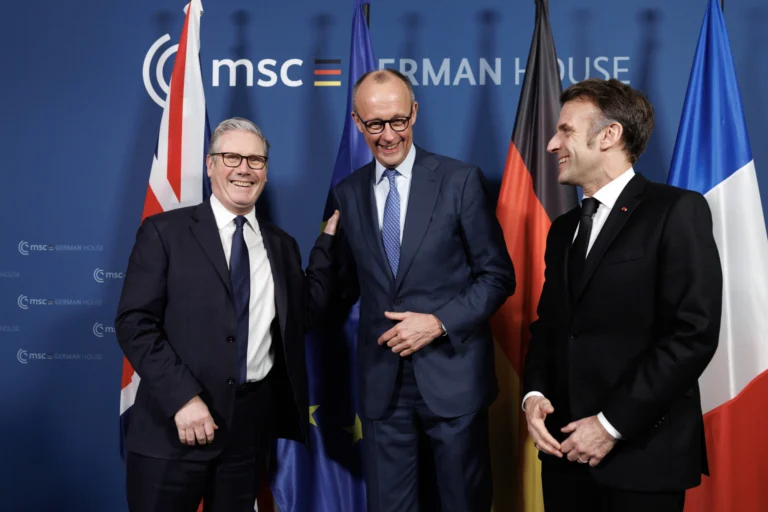
Keir Starmer, Friedrich Merz, and Emmanuel Macron. Photo: avalon.red
March 4, 2026 Hour: 2:53 pm
Washington demands that its allies grant full access to military bases or face consequences.
The geopolitical landscape of early 2026 shifted dramatically following a sudden and violent escalation in Middle Eastern security.
RELATED:
Iran Forces USS Abraham Lincoln to Flee to Indian Ocean
Following the February 28 joint U.S.-Israeli strikes that killed Iranian Supreme Leader Ali Khamenei, Tehran responded with a strategy of missile attacks across the region.
Meanwhile, Washington issued a formal ultimatum to its European allies, demanding full access to their military bases or risking the dissolution of the alliance.
This article examines how the United Kingdom, France, and Germany are responding to Donald Trump’s requests for logistical support.
Though these nations initially distanced themselves from offensive operations, Iranian retaliation has forced a realignment that threatens European strategic autonomy.
The United Kingdom: Starmer’s “Defensive” Capitulation
Once again, the United Kingdom has positioned itself as the primary European enabler of American military objectives.
On March 1, 2026, Prime Minister Keir Starmer announced that the UK would permit U.S. forces to use British sovereign bases for “specific and limited defensive purposes.”
This decision reversed earlier statements that emphasized a “negotiated settlement” as the only path forward.
Starmer’s government authorized the use of RAF Fairford in Gloucestershire and the Diego Garcia base in the Indian Ocean.
The primary mission is “neutralization at source,” which involves bombarding Iranian missile depots and launchers before they can target regional airports, hotels, and oil infrastructure.
“The United States has requested permission to use British bases for that specific and limited defensive purpose,” Starmer stated.
“We have taken the decision to accept this request to prevent Iran from firing missiles across the region.” Starmer framed the move as a duty to protect the 300,000 British citizens currently in the Middle East.
Internal Reactions: Protests and Political Friction
The decision has ignited a firestorm in British domestic politics. Emily Thornberry, the Chair of the Foreign Affairs Committee, and the leaders of the Liberal Democrats have condemned the move, labeling the U.S. strikes a breach of international law.
Critics argue that Starmer is being “dragged into another prolonged war” by the Trump administration.
Organizations such as the Stop the War Coalition have organized protests and drawn parallels to the 2003 invasion of Iraq. They warn that “redefining offensive as defensive” creates a dangerous slippery slope.
Recent polling suggests a deeply divided public. There is significant opposition to joining further waves of offensive strikes, even as concern for British lives in the region grows.
France and Germany: Between Industrial Panic and Strategic Solidarity
While the UK is providing launchpads, France and Germany are attempting to balance their historical role as diplomats with the harsh realities of a disrupted global energy market.
Both countries signed a joint statement with the UK, expressing their readiness to take “necessary and proportionate” action to destroy Iran’s strike capabilities.
Germany’s Economic Pragmatism
Chancellor Friedrich Merz of Germany has adopted a tone more aligned with Washington’s ideology, viewing the collapse of the Iranian regime as a potential win for global security. However, his support is heavily tempered by concerns about industrial survival.
Tanker traffic through the Strait of Hormuz has decreased by 94 percent, and Qatar has suspended LNG production. These developments have created a systemic crisis for German manufacturing.
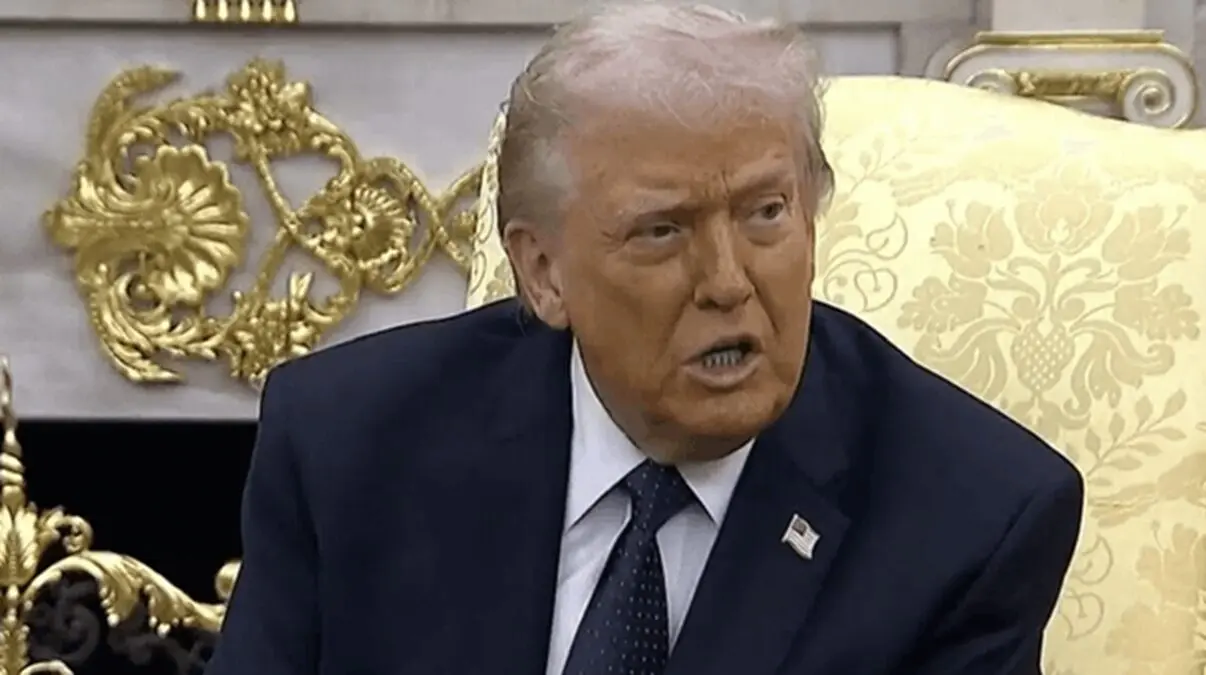
During a White House meeting on March 3, Merz urged President Trump to bring the conflict to a “swift conclusion” to stabilize oil and gas prices.
German labor unions and industrial giants remain wary of a prolonged conflict that could trigger a deep recession. The Ministry of Foreign Affairs has clarified that, although it supports defending allies, the Bundeswehr will not engage in offensive bombing missions.
France: Mediterranean Dissuasion
President Emmanuel Macron has adopted a military-logistics-based approach: he deployed the aircraft carrier Charles de Gaulle and formed a coalition to secure the Red Sea shipping lanes.
He continues to call for an urgent United Nations Security Council meeting, arguing that the escalation is “dangerous for everyone.”
However, by pledging full support to Gulf partners such as Saudi Arabia and the United Arab Emirates (UAE), France has effectively integrated its “strategic autonomy” into the U.S.-led command structure.
French institutions are divided between those who see a “historic opportunity” to reshape the Middle East and those who fear that Macron is sacrificing French independence for a Trump-led agenda lacking a viable postwar plan.
The Spanish Exception: Sovereignty Under Economic Siege
While the E3 bloc has moved toward varying degrees of military cooperation, Spain has emerged as the most significant institutional dissenter within both the European Union and NATO.
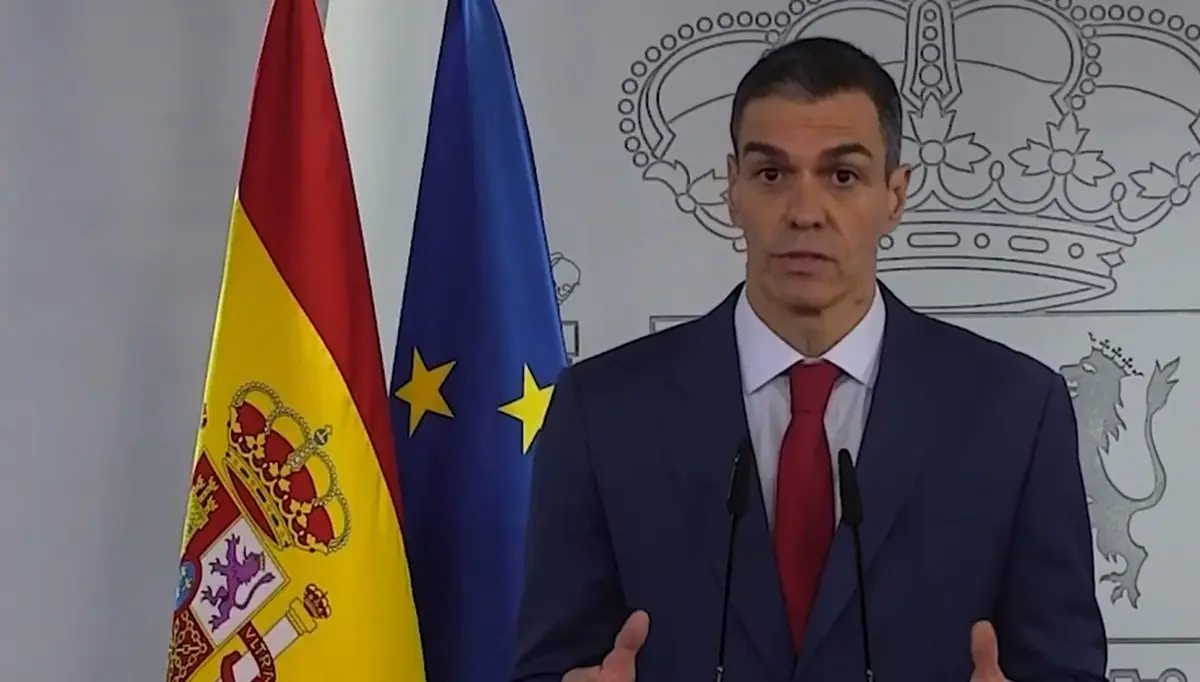
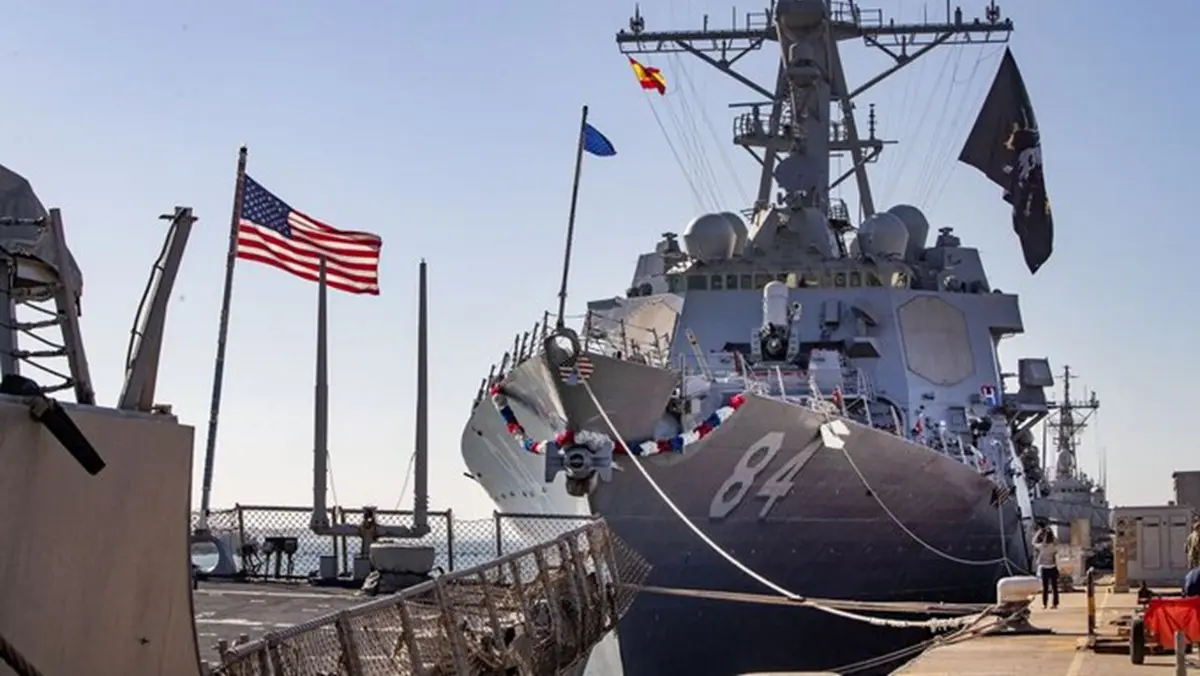
Prime Minister Pedro Sánchez has anchored his position in defense of international law, refusing to authorize the use of the Rota and Morón de la Frontera bases for offensive operations against Iran.
Sánchez argues that “Operation Epic Fury” lacks a United Nations Security Council mandate and that bypassing multilateral institutions sets a “dangerous precedent” similar to the events leading up to the Iraq War in 2003.
“Spain remains a loyal ally, but loyalty does not mean blind obedience,” Sánchez stated on March 2. “Our bases will not be used to launch attacks that could escalate into a regional war or bypass the legal frameworks that maintain global stability.”
This “sovereign dissent” has triggered a fierce internal battle within Spain. The IBEX 35—Spain’s powerful stock exchange index—is putting immense pressure on La Moncloa.
Leaders in the tourism, banking, and energy sectors fear that Donald Trump’s threat of a “total trade embargo” against non-cooperative allies will lead to economic catastrophe. They argue that Spain’s “moral high ground” could result in a 2 percent drop in GDP due to lost U.S. markets.
Conversely, a broad coalition of left-wing organizations and unions has mobilized under the banner of “No to War,” supporting Sánchez’s refusal to allow Spain to be used as a launchpad for imperial intervention.
NATO’s “Defensive Shield” and the Erosion of Red Lines
Although NATO officially maintains a non-belligerent stance in the conflict, its actions reveal deep operational involvement.
Although Secretary-General Mark Rutte claims that the alliance is not at war, NATO has deployed missile defense systems throughout the Mediterranean and Turkey. Meanwhile, AWACS surveillance planes provide U.S. and Israeli forces with real-time intelligence essential for executing strikes against Iran.
The line between defense and offense became blurred on March 4, when NATO-operated Patriot batteries in Turkey intercepted an Iranian drone. This demonstrates how NATO’s “defensive shield” has become indistinguishable from a military pressure campaign against Tehran, all while operating outside of formal collective defense mechanisms.
A Fractured Continent and an Unfolding Crisis
The United Kingdom, France, and Germany’s alignment with the Trump administration’s military objectives is a turning point for European geopolitics.
By granting access to their sovereign bases and integrating their naval and intelligence assets into “Operation Epic Fury,” these three powers have prioritized transatlantic alliance demands over strategic autonomy and independent multilateralism.
Three critical developments have emerged: the end of European neutrality, with the UK fully committing to the offensive and France and Germany shifting from diplomacy to deterrence; the sovereign divide created by Spain’s refusal to allow the use of its bases; and the NATO paradox, in which the alliance serves as an indispensable intelligence provider while maintaining its official noncombatant status.
The situation continues to develop rapidly. The potential closure of the Strait of Hormuz, domestic unrest within European capitals, and the risk of miscalculation triggering a broader NATO-led conflict could alter the trajectory of the war within hours.
As the first wave of European-backed strikes concludes, the international community must question whether this “Coalition of the Willing” has secured a safer Middle East or merely opened a Pandora’s box of permanent instability and erosion of international law.
Sources: Al Jazeera – teleSUR – The Guardian – Jerusalem Post – Gov.UK – House Of Commons – 7News Australia – Página 12 – LMT Online – El Economista
Author: Silvana Solano
Source: teleSUR