


Dutch Voters To Head To the Polls Amid Political Fragmentation
X/ @jeffreylowes
October 27, 2025 Hour: 12:48 pm
The Netherlands faces another election marked by disillusionment and uncertainty.
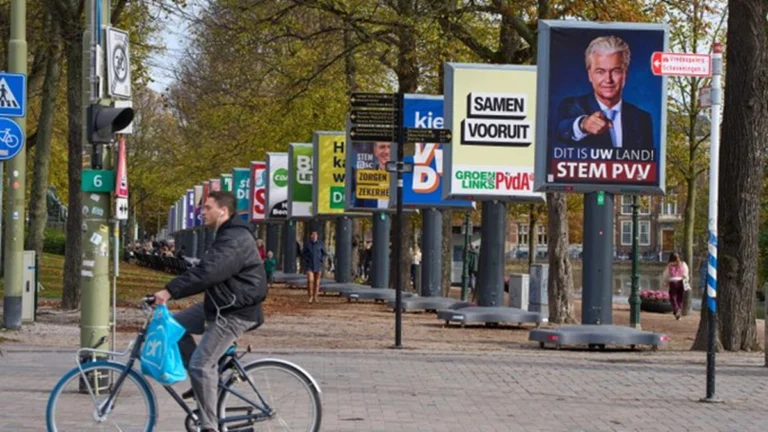
On Wednesday, the Netherlands will head to the polls for the third time in less than five years, amid widespread public distrust and difficulties forming stable majorities.
RELATED:
Dutch Voters Dissatisfied With Politics Ahead of Election
Compounding the situation is the collapse of the People’s Party for Freedom and Democracy (VVD), which dominated Dutch politics under Mark Rutte for more than a decade. A total of 27 parties are running for the 150 seats in Parliament, currently divided among 15 political groups.
Voters arrive at the ballot box divided and volatile after a string of unstable governments. Rutte’s last two cabinets fell in January 2021, over a childcare benefits scandal, and in July 2023, due to disagreements on asylum policy. The coalition that followed—formed after the November 2023 elections and led by independent Dick Schoof since July 2024—collapsed this summer over migration policy, triggering an early election.
Given this backdrop, polls show that many Dutch citizens feel disenchanted with politics. The Netherlands Institute for Social Research (SCP) warns of a “dialogue of the deaf” between those calling for closed borders and those defending asylum rights, which has prevented a balanced debate about national identity and the welfare state, while overshadowing other urgent issues such as housing and healthcare.
What Do the Polls Say?
No party is expected to win an outright majority—a tradition in Dutch coalition politics. The right-wing Party for Freedom (PVV), led by Geert Wilders, remains the leading force in the polls, projected to win between 29 and 31 seats.
It is followed by the joint GreenLeft–Labour alliance (GL-PvdA), led by Frans Timmermans, and the Christian Democratic Appeal (CDA), led by Henri Bontenbal, both polling between 22 and 27 seats. These figures reflect weighted averages of surveys published by Peilingwijzer.
The progressive liberal D66, the conservative VVD, and the national-conservative JA21 form a second tier, with estimates ranging from 12 to 17 seats. The remaining parties are not expected to surpass five seats each.
The centrist NSC, which left Schoof’s government in August after internal clashes over the Dutch response to Israel’s offensive in Gaza, now appears in some polls with one or no seats, despite currently holding 21.
If these forecasts are confirmed, and given the mutual vetoes among major parties—several groups have ruled out governing with Wilders, and the VVD has rejected joining a clearly left-wing coalition—difficult negotiations are expected to form a coalition government, likely requiring four or five parties.
Distrust and Indecision
A recent SCP study shows that 59% of Dutch citizens believe the country is “heading in the wrong direction,” while 60% give a failing grade to national politics, criticizing leaders for failing to address urgent problems.
Indecision is also widespread: according to broadcaster RTL, half of voters still don’t know which party to support, and one in four say they do not feel represented by any political organization.
That discontent coexists with an aging electorate: around 13.4 million people are eligible to vote, and 28% are over 65, compared with 18% three decades ago. The average Dutch voter is about 51 years old.
The SCP stresses that the migration debate is dominating the campaign and urges a focus on the “large moderate majority” that sees both advantages and challenges in migration.
Liberal Collapse
Parties are entering this election amid skepticism and internal fractures, and the most visible case is the liberal VVD. According to internal conversations cited by RTL, many members admit they “fear the results” and speak of a “spiral” of declining support since Rutte’s departure and the party’s entry into a coalition with the far right.
Others have labeled recent decisions “populist mistakes,” such as backing a motion to designate the Antifa movement as a terrorist organization—a move even the VVD’s youth wing condemned as “undemocratic.”
Liberal leader Dilan Yesilgöz has lost support both inside and outside the party. According to an Ipsos I&O poll, only 36% of VVD voters plan to back her, compared with support levels above 80% under Rutte. Yesilgöz has been criticized across the political spectrum for turning the VVD into a party “increasingly right-wing and disconnected from social reality.”
The party has ruled out alliances with GL-PvdA, CDA, and D66, and with Wilders’ PVV also vetoed, many analysts foresee the liberals moving into opposition after this election.
teleSUR/ JF
Source: EFE