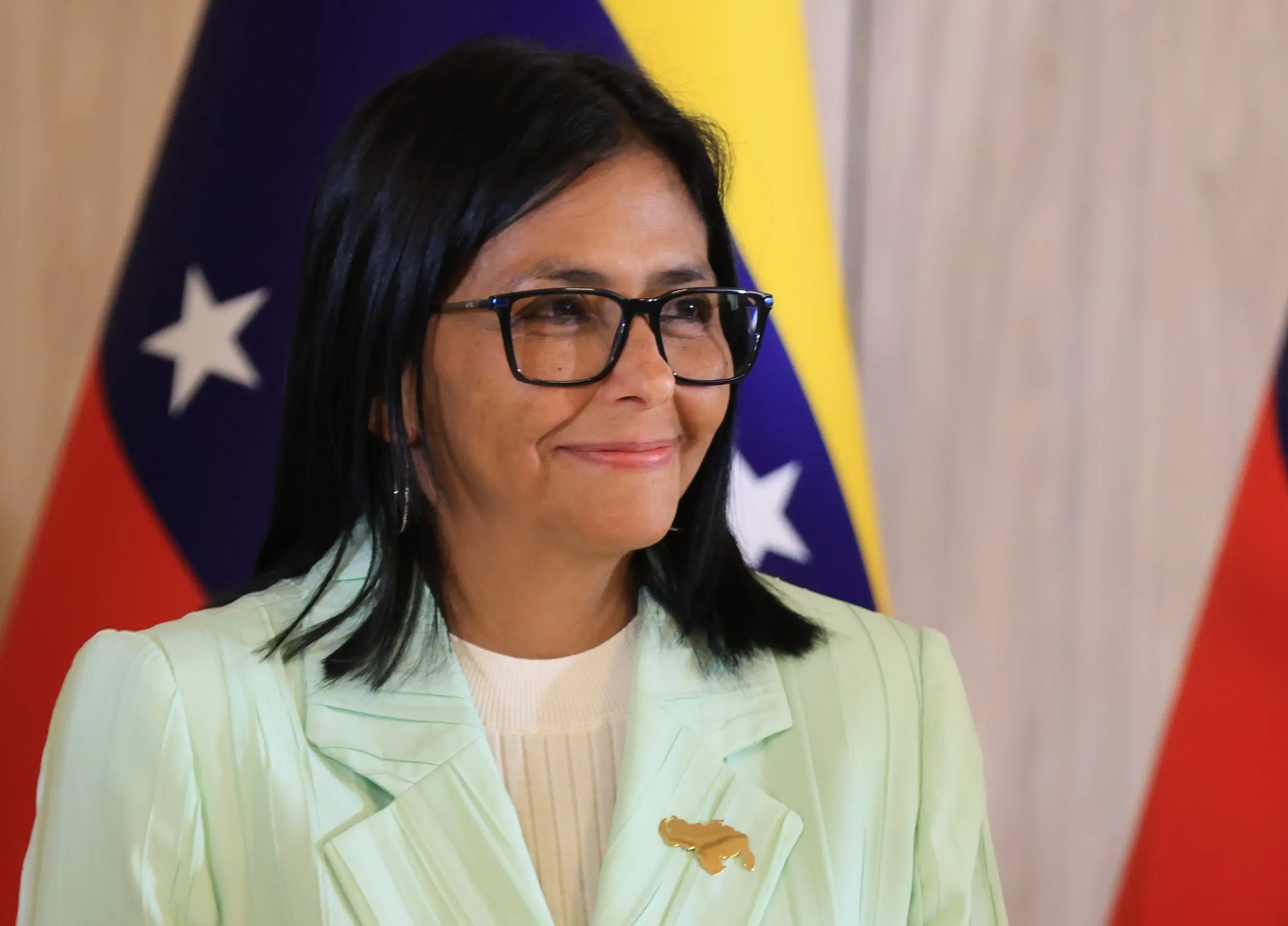



Delcy Rodriguez Urges End to Sanctions, Calls for Respectful U.S. Relations
Delcy Rodríguez calls for lifting sanctions on Venezuela while outlining policies for fishing production and food security.
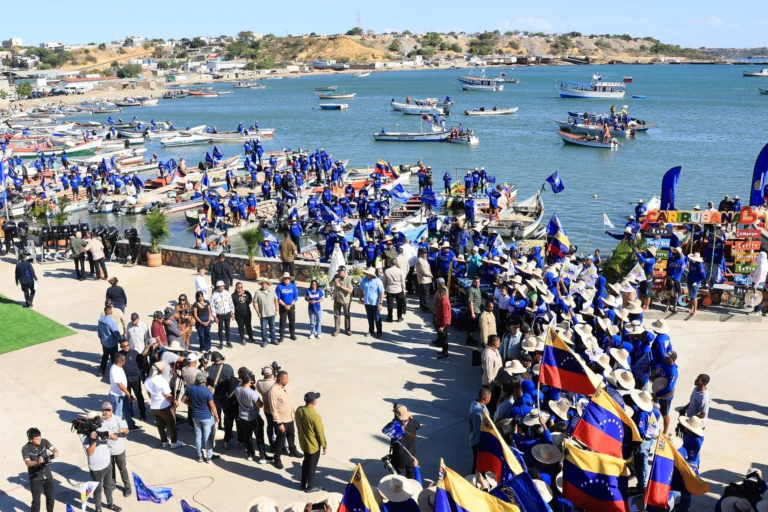
Venezuelan authorities mark the Day of Food and Artisanal Fishermen while announcing initiatives for the fishing sector. Photo: Prensa Presidencial
March 15, 2026 Hour: 12:10 am
Acting president links sanctions to trade inequality while announcing fishing sector initiatives and food security measures.
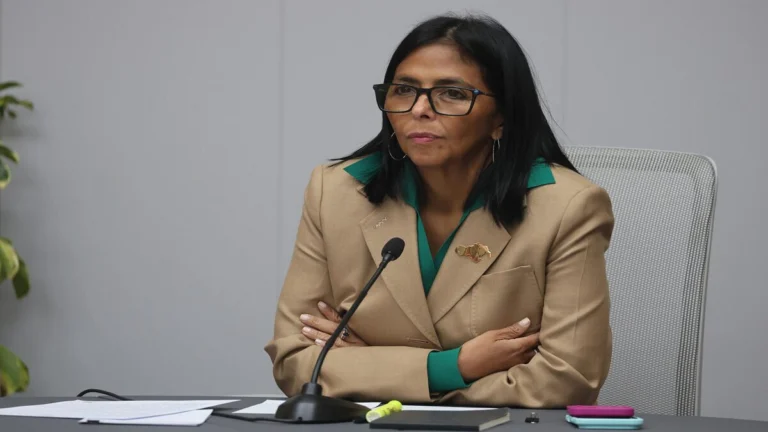
Delcy Rodríguez said Venezuela is seeking relations with the United States based on mutual respect, while urging the removal of sanctions that constrain the country’s economy and international trade.
RELATED: U.S. Officially Recognizes the Government of Venezuelan Acting President Delcy Rodriguez
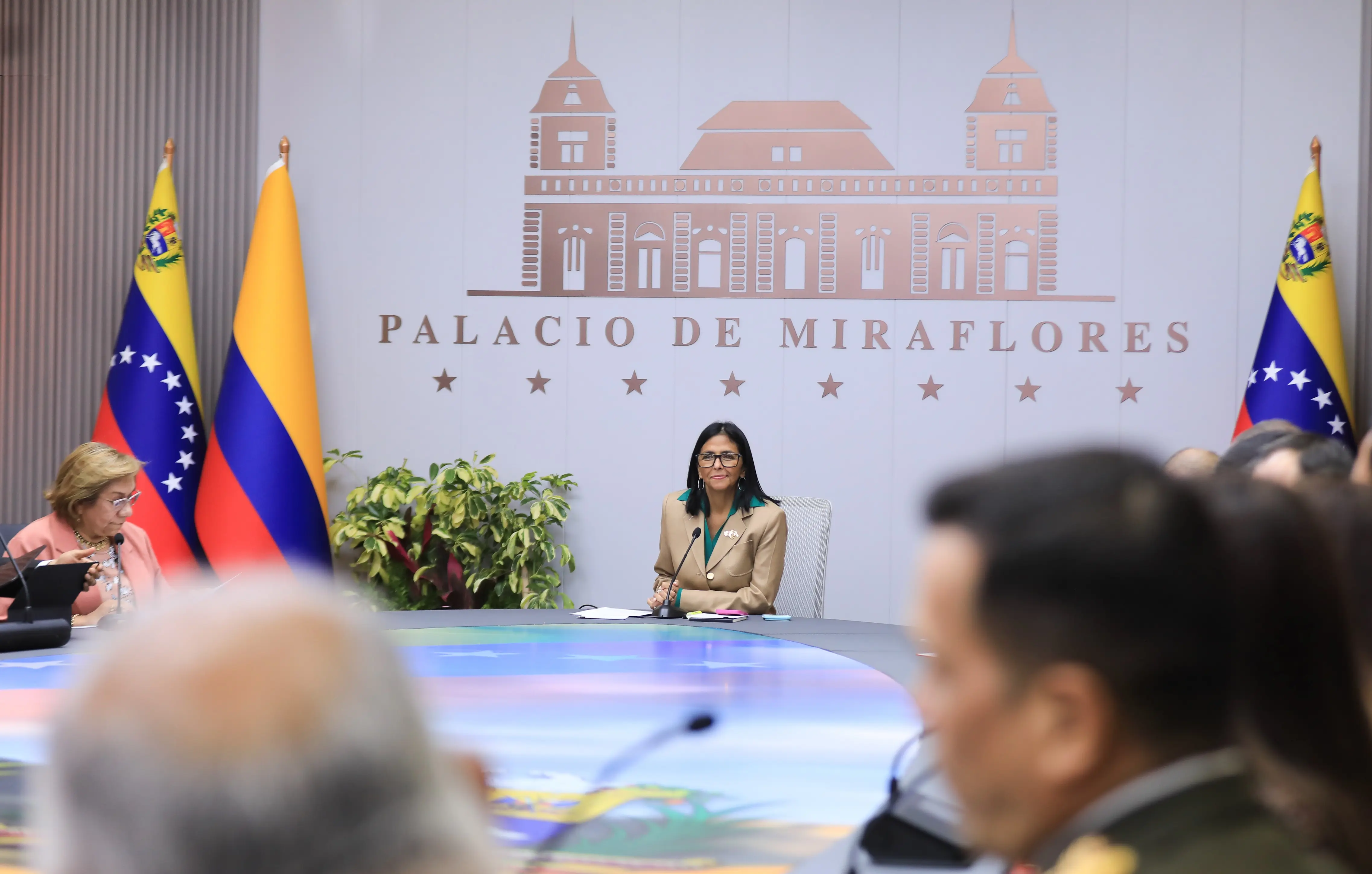
Speaking in Carirubana, in Falcón State, during celebrations for the Day of Food and Artisanal Fishermen, Rodríguez said Venezuela remains committed to safeguarding national stability while maintaining dialogue with Washington.
“We are moving forward. We are standing for our people, our people drive us, protecting peace in Venezuela and the tranquility of our homeland. We are demonstrating that standing upright, with our heads held high, we can move forward with relations of respect with the United States,” she said.
Text Reads: Interim President Delcy Rodríguez stated: “I take this opportunity to call for national unity, for all the people of Venezuela to unite in a single cry, demanding the removal of sanctions and the elimination of the blockade. Venezuela wants to contribute at the regional level.” Interim President Delcy Rodríguez states that “Venezuela will soon share tourism with Colombia.”
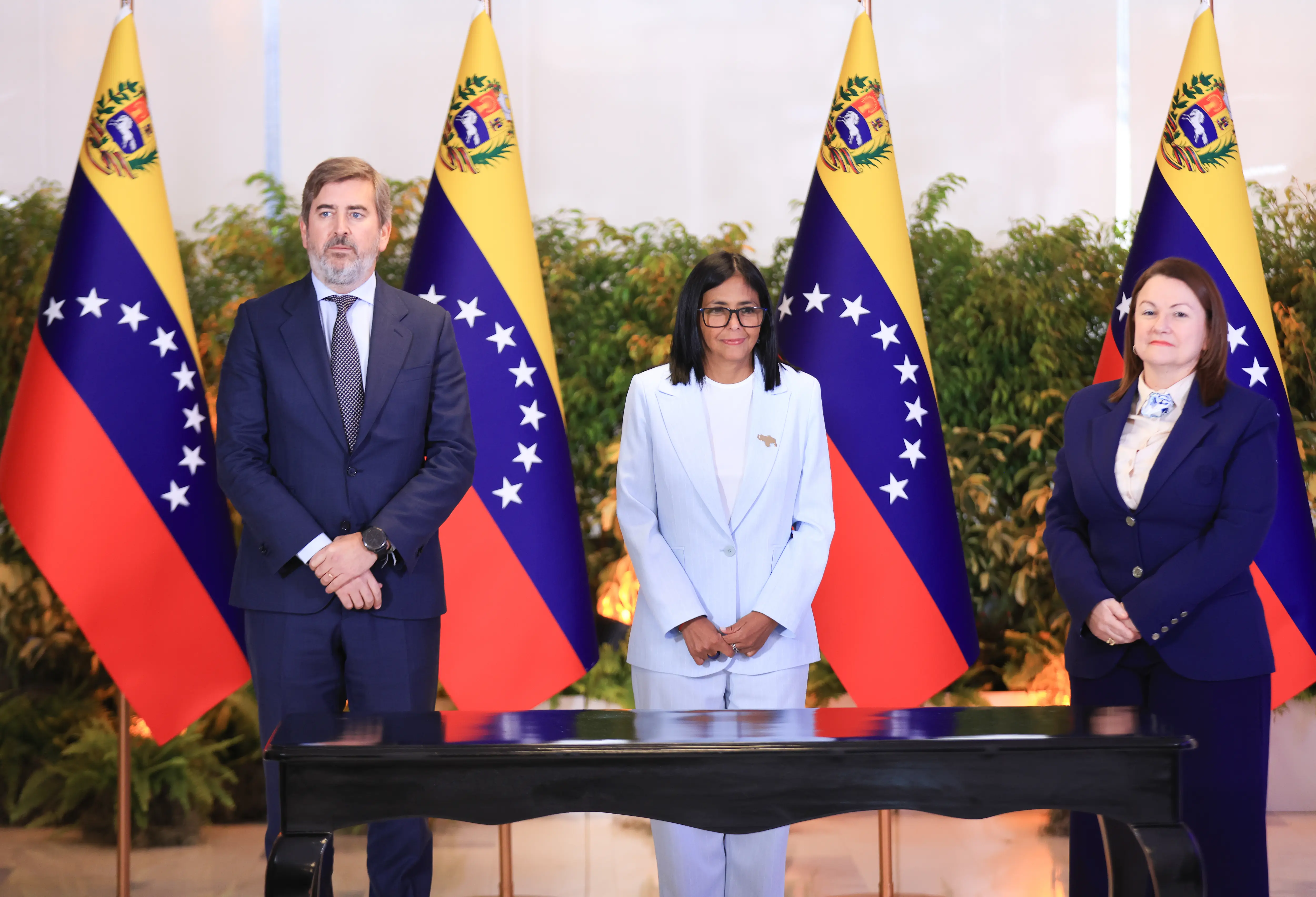
Rodríguez noted that the U.S. flag had been raised in Venezuela after seven years and said the Venezuelan flag would soon be raised again at the country’s embassy in the United States. “That flag will represent the truth of Venezuela, of our people, and our message of cooperation, dialogue and respect for legality,” she added.
The acting president also addressed a proposal by Gustavo Petro to establish zero tariffs in bilateral trade. She said sanctions imposed on Venezuela prevent the country from competing under equal conditions.
“President Petro, we would like to, but it cannot be done, because the Venezuelan people are sanctioned. We cannot compete under equal conditions and we must accompany our productive country so that, under these conditions of inequality, we can reach foreign trade that benefits the Venezuelan people,” she said.
Rodríguez called for national unity and urged Venezuelans from all sectors to demand the lifting of sanctions. “Workers, women, men, entrepreneurs, students, youth — everyone united in a single demand: remove the illegal sanctions against Venezuela, lift the blockade against our country,” she said.
Addressing U.S. President Donald Trump, she added: “President Trump, this is the feeling of a people, but also the way for Latin America to move toward balanced growth, where Venezuela can also contribute to regional development.”
Fishing sector and food policy
The commemoration marks the Day of Food and Artisanal Fishermen, established in 2010 by former president Hugo Chávez following the prohibition of trawling fishing, a policy aimed at restoring marine ecosystems and supporting sustainable fishing along the country’s coast.
Rodríguez said the sector forms part of Venezuela’s broader effort to diversify the economy beyond oil while strengthening national food sovereignty.
She reported that average daily caloric intake in the country currently reaches 3,300 calories, exceeding the 2,700 calories recommended by the Food and Agriculture Organization.
Rodríguez also announced that the Social Protection Fund received $300 million this month from an extraordinary fuel oil sale. “What we receive extraordinarily will go to our workers, to our people, to social protection, so that through national unity we continue moving forward,” she said.
Authorities also announced the delivery of 500 engines to support artisanal fishing activities and the creation of a revolving fund financed jointly by the government and fishermen. “As you said, 50 percent will be provided by the government and 50 percent by the fishermen, and that will be used to support the fleet and the needs of our fishermen,” Rodríguez explained.
In addition, the government approved 290 projects aimed at strengthening the production capacity of fishermen and aquaculture producers as part of Venezuela’s national economic agenda.
Officials said the measures seek to support coastal communities, improve working conditions in the fishing sector and advance Venezuela’s strategy to expand non-oil economic activity while reinforcing national food production.
Author: MK
Source: Prensa presidencial