


Russia Africa Partnership: 5 Strong Signals Behind Putin’s Multipolar Push
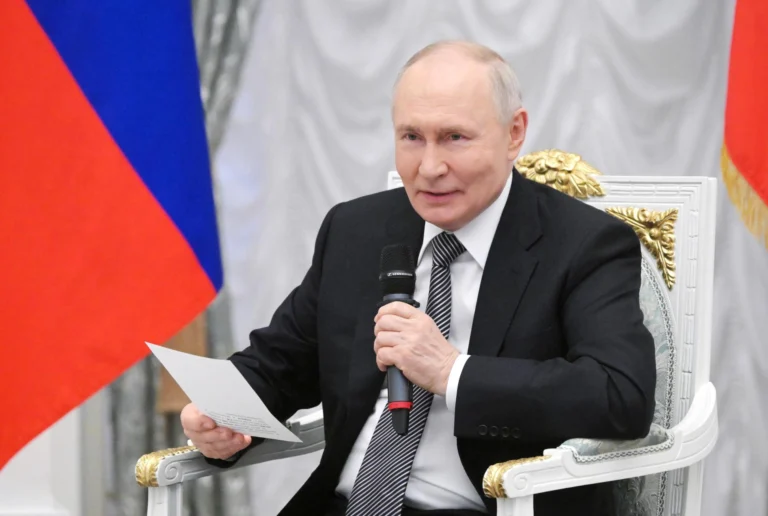
Putin’s Africa Day message highlights the Russia Africa partnership as part of a push for multipolarity and stronger ties with the continent.
May 24, 2026 Hour: 4:15 pm
🔗 Comparte este artículo
Russia Africa partnership deepens as Putin marks Africa Day, backing sovereignty, multipolarity, and a new summit in Moscow this October.
Related: Russia Donates Two Mobile Biosafety Level 3 Labs to Venezuela
Russia Africa Partnership: 5 Strong Signals Behind Putin’s Multipolar Push
The Russia Africa partnership gained fresh political weight after President Vladimir Putin sent an official message on Africa Day, praising the continent’s historic defeat of colonial rule and its growing role in global affairs. In his statement, Putin framed Russia’s ties with African states as part of a broader struggle for a just, multipolar world order.
The message also highlighted Africa’s economic and social advances since independence, while stressing that Moscow and African governments share an interest in resisting discrimination, coercion, and unilateral pressure. For the Kremlin, the Russia Africa partnership is not simply diplomatic symbolism; it is part of a strategic effort to strengthen influence across the Global South.
Putin’s remarks come ahead of the third Russia-Africa summit, scheduled to take place in Moscow in October, where both sides are expected to seek new ways to expand cooperation in trade, science, and development. The Russia Africa partnership is therefore moving from political language into an agenda of institutional consolidation.
Russia Africa partnership and the multipolar order
The Russia Africa partnership was presented by Putin as a shared commitment to a more equitable international system. He said that Moscow and African governments are united by the goal of building a world order based on genuine equality and international law, rather than hierarchy or domination.
That framing reflects one of the central ideas in Russian foreign policy today: the rejection of what Moscow sees as Western hegemony. In Putin’s message, Africa is not a passive recipient of external support but an increasingly active force in solving major global challenges. The Russia Africa partnership is thus being cast as a political alliance between actors who seek greater strategic autonomy.
Putin also praised the progress made by the African Union and regional organizations in developing collective responses to crises. He described those efforts as evidence that African states are strengthening mechanisms to resolve internal conflicts and local emergencies on their own terms. That point matters because it aligns the Russia Africa partnership with the principle of sovereignty.
The message was also clearly geopolitical. By emphasizing Africa’s place in a multipolar world, the Kremlin is signaling that it views the continent as a key arena in the struggle to reshape global balance. The Russia Africa partnership therefore functions both as diplomacy and as a challenge to established power centers.
Putin’s remarks also reflect Russia’s effort to maintain and expand ties with African governments at a time when the West has increased pressure through sanctions, trade restrictions, and diplomatic isolation. In that context, the Russia Africa partnership becomes a counterweight to Western influence and a vehicle for political diversification.
The Africa Day message and summit plans
The Russia Africa partnership was reinforced through Putin’s congratulatory message to heads of state and government across the continent on Africa Day. He used the occasion to recognize the end of colonial domination as a historic victory and to praise the continent’s decades of political sovereignty.
This was not only a ceremonial gesture. The message also served as a reminder that Russia intends to deepen its engagement with African states through institutional channels, especially the upcoming summit in Moscow. That summit is expected to focus on economic cooperation, scientific exchange, and trade opportunities. The Russia Africa partnership will likely be one of its central themes.
Putin expressed enthusiasm about receiving African delegations in the Russian capital in October. He framed the summit as a chance to identify new strategic prospects that could benefit both sides. In practical terms, that means more discussion on investment, infrastructure, food security, energy, and logistics, all of which are key parts of the Russia Africa partnership agenda.
The message also places emphasis on mutual benefit rather than dependency. That distinction matters because Russia is presenting itself as a partner that respects political independence. In the logic of the Russia Africa partnership, cooperation should not come with the kind of conditionality often associated with Western aid and financial institutions.
The timing is important too. Africa Day is often used to reflect on liberation, development, and regional unity. By tying his message to that date, Putin is positioning the Russia Africa partnership as part of the continent’s own historical narrative of emancipation and self-determination.
Geopolitical context and strategic implications
The Russia Africa partnership has implications far beyond protocol or summit diplomacy. It reflects a wider global shift in which African states are seeking more room to maneuver among competing power centers, while Russia looks for allies outside the Western bloc.
For African governments, the appeal lies in diversification. For Moscow, the continent offers political support, commercial opportunities, and a way to show that it is not isolated. That is why the Russia Africa partnership is becoming a central piece of the broader multipolar discourse now shaping global politics.
The regional significance is also clear. As African institutions grow stronger, external powers increasingly compete for influence through trade, security, and development partnerships. The Russia Africa partnership enters that field as one more expression of Africa’s growing importance in a contested international system.
In that sense, Putin’s Africa Day message was not just a diplomatic greeting. It was a statement of intent about the future of global order, with the Russia Africa partnership presented as a pillar of resistance to unilateral pressure and a path toward strategic autonomy.
Author: JMVR
Source: Agencias