Iran Threatens to Halt Oil Exports to Adversaries via Hormuz
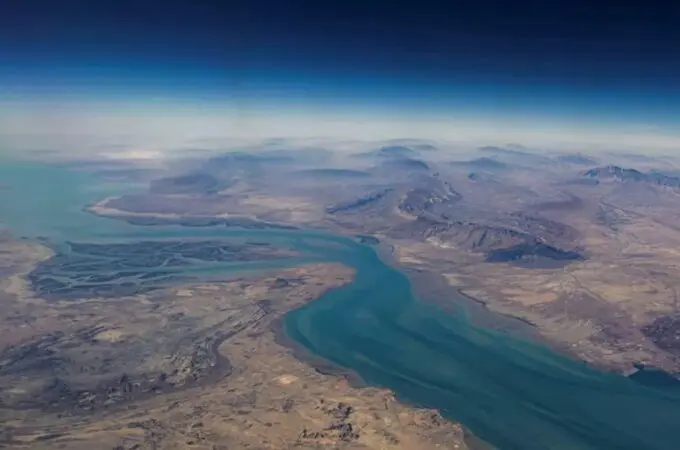
Tehran warns security in the strait cannot be guaranteed as long as U.S. and Israeli attacks on Iranian infrastructure continue.
Iranian officials warned that oil exports through the Strait of Hormuz could be blocked for adversaries and their partners if military confrontation with the United States and Israel continues.
RELATED: Putin, Trump Discuss Iran, Ukraine In Recent Call
In exclusive remarks to the pan-Arab network Al Mayadeen, a senior Iranian military official outlined what he described as new deterrence equations that could alter the course of the confrontation with Washington and Tel Aviv.
The official said Iran would not allow the export of “not a single liter of oil” from the region to hostile countries or their partners, adding that the measure would remain in place “until further notice.” He reiterated what he called the principle of “security for all or security for none,” warning that continued U.S. and Israeli attacks on Iranian infrastructure would inevitably lead to broader insecurity in the region.
Text Reads: The Islamic Revolutionary Guard Corps estimated that the “efforts” by Washington and Tel Aviv to reduce and control oil and gas prices will be temporary and ineffective.
According to the official, the management of the Strait of Hormuz in wartime would be subject to strict military and security regulations. He also described recent movements by U.S. and Israeli forces as “non-conventional behaviors,” which he attributed to what he said was the failure of their offensive plans.
The official warned that continued “vile conduct” could push Tehran toward high-intensity scenarios with significant costs. He added that groups within the Resistance maintain “an open hand” to significantly expand the scope of the conflict.
Separately, Ali Larijani, secretary of Iran’s Supreme National Security Council, said security in the Strait of Hormuz cannot be guaranteed while the war fueled by the United States and Israel continues.
Iranian authorities maintain that Tehran has not formally ordered the closure of the strait. However, they say the waterway is effectively closed due to the conflict, as vessels are unwilling to transit the passage.
The Strait of Hormuz is one of the world’s most strategic maritime corridors, through which roughly 20 percent of global oil supplies and a significant share of liquefied natural gas normally pass.