


Bolivia Road Blockades Deepen Amid Police Raids
Police and military forces attempted to clear highways leading to La Paz as unions and peasant organizations expanded protests demanding economic measures and the president’s resignation.
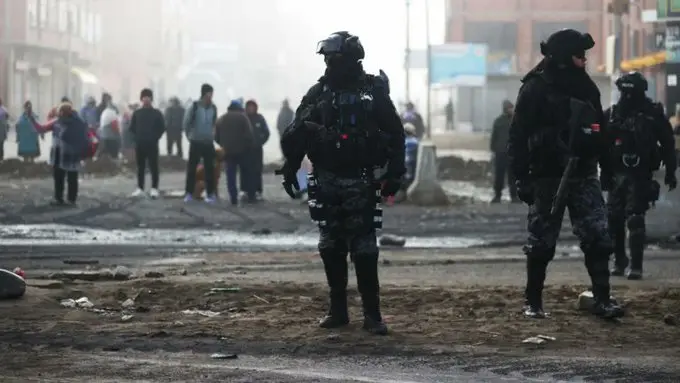
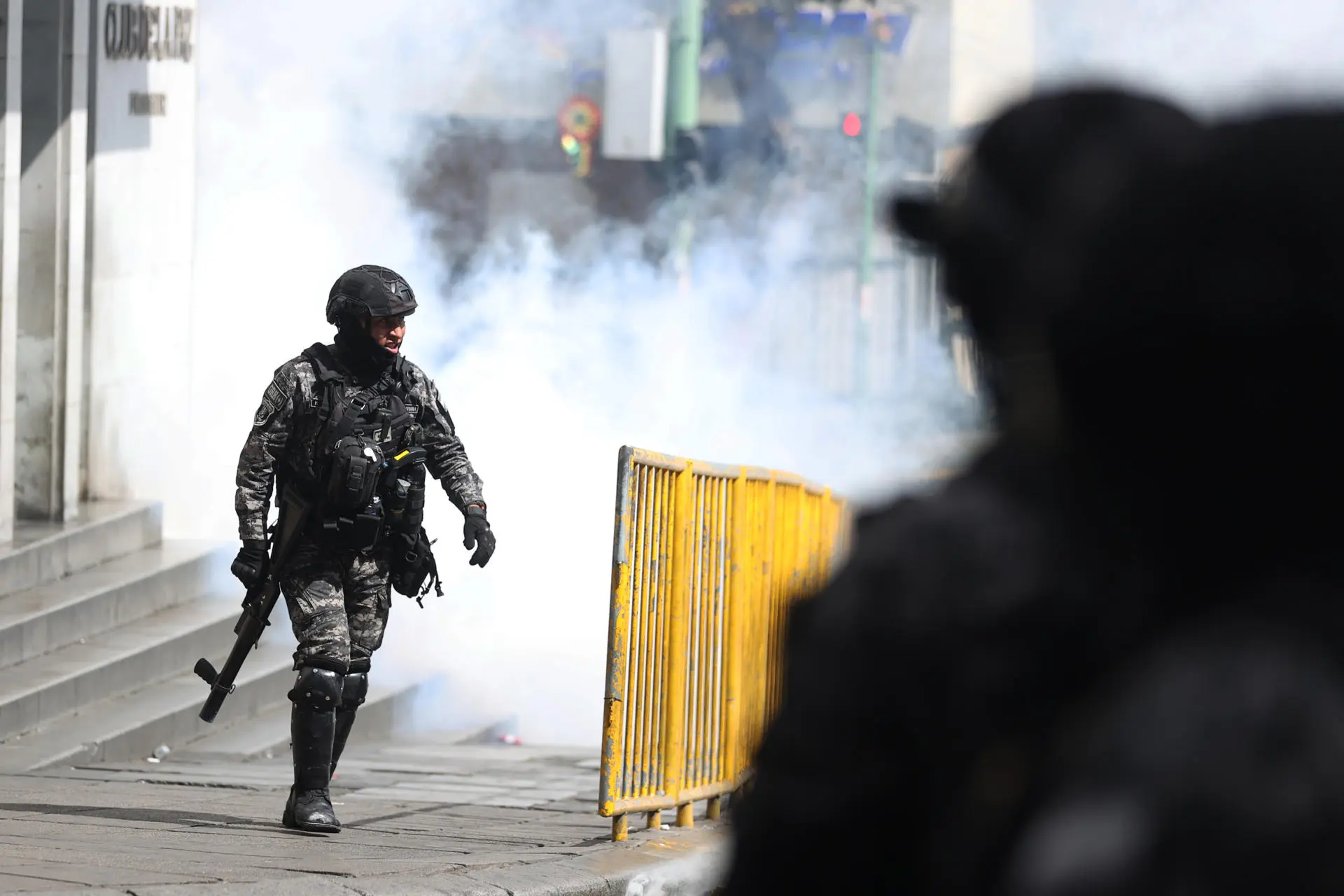
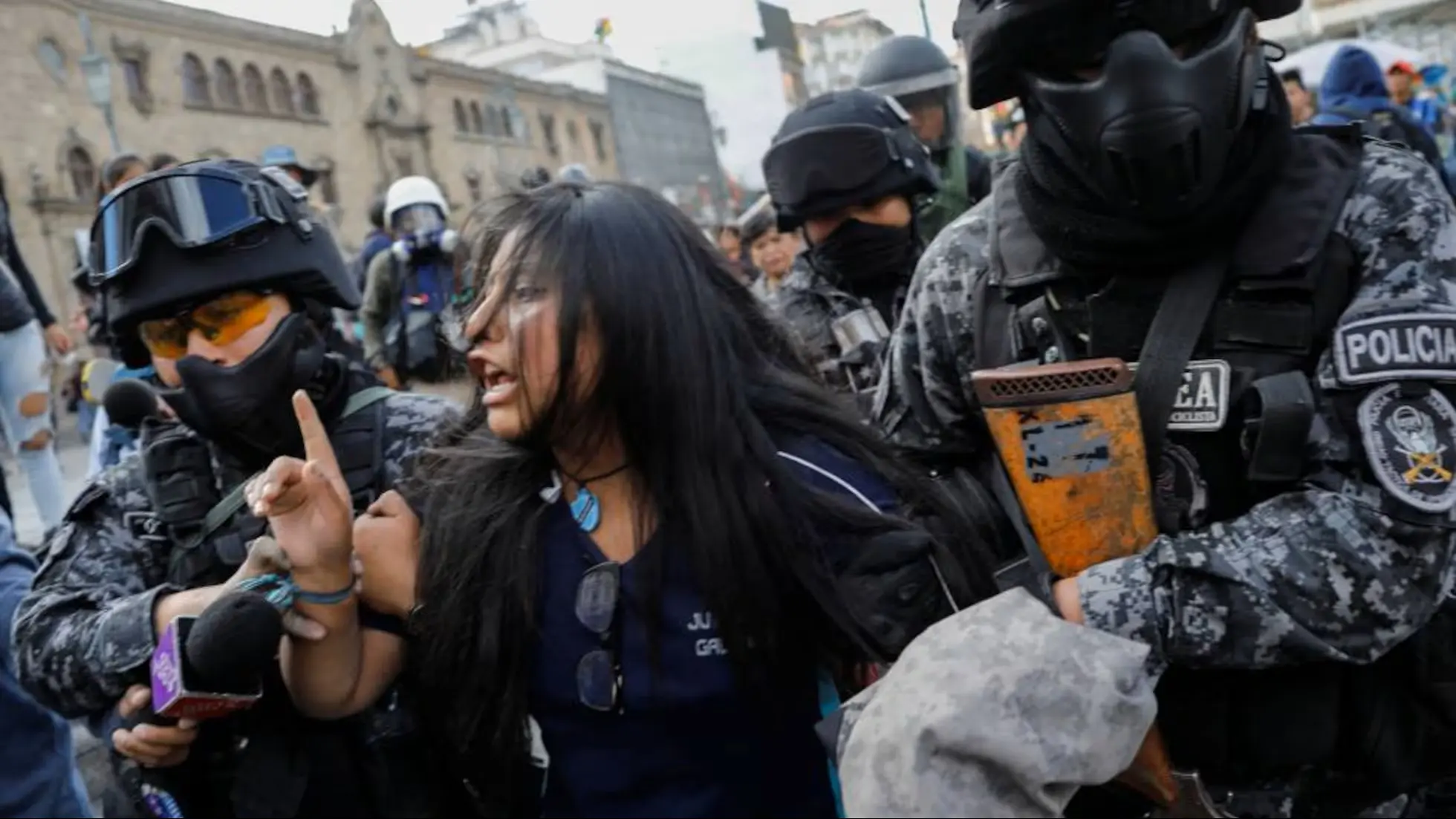
Bolivian protesters maintain road blockades during clashes with security forces amid nationwide demonstrations against the government. Photo: EFE
May 24, 2026 Hour: 1:34 am
🔗 Comparte este artículo
Unions and peasant groups intensify protests as authorities fail to fully reopen key highways.
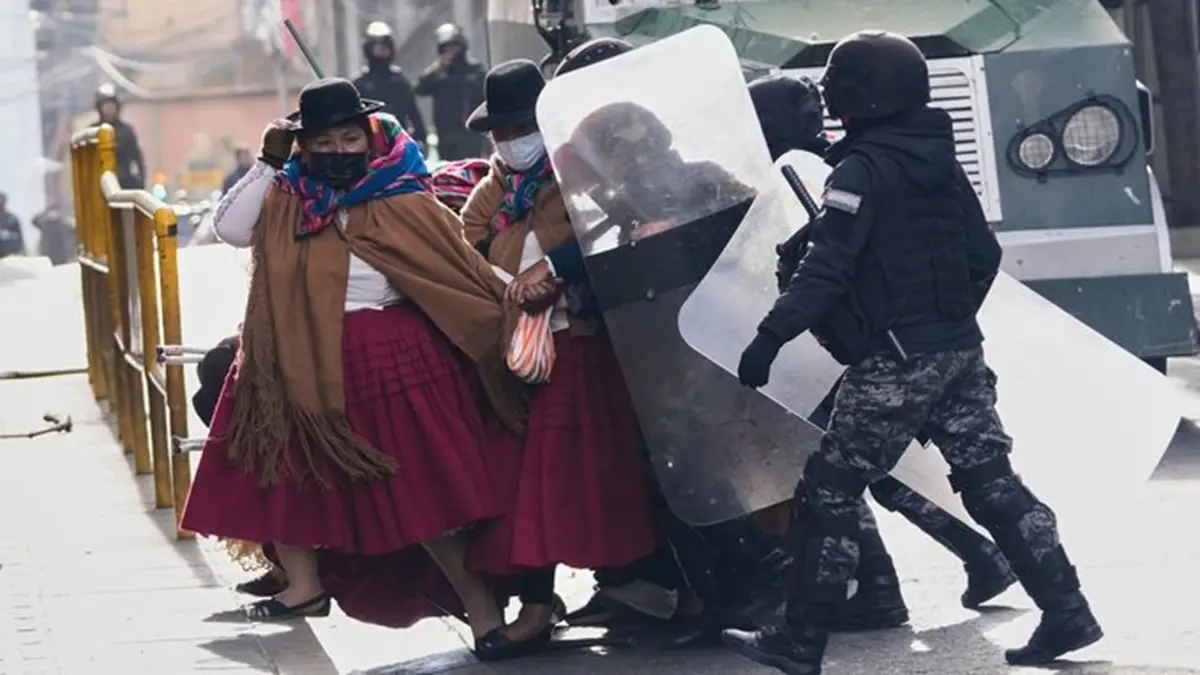
Bolivian police and military forces launched operations on Saturday to clear highways leading to La Paz, triggering clashes with protesters who later reestablished blockades in several regions amid an ongoing wave of anti-government mobilizations.
RELATED: Bolivian Mass Protest Under Police Repression, Demand President’s Resignation
The operation, known as White Flags, sought to reopen the La Paz-Oruro highway and other strategic routes after more than 20 days of nationwide protests and transport disruptions that have caused shortages of food, fuel and other basic supplies in the capital, alongside rising prices.
Local media reported confrontations in the Senkata district of El Alto, where police used chemical agents to disperse demonstrators blocking the road. Protesters resisted the operation, and additional groups later joined the mobilization, restoring the blockade shortly afterward.
Bolivian press reports indicated that although authorities managed to partially clear some roads, protesters rebuilt barricades at several points, prolonging a conflict that has kept the country on edge for more than three weeks.
Text Reads: ROADBLOCK RESTORED: Farmers and residents of District 8 in El Alto are restoring the roadblock on the highway to Oruro, which had been cleared by the joint operation of police and military this morning.
Public Works Minister Mauricio Zamora, who headed a convoy of official vehicles traveling toward Oruro, about 227 kilometers from La Paz, acknowledged that protest groups resumed blocking the highway after the convoy passed, continuing a pattern seen throughout the demonstrations.
A similar operation last Saturday also failed to fully reopen the same route, advancing little more than 50 kilometers before protesters in El Alto and nearby areas halted the convoy through renewed demonstrations and clashes with security forces.
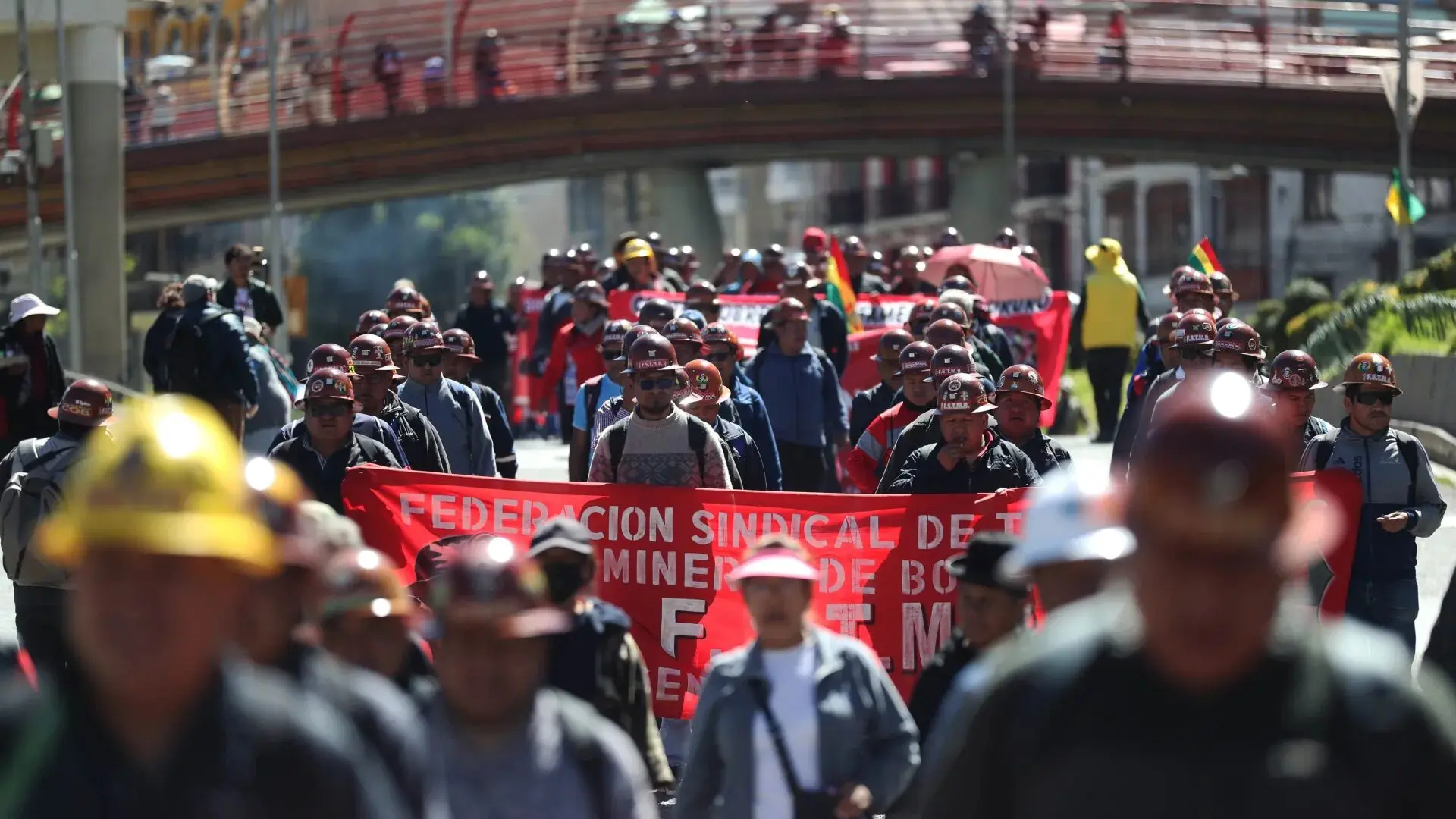
The protests against the administration of President Rodrigo Paz are being led by peasant organizations and labor sectors linked to the Bolivian Workers’ Central (COB). In recent days, blockades have expanded into Cochabamba, Santa Cruz, Potosí and Chuquisaca.
The COB has accused the government of promoting privatization policies that could increase the prices of electricity, drinking water, liquefied petroleum gas and compressed natural gas for vehicles.
For more than 20 days, workers, peasants, teachers, Indigenous organizations and transport workers led by the COB and the Tupac Katari Peasant Federation of La Paz have demanded wage increases, economic stabilization, rejection of privatization measures and the resignation of President Paz.
The mobilizations began around a platform containing more than 100 union demands, including opposition to privatization and what organizers describe as “state abandonment.” Protest leaders accuse the government of deepening the economic crisis, enabling corruption and failing to address the country’s social and economic problems.
On Friday, COB Executive Secretary Mario Argollo, who is reportedly under an arrest order issued by prosecutors, reappeared in a video circulated on social media criticizing a recent message delivered by President Paz.
“There has not been a press conference with clear answers for the population,” Argollo said, adding that the government instead issued “a provocation by criminalizing us and calling union leaders vandals.”
On Saturday, the National Executive Committee of the Unified Syndical Confederation of Rural Workers of Bolivia (CSUTCB) called for expanding the protests nationwide.
In a statement, the organization said demonstrators “must continue this unwavering struggle, today in defense of our natural resources, the popular economy of the Bolivian people and the sovereignty of the country.”
The CSUTCB described Bolivia as facing “a crucial situation” under “a neoliberal government that sought to impose unconstitutional measures, putting our natural resources, state companies, land and territory at risk of privatization and commodification.”
The organization instructed regional federations to “expand the indefinite national road blockade and other measures nationwide” until President Paz resigns, accusing his administration of being “incapable, murderous, criminal, discriminatory, fascist, neoliberal, privatizing and traitorous.”
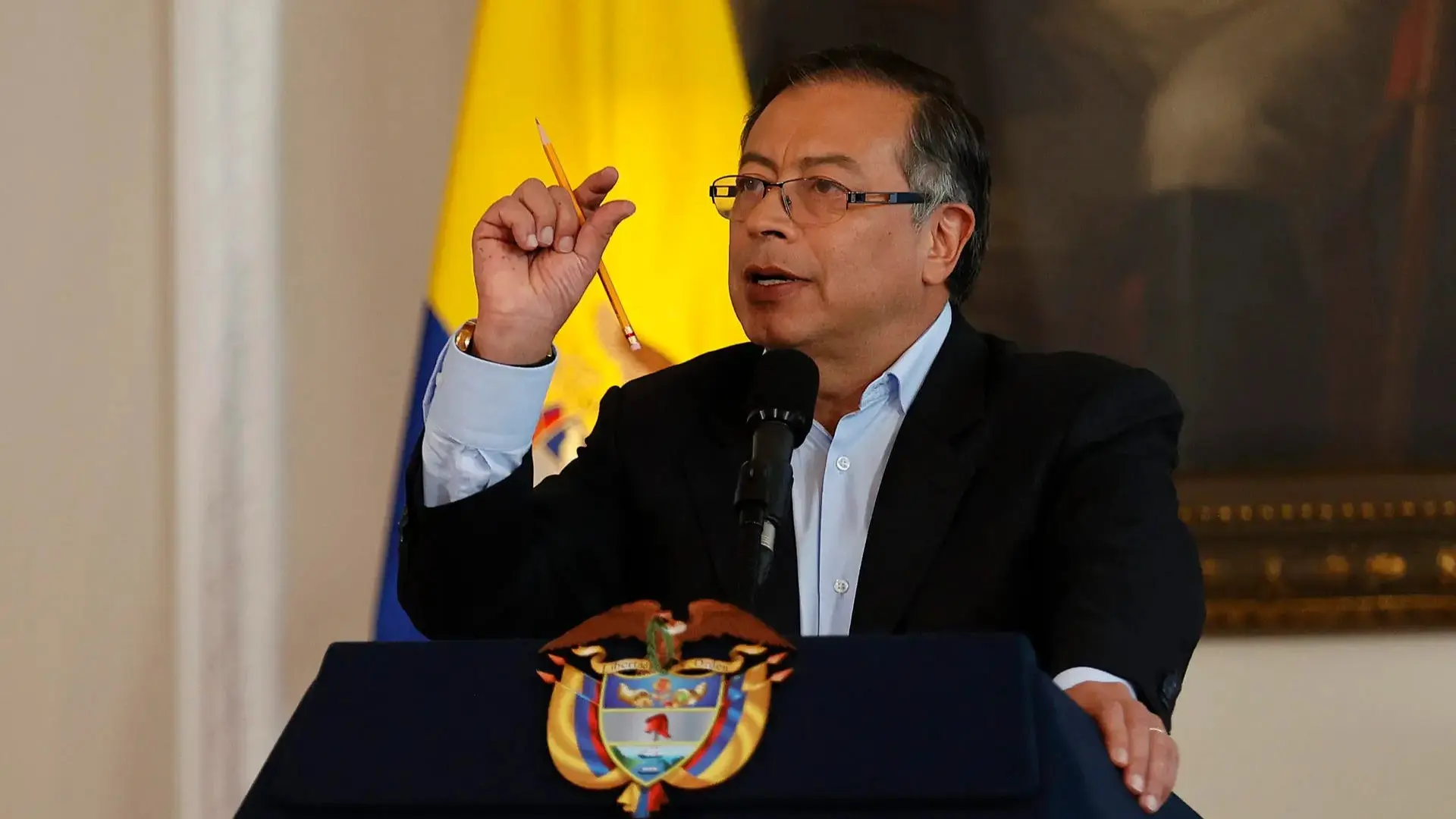
President Paz, who has received support from the United States and right-wing governments in the region, said in an interview carried by local media that his administration would make “every effort” to establish dialogue with protesting sectors, while warning that “everything has a limit.”
Asked about the possibility of declaring a state of exception, Paz said the government would apply all measures “protected under the Constitution.” “That is what we are doing. Later we will make whatever decisions are necessary,” he added.
Text Reads: All our solidarity with our peasant and indigenous brothers and sisters who continue to fight for their rights. Our condolences and deepest sympathies to the family of our brother murdered in Vilaque and to all those injured by the repression.
The government has accused former President Evo Morales of promoting “a macabre plan” to “break the constitutional order” and alleged that the effort is financed by drug trafficking. Morales rejected the accusation, questioning whether the government was labeling all protesting sectors as “drug traffickers.”
Organizations participating in the mobilizations have denounced what they describe as attempts to criminalize popular protest.
Author: MK
Source: Agencies